
A mum who killed her baby daughter by fracturing her skull took a bath and brought a lottery ticket from a shop before taking her to the hospital in a taxi, a court heard. Sarah Ngaba, 32, accepted that she caused "dreadful, life-shortening and life-limiting" head injuries to seven-week old Eliza but denied murder, claiming she was guilty of infancticide.
Jurors at Birmingham Crown Court were told the sole issue for them to decide was whether the balance of Ngaba's mind was distrubed at the time of the attack, and if disturbance was partly caused by failure to fully recover from giving birth.
Opening the case against Ngaba on Monday, May 11, prosecutor Jonas Hankin KC said Eliza died aged two in August 2022 from an infection after her injuries left her vulnerable, Birmingham Live reports.
UK pottery giant collapses into administration after 217 years - huge sale launched
UK's broadband firms ranked: Is yours first or last?
The court heard that Eliza was born in Homerton Hospital in east London on September 19, 2029 because Ngaba who was living in Shropshire, wanted to be close to family members during childbirth. Following her return to Telford, the court heard that Eliza was taken to hospital after being attacked on the morning of November 13, 2019.
Mr Hankin told the court Ngaba, formerly of Briarwood in Brookside, Telford, was previously convicted of causing grievous bodily harm.
The Crown's KC said it was agreed head injuries inflicted by Ngaba were "a cause" of Eliza's death as they had left her profoundly disabled and vulnerable to severe complications from infection, including death.
Mr Hankin said: "That is what happened - she died from a respiratory infection, but she would not have died from that infection had she not been rendered vulnerable by the injuries inflicted by her mother.
"There is, therefore, no dispute that the defendant unlawfully caused Eliza Ngaba's death and she intended to cause her really serious harm.
"The only issue in this trial is whether the defence of infanticide applies. If it does, the defendant is guilty of infanticide. If it does not, she is guilty of murder."
Outlining the evidence the Crown relied on, Mr Hankin told the court a witness who saw Eliza on a video call on the morning of November 13 2019 "could see her body was shaking".
Ngaba waas advised to take Eliza to hospital straight away but the defendant said she needed to have a bath and did not call an ambulance, the court heard. Instead she rang a taxi company at 8.13am.
Mr Hankin added: "She was told no taxi was available until 8.50am and that, if she needed to get to hospital sooner, she would have to make alternative arrangements.
"Despite that she settled for the taxi at 8.50am."
Doorbell footage caught Ngaba leaving her flat at 8.40am, jurors heard, while footage from a local supermarket at 8.59am showed her buying a lottery ticket and obtaining cashback.
The taxi driver, Mr Hankin said, arrived at 9.05am and described the defendant as being very calm and not seeming worried. When arriving at the hospital, the defendent "was calm and did not rush" the court heard.
Ngaba's alleged behaviour was described by hositapl staff as "annoyed, detatched and concerned about housing rather than her baby's medical emergency". The prosecutor continued: "The prosecution says this sequence of events is important.
"Eliza was visibly shaking. The defendant was told to take her to A&E. An ambulance was suggested. She didn't call one.
"She chose to bathe and dress first, accepted a delayed taxi, went to a supermarket, bought a lottery ticket, travelled calmly to hospital, and did not even rush when she got there.
"That evidence is difficult to reconcile with the suggestion the assault on Eliza was the product of an acute childbirth-caused disturbance of mind.
"It is more consistent with a lack of urgency, with detachment, self-concern, and a failure simply to prioritise her daughter's welfare."
Ngaba was alleged to have told a nursing sister Eliza had not fed since around 5am and to have made no reference to her having suffered any sort of physical trauma.
Mr Hankin told jurors: "The impression she gave was that Eliza was simply unwell.
"That's important because Eliza's neurological injuries were so severe that after they had been inflicted she could not have behaved normally, interacted normally, or fed normally.
"When Eliza was taken out of the pram, the nurse immediately saw she was in a state of collapse: pale, unresponsive, gasping and having seizures.
"Indeed she was concerned that Eliza was about to die and she required immediate emergency resuscitation."
The court heard Eliza's injuries were caused by forceful shaking "together with a very significant impact" to the head, causing a complex skull fracture.
Referring to Ngaba's claim of infanticide, Mr Hankin added: "The defence will say that, at the time of the assault, the balance of the defendant's mind was disturbed, and it was disturbed at least in part because she had not fully recovered from the effects of giving birth.
"The prosecution says the evidence does not justify such a conclusion. The prosecution says that when the evidence is looked at carefully, the true picture is not one of a childbirth-related disturbance of mind - it is one of anger, frustration, resentment and a loss of self-control."
The case is ongoing.
-
Dhoom-fame Suzuki Hayabusa speeding at 160 kmph crashes in Hyderabad, leaves five dead, including infant

-
Condé Nast India convenes industry leaders at The Luxury Conclave 2026, unfolding theme of Young India reshaping luxury

-
'Chai stall' to 'Papa ki kirane ki dukan': What Indian techies say they’ll do if fired tomorrow

-
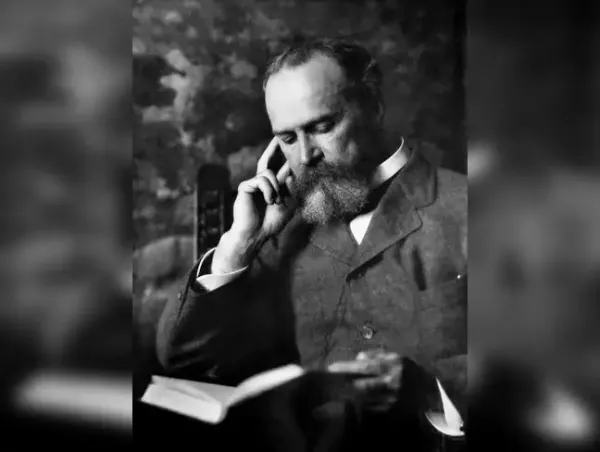
Success Quote of the Day by father of American psychology William James: 'There is but one cause of human failure. And that is...'
-
Germany plans 'active cyberdefence' as online attacks rise