The art of giving: Kiran Mazumdar-Shaw, Claire, and the quiet power of aunts
ETimes | May 11, 2026 6:40 PM CST

While growing up in the 1980s and 1990s, my go-to person was my aunt — especially when my mother was chasing me for some “assumed” wrongdoing. My father’s younger sister was fifteen years older than me, and we shared what Bengalis call a tui-tokari relationship: teasing, affectionate, hot-and-cold, but deeply comforting. The age gap was perfect for all the things you couldn’t tell your parents — sometimes out of fear, sometimes embarrassment. We all go through awkward phases, teenage angst, and that desperate need to feel understood at an age when hormones are raging and emotions arrive before wisdom does.
So who do we run to with our questions and secret worries? Bua, pishi, phoopi, mausi, mavashi, athe, chikkamma – the names change across India, but the role remains the same. Aunts are often our first allies outside our parents: confidantes, co-conspirators, protectors, and soul friends rolled into one.
That is perhaps why the recent news about naming her niece, , as her successor at Biocon struck such an emotional chord. It instantly brought back memories of childhood and adolescence, when an aunt could mean the world. And for many of us, if we are lucky, they still do.
Mazumdar-Shaw, who built Biocon from a modest startup into a global biotech powerhouse, is now 73. She has outlined a structured five-year transition plan for Claire, 37, a biotech specialist and CEO of Bicara Therapeutics. Speaking recently about the decision, she said she had long seen Claire as her successor because she had proved she could run a company.
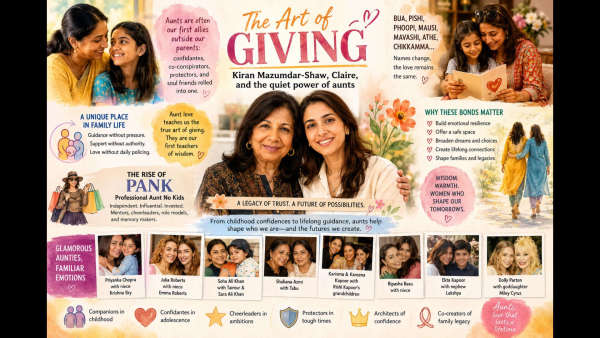
The move feels bigger than a standard corporate succession story. In India, business inheritances are often associated with tension, entitlement, or dynastic pressure. Here, however, the story rests on something gentler and more personal: trust between an aunt and niece. In choosing Claire, Mazumdar-Shaw highlighted a bond that is often underestimated — one where aunts become mentors, role models, emotional anchors, and sometimes custodians of family legacies.
A unique place in family lifeThe aunt-niece or aunt-nephew relationship occupies a special place in most families. Unlike the intense and often pressurised parent-child dynamic, it usually feels lighter, more voluntary, and less judgmental. Sociologists and psychologists often describe aunts and uncles as “quasi-parental” figures — adults who offer guidance and emotional safety without carrying the full burden of parenting.
Research rooted in kin selection theory suggests that childless women, or women with fewer parenting responsibilities, often invest deeply in nieces and nephews. One study found that women over 35 without children had more recent contact with nieces and nephews than mothers themselves did.
But beyond theory, anyone who has had a close aunt knows the emotional truth of it. Aunts are often the people teenagers speak to about relationships, insecurities, identity crises, or dreams they hesitate to reveal at home. They offer support without authority. They can encourage unconventional ambitions, defend artistic passions, or simply provide a space where a child feels fully accepted.
That is the magic of the relationship: love without the daily policing. Aunts can spoil, guide, protect, and champion all at once. We learn from them the true art of giving. They are our first teachers of wisdom.
The rise of the PANKA few years ago, the term “PANK” — Professional Aunt No Kids — entered popular culture. Coined by Canadian-American author and marketer Melanie Notkin around 2008, it described financially independent women without children who devoted time, affection, and money to nieces, nephews, and friends’ children.
Through her Savvy Auntie platform, Notkin transformed aunthood into a visible cultural identity. Marketers quickly noticed the trend. Toy brands, travel companies, and lifestyle businesses began targeting PANKs, recognising both their disposable income and emotional investment in children around them.
The idea resonated because it challenged the old stereotype of the lonely or incomplete “childless woman.” Instead, it celebrated women who found meaning, connection, and joy through extended family bonds. In many ways, it reflected changing realities: delayed marriage, smaller families, and a broader understanding of what nurturing can look like.
The numbers were significant. Early estimates suggested there were nearly 23 million PANKs in North America alone. Their spending on children’s gifts, travel, and experiences ran into billions of dollars annually. But their influence extended beyond economics. Studies found that many saw themselves as role models, mentors, and emotional support systems for the children in their lives.
Even critics who dismissed the term as a marketing gimmick acknowledged that it spotlighted something real: aunthood had become an increasingly important emotional role in modern society.
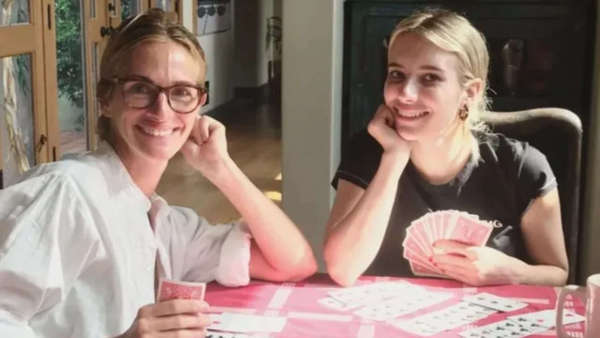
Glamorous aunties, familiar emotionsPopular culture is filled with famous aunt-niece and aunt-nephew relationships that mirror this warmth. Priyanka Chopra Jonas is incredibly close to her niece, Krishna Sky Sarkisian (her brother's daughter). She frequently shares photos of "Auntie duties," including glamorous photoshoots with her niece and spending quality time with her sister’s daughter, calling them "glam and creative" moments. Julia Roberts , the most famous Hollywood icon, is also the supportive aunt to actress Emma Roberts. Julia is known for sending sweet, supportive, and silly messages to her niece on social media, often sharing personal, fun memories. Soha Ali Khan is famously close with her nephew Taimur and niece Sara Ali Khan, frequently sharing pictures of their festive gatherings. She often shares photos of her daughter, Inaaya, bonding with her cousins, showing a very close-knit, loving family environment.
Did you know that Shabana Azmi is the aunt (paternal aunt) of actresses Tabu and Farah Naaz? Karisma Kapoor & Kareena Kapoor, Known as "Lolo" and "Bebo," are deeply involved aunts to their nieces and nephews, particularly Rishi Kapoor's grandchildren. Bipasha Basu is a doting "maasi" (maternal aunt) to her sister's daughter, frequently sharing pictures with her niece on social media. Ekta Kapoor is famous for her strong bond with her nephew, Lakshya Kapoor. Singer Dolly Parton, while not biologically related, is the godmother to Miley Cyrus, and calls her family.
In the Kardashian-Jenner family, Kendall Jenner became an aunt at 14 and is known to share a close bond with her many nieces and nephews, especially Stormi, daughter of Kylie Jenner. Khloé Kardashian is affectionately called “Aunt KoKo” by her siblings’ children. Rihanna shares a famously affectionate relationship with her young relative Majesty, while Beyoncé is lovingly known as “Auntie BB” within her extended family.
These stories endure because they feel familiar. Aunts often represent a blend of glamour and safety – adults who seem worldly and exciting, yet emotionally available in ways parents sometimes cannot be.
Bua, as an institutionIn India, the aunt bond carries even deeper cultural significance. Our languages distinguish between maternal and paternal aunts with astonishing specificity: mausi, bua, chachi, mami, pishi, phoopi. Each comes with its own emotional texture and social expectations.
And then there is the broader Indian institution of “Aunty” – the affectionate title given to neighbours, family friends, teachers, and older women in one’s social orbit. It is fictive kinship at its most Indian: relationships built not only by blood but by care, familiarity, and proximity.
Indian aunts often become central figures in child-rearing, especially in urban nuclear families separated from larger support systems. They preserve recipes, rituals, stories, family gossip, and emotional continuity. Many children remember a mausi who spoiled them endlessly or a strict-but-loving bua who stepped in during moments of crisis.
That is partly why Kiran Mazumdar-Shaw ’s decision resonates so strongly in India. It reflects a long cultural tradition where capable female relatives quietly sustain families, businesses, and legacies across generations.
Historically too, Indian aunts have often played crucial roles: managing households, raising younger relatives, preserving family wealth, or mentoring girls through education and marriage. Today, as more women enter leadership roles and delay or rethink motherhood, these bonds are evolving in new ways. Professional urban women increasingly occupy PANK-like roles while remaining deeply embedded in family life.
Why these bonds matterPsychologists say strong aunt relationships can improve emotional resilience in children and teenagers. Aunts often act as mediators during family conflict, trusted listeners during adolescence, and advocates during difficult transitions.
For young women especially, aunts can model alternative ways of living – showing that adulthood, ambition, marriage, motherhood, and success can all take different forms. They widen the imagination of what is possible. The relationship is also reciprocal. In ageing societies and smaller families, nieces and nephews frequently become vital support systems for older aunts later in life, creating long cycles of mutual care.
In a world where family structures are constantly changing, these relationships remain surprisingly stable. They are chosen repeatedly, nurtured voluntarily, and sustained by affection rather than obligation alone.
A timeless relationshipKiran Mazumdar-Shaw handing the baton to Claire Mazumdar is more than a corporate story. It is a reminder of how deeply influential aunt relationships can be – emotionally, culturally, and even professionally.
Whether through the PANK phenomenon in the West, celebrity “auntie” culture, or India’s deeply rooted family systems, aunts continue to shape lives quietly but profoundly. They offer wisdom without suffocation, love without constant discipline, and companionship without competition.
Perhaps that is why these bonds endure across generations. They allow us to feel seen at moments when we are most uncertain about ourselves.
As societies rethink parenthood, caregiving, and what makes a family, aunts are no longer secondary figures in the family tree. They are often architects of memory, confidence, identity, and legacy. And sometimes, as in the story of Kiran and Claire Mazumdar, they are trusted enough to inherit the future.
So who do we run to with our questions and secret worries? Bua, pishi, phoopi, mausi, mavashi, athe, chikkamma – the names change across India, but the role remains the same. Aunts are often our first allies outside our parents: confidantes, co-conspirators, protectors, and soul friends rolled into one.
That is perhaps why the recent news about naming her niece, , as her successor at Biocon struck such an emotional chord. It instantly brought back memories of childhood and adolescence, when an aunt could mean the world. And for many of us, if we are lucky, they still do.
Mazumdar-Shaw, who built Biocon from a modest startup into a global biotech powerhouse, is now 73. She has outlined a structured five-year transition plan for Claire, 37, a biotech specialist and CEO of Bicara Therapeutics. Speaking recently about the decision, she said she had long seen Claire as her successor because she had proved she could run a company.
The move feels bigger than a standard corporate succession story. In India, business inheritances are often associated with tension, entitlement, or dynastic pressure. Here, however, the story rests on something gentler and more personal: trust between an aunt and niece. In choosing Claire, Mazumdar-Shaw highlighted a bond that is often underestimated — one where aunts become mentors, role models, emotional anchors, and sometimes custodians of family legacies.
A unique place in family lifeThe aunt-niece or aunt-nephew relationship occupies a special place in most families. Unlike the intense and often pressurised parent-child dynamic, it usually feels lighter, more voluntary, and less judgmental. Sociologists and psychologists often describe aunts and uncles as “quasi-parental” figures — adults who offer guidance and emotional safety without carrying the full burden of parenting.
Research rooted in kin selection theory suggests that childless women, or women with fewer parenting responsibilities, often invest deeply in nieces and nephews. One study found that women over 35 without children had more recent contact with nieces and nephews than mothers themselves did.
But beyond theory, anyone who has had a close aunt knows the emotional truth of it. Aunts are often the people teenagers speak to about relationships, insecurities, identity crises, or dreams they hesitate to reveal at home. They offer support without authority. They can encourage unconventional ambitions, defend artistic passions, or simply provide a space where a child feels fully accepted.
That is the magic of the relationship: love without the daily policing. Aunts can spoil, guide, protect, and champion all at once. We learn from them the true art of giving. They are our first teachers of wisdom.
The rise of the PANKA few years ago, the term “PANK” — Professional Aunt No Kids — entered popular culture. Coined by Canadian-American author and marketer Melanie Notkin around 2008, it described financially independent women without children who devoted time, affection, and money to nieces, nephews, and friends’ children.
Through her Savvy Auntie platform, Notkin transformed aunthood into a visible cultural identity. Marketers quickly noticed the trend. Toy brands, travel companies, and lifestyle businesses began targeting PANKs, recognising both their disposable income and emotional investment in children around them.
The idea resonated because it challenged the old stereotype of the lonely or incomplete “childless woman.” Instead, it celebrated women who found meaning, connection, and joy through extended family bonds. In many ways, it reflected changing realities: delayed marriage, smaller families, and a broader understanding of what nurturing can look like.
The numbers were significant. Early estimates suggested there were nearly 23 million PANKs in North America alone. Their spending on children’s gifts, travel, and experiences ran into billions of dollars annually. But their influence extended beyond economics. Studies found that many saw themselves as role models, mentors, and emotional support systems for the children in their lives.
Even critics who dismissed the term as a marketing gimmick acknowledged that it spotlighted something real: aunthood had become an increasingly important emotional role in modern society.
Glamorous aunties, familiar emotionsPopular culture is filled with famous aunt-niece and aunt-nephew relationships that mirror this warmth. Priyanka Chopra Jonas is incredibly close to her niece, Krishna Sky Sarkisian (her brother's daughter). She frequently shares photos of "Auntie duties," including glamorous photoshoots with her niece and spending quality time with her sister’s daughter, calling them "glam and creative" moments. Julia Roberts , the most famous Hollywood icon, is also the supportive aunt to actress Emma Roberts. Julia is known for sending sweet, supportive, and silly messages to her niece on social media, often sharing personal, fun memories. Soha Ali Khan is famously close with her nephew Taimur and niece Sara Ali Khan, frequently sharing pictures of their festive gatherings. She often shares photos of her daughter, Inaaya, bonding with her cousins, showing a very close-knit, loving family environment.
Did you know that Shabana Azmi is the aunt (paternal aunt) of actresses Tabu and Farah Naaz? Karisma Kapoor & Kareena Kapoor, Known as "Lolo" and "Bebo," are deeply involved aunts to their nieces and nephews, particularly Rishi Kapoor's grandchildren. Bipasha Basu is a doting "maasi" (maternal aunt) to her sister's daughter, frequently sharing pictures with her niece on social media. Ekta Kapoor is famous for her strong bond with her nephew, Lakshya Kapoor. Singer Dolly Parton, while not biologically related, is the godmother to Miley Cyrus, and calls her family.
In the Kardashian-Jenner family, Kendall Jenner became an aunt at 14 and is known to share a close bond with her many nieces and nephews, especially Stormi, daughter of Kylie Jenner. Khloé Kardashian is affectionately called “Aunt KoKo” by her siblings’ children. Rihanna shares a famously affectionate relationship with her young relative Majesty, while Beyoncé is lovingly known as “Auntie BB” within her extended family.
These stories endure because they feel familiar. Aunts often represent a blend of glamour and safety – adults who seem worldly and exciting, yet emotionally available in ways parents sometimes cannot be.
Bua, as an institutionIn India, the aunt bond carries even deeper cultural significance. Our languages distinguish between maternal and paternal aunts with astonishing specificity: mausi, bua, chachi, mami, pishi, phoopi. Each comes with its own emotional texture and social expectations.
And then there is the broader Indian institution of “Aunty” – the affectionate title given to neighbours, family friends, teachers, and older women in one’s social orbit. It is fictive kinship at its most Indian: relationships built not only by blood but by care, familiarity, and proximity.
Indian aunts often become central figures in child-rearing, especially in urban nuclear families separated from larger support systems. They preserve recipes, rituals, stories, family gossip, and emotional continuity. Many children remember a mausi who spoiled them endlessly or a strict-but-loving bua who stepped in during moments of crisis.
That is partly why Kiran Mazumdar-Shaw ’s decision resonates so strongly in India. It reflects a long cultural tradition where capable female relatives quietly sustain families, businesses, and legacies across generations.
Historically too, Indian aunts have often played crucial roles: managing households, raising younger relatives, preserving family wealth, or mentoring girls through education and marriage. Today, as more women enter leadership roles and delay or rethink motherhood, these bonds are evolving in new ways. Professional urban women increasingly occupy PANK-like roles while remaining deeply embedded in family life.
Why these bonds matterPsychologists say strong aunt relationships can improve emotional resilience in children and teenagers. Aunts often act as mediators during family conflict, trusted listeners during adolescence, and advocates during difficult transitions.
For young women especially, aunts can model alternative ways of living – showing that adulthood, ambition, marriage, motherhood, and success can all take different forms. They widen the imagination of what is possible. The relationship is also reciprocal. In ageing societies and smaller families, nieces and nephews frequently become vital support systems for older aunts later in life, creating long cycles of mutual care.
In a world where family structures are constantly changing, these relationships remain surprisingly stable. They are chosen repeatedly, nurtured voluntarily, and sustained by affection rather than obligation alone.
A timeless relationshipKiran Mazumdar-Shaw handing the baton to Claire Mazumdar is more than a corporate story. It is a reminder of how deeply influential aunt relationships can be – emotionally, culturally, and even professionally.
Whether through the PANK phenomenon in the West, celebrity “auntie” culture, or India’s deeply rooted family systems, aunts continue to shape lives quietly but profoundly. They offer wisdom without suffocation, love without constant discipline, and companionship without competition.
Perhaps that is why these bonds endure across generations. They allow us to feel seen at moments when we are most uncertain about ourselves.
As societies rethink parenthood, caregiving, and what makes a family, aunts are no longer secondary figures in the family tree. They are often architects of memory, confidence, identity, and legacy. And sometimes, as in the story of Kiran and Claire Mazumdar, they are trusted enough to inherit the future.
READ NEXT
-
BAN vs PAK 1st Test: Pakistan surrenders to the speed of Nahid Rana, crushed by Bangladesh for the third consecutive time
-
‘Bharat’ dominates the banking sector! Public sector banks once again raised their flag in FY26, the world was surprised to see the pace of profits.

-
Cannes Film Festival 2026: From Armani gown to Gucci saree…Alia Bhatt’s best Cannes looks, see photos

-
Kanpur Drama: Wife Climbs Tower for Jailed Hubby, Cops Forced to Bring Him to Spot

-
Nepal requests fertilisers from India amid West Asia crisis: MEA