There is a version of events that Pakistan's military establishment has worked hard to circulate: that the ceasefire of 10 May 2025 represented a mutual de-escalation between two nuclear-armed states, with honour intact on both sides. Then there are the procurement orders, and procurement orders are merciless in what they reveal.
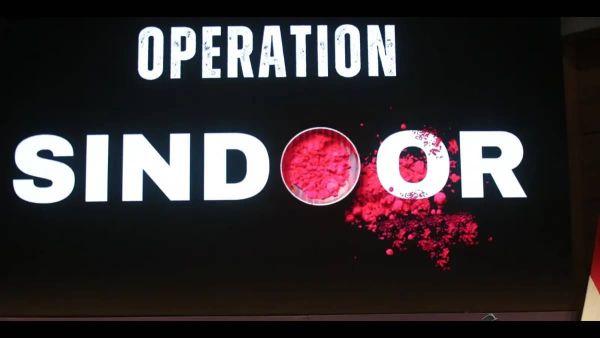
Operation Sindoor opened at approximately 0100 hours on 07 May 2025. Nine terrorist-linked targets were destroyed across Pakistan and Pakistan-Occupied Jammu and Kashmir. Pakistan's military installations were left untouched, and India said so explicitly in a public briefing. The message embedded in that announcement was unhurried and deliberate: this is calibrated, this is controlled, and you still have options. Islamabad declined them.
Over the following two days, Pakistan launched drones, rockets, and long-range artillery. The drones were absorbed by Indian air defences. The rockets and artillery accomplished nothing of significance. And by reaching for escalation, Pakistan handed India the justification for what came next.
On 10 May, Indian forces struck eleven Pakistani air bases in a single coordinated wave. Among them was Nur Khan, adjacent to General Headquarters, inside the shadow of the Islamabad Capital Territory.
The physical damage was one dimension of the operation. The signal was another: India possessed escalation dominance, could engage Pakistan's command infrastructure at will, and had apparently identified a further phase, one that threatened leadership nodes, communications architecture, and the functional links between GHQ and its subordinate formations. The prospect of command decapitation, suddenly credible, produced a ceasefire request within hours.
The rebuilding that followed tells the operational story Pakistan has preferred not to tell.
The Army Rocket Force Command was established around the FATAH-series Guided Multi-Launcher Rocket System, with artillery divisions at Gujranwala and Pano Aqil restructured into ARF Division (North) and ARF Division (South) and additional missile regiments placed under direct GHQ control. Long-range precision strike capability — visibly absent during the conflict — was being reconstructed from scratch. A domestic 155mm artillery ammunition production facility was fast-tracked, the munitions' shortfalls of May having made external supply chain dependence untenable.
Over 25 regiments' worth of Chinese SH-15 Mounted Gun Systems were contracted to address artillery mobility and survivability — the same systems reportedly deployed through civilian areas during the conflict to shield them from Indian targeting, with no apparent regard for civilian safety.
Chinese Z-10ME attack helicopters were inducted into No. 31 Attack Helicopter Squadron by August 2025, addressing close air support gaps the conflict had made impossible to ignore. A dedicated UAV force was stood up under the Bahawalpur Corps, built around ISR drones and targeting systems, after Pakistan's own drone offensive had been neutralised almost entirely. Chinese CH-4 and CH-5 combat drones and SA-180 loitering munitions were contracted to rebuild the unmanned strike capability.
Turkish KORKUT air-defence systems addressed low-level aerial vulnerabilities exposed during Indian operations. Turkish OMTAS anti-tank missiles and ERYX ATGMs responded to anti-armour deficiencies identified in post-conflict assessments.
Chinese VT-4 tanks, rebranded as MBT Haider, addressed armour modernisation shortfalls. MILGEM-class corvettes from Turkey and Hangor-class submarines extended the procurement sweep into the naval domain. An electronic warfare cooperation agreement with Turkey was concluded within days of the ceasefire, suggesting that electromagnetic vulnerabilities had been among the most jarring discoveries of the thirteen-day confrontation.
The deepest consequence was constitutional. The reported 27th Constitutional Amendment abolished the office of Chairman Joint Chiefs of Staff Committee and replaced it with a Chief of Defence Forces.
A separate post of Commander, National Strategic Command was created under an Army Lieutenant General, centralising nuclear command authority under the Army Chief, an acknowledgement that Pakistan's deterrence posture had been shaken by India's willingness to strike deep despite it. An institution that restructures its nuclear command after a conflict is not signalling confidence. It is signalling that something broke.
Pakistan's difficulties were compounded by commitments already weighing on its forces: deployments to Saudi Arabia under the Strategic Mutual Defence Agreement, operations along the Durand Line under Ghazab-Lil-Haq, and internal campaigns across Khyber Pakhtunkhwa and Balochistan under Azm-e-Istekam. There was no strategic reserve available for a prolonged war.
The procurement shows Pakistan's full accounting of what was found wanting, paid for in emergency contracts across every domain of modern warfare.
-
CTET September 2026 Notification Out: CBSE Opens Registration Window, Check Exam Dates & Schedule
-
Royal Challengers Bengaluru Players Receive Warm & Heritage Welcome In Raipur As They Defeat Mumbai Indians In Nail-Biting Thriller

-
Perplexity’s Personal Computer App Now Available For Mac Users

-
HBSE Class 10 Result 2026 Likely On May 16-17 At bseh.org.in; Check More Details Here

-
HBSE To Announce Haryana Board Class 12 Result On May 14; Here's How To Access Results