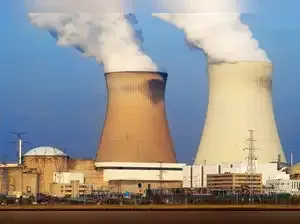
New Delhi: Power giant NTPC will soon submit its first feasibility study for a nuclear project with the Department of Atomic Energy (DAE) and seek its nod to go ahead with the plan, sources said. The approval will pave the way for NTPC to begin work on its first standalone nuclear project in India as the PSU is keen to achieve at least 2 GW of nuclear capacity by 2032.
Further, the company is in the process of conducting feasibility studies in two more states and in the latest development has received a go-ahead from the Bihar government to conduct a feasibility study for a nuclear project in Banka district, they said.
Also Read: Mitsubishi moves to exit NTPC project
As part of its energy diversification strategy, NTPC is looking to set up 30 GW of nuclear projects in at least 14 states with investments worth lakhs of crores to contribute to the government's ambitious 100 GW nuclear capacity target by 2047.
NTPC has completed feasibility study in one of the states, while it is in the process of undertaking feasibility studies in another two states, two sources aware of the development said.
"The company will be very soon submitting the completed feasibility study for the nuclear project in the state," one of the sources said requesting anonymity.
As per the process, the standing site selection committee of the DAE reviews any such proposals, and if found technically feasible puts it to the Atomic Energy Commission (AEC) for further process.
Sources said a feasibility study comprises estimates related to investments, land and water, among other requirements.
"On an average, NTPC is looking to set up at least two units of 700 MW each in the states being explored for nuclear projects," a source said.
Industry estimates suggest that to set up a nuclear power capacity of 1 GW, typically an investment of ₹15,000-20,000 crore is required and the timeframe could be at least three years from concept to commissioning. Five litres water is needed to produce 1 unit of nuclear power. Land requirement depends on the size of the project with 1 sq km exclusion zone.
Of various other inputs, water supply is a key requirement for a nuclear project.
NTPC is exploring Gujarat, Andhra Pradesh, Maharashtra and MP, among others for its nuclear ambitions.
Further, the company is in the process of conducting feasibility studies in two more states and in the latest development has received a go-ahead from the Bihar government to conduct a feasibility study for a nuclear project in Banka district, they said.
Also Read: Mitsubishi moves to exit NTPC project
As part of its energy diversification strategy, NTPC is looking to set up 30 GW of nuclear projects in at least 14 states with investments worth lakhs of crores to contribute to the government's ambitious 100 GW nuclear capacity target by 2047.
NTPC has completed feasibility study in one of the states, while it is in the process of undertaking feasibility studies in another two states, two sources aware of the development said.
"The company will be very soon submitting the completed feasibility study for the nuclear project in the state," one of the sources said requesting anonymity.
As per the process, the standing site selection committee of the DAE reviews any such proposals, and if found technically feasible puts it to the Atomic Energy Commission (AEC) for further process.
Sources said a feasibility study comprises estimates related to investments, land and water, among other requirements.
"On an average, NTPC is looking to set up at least two units of 700 MW each in the states being explored for nuclear projects," a source said.
Industry estimates suggest that to set up a nuclear power capacity of 1 GW, typically an investment of ₹15,000-20,000 crore is required and the timeframe could be at least three years from concept to commissioning. Five litres water is needed to produce 1 unit of nuclear power. Land requirement depends on the size of the project with 1 sq km exclusion zone.
Of various other inputs, water supply is a key requirement for a nuclear project.
NTPC is exploring Gujarat, Andhra Pradesh, Maharashtra and MP, among others for its nuclear ambitions.