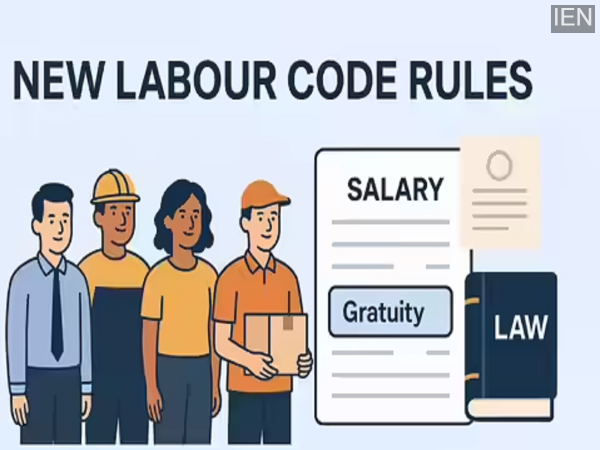
Labour Code Rules: A major chapter in India's labor reforms is about to unfold. In this regard, the Central Government has introduced four highly significant changes within the new Labor Codes.
New Labour Code: Discussions regarding labor reforms in India have been ongoing for several years. Continuing this process, a major new chapter in the country's labor reforms has now officially commenced. Recently, the Central Government fully notified the final rules for the four new Labor Codes. Essentially, these four new codes—covering Wages, Social Security, Industrial Relations, and Occupational Safety—are set to replace the existing labor laws and regulations.
1. Reduction in 'Take-Home' Salary
Under the new rules issued by the Central Government, it has now been made mandatory for your 'Basic Salary' to constitute at least 50 percent of your total Cost to Company (CTC). However, it is crucial to note that if your current Basic Salary falls below this threshold, efforts will need to be made to increase it. This adjustment will significantly help in boosting your Provident Fund (PF) contributions. Furthermore, as a result of this restructuring, you may also see potential increases in the amounts accrued toward your retirement funds and gratuity.
2. Major Changes to Gratuity Rules
Meanwhile, keeping the new Labor Code regulations in mind, the Central Government has also introduced significant changes to the rules governing gratuity. Specifically, the requirement for 'fixed-term' or contract-based employees to complete a waiting period of five years to become eligible for gratuity has now been completely abolished. If such employees have completed just one year of service, they will now be fully entitled to receive gratuity.
3. Leave Entitlement Linked to Working Hours
According to the regulations outlined in the new Labor Code, the maximum limit for total working hours per week has now been fixed at 48 hours. In other words, if companies so choose, they may adopt a four-day workweek; however, under this arrangement, it would be strictly mandatory for them to grant employees three weekly holidays. Furthermore, if any employee works beyond the stipulated hours, they must be compensated at double their standard hourly rate (Double Overtime). Additionally, employees will now be entitled to earned leave after completing 180 days of diligent work within a year.
4. Equal Opportunities for Women
Under the new code, women have now been permitted to work night shifts—specifically between 7:00 PM and 6:00 AM. Moreover, the code guarantees equal pay for equal work for both male and female employees.
-
I loved him, he manipulated me: my shocking reality

-
4 Zodiac Signs Receive A Powerful Sign From The Universe On May 11, 2026

-
Who Makes KitchenAid Dishwashers And Where Are They Manufactured?

-
Mother Ventures is looking at moms as the ‘economic engine’

-
Low nuclear penetration in India creates scope for major expansion amid govt efforts