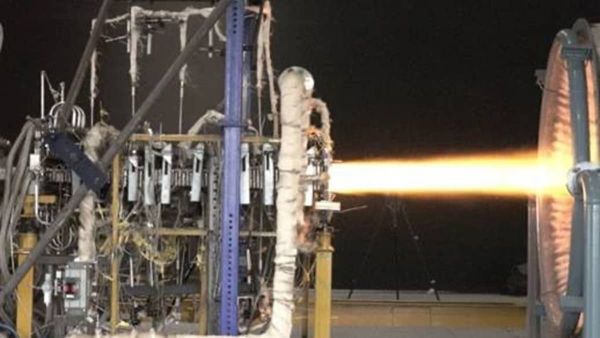
New Delhi: India has achieved a major breakthrough in hypersonic weapons technology after the Defence Research and Development Organisation (DRDO) conducted a successful long-duration trial of an actively cooled full-scale scramjet combustor. The test, carried out on May 9 at the Scramjet Connect Pipe Test facility in Hyderabad, ran for more than 1200 seconds and registered one of the longest sustained ground trials of its kind globally.
The achievement builds on an earlier run of over 700 seconds completed in January this year at the same facility, showcasing steady progress in the country’s push towards operational hypersonic capability. The officials asserted that the extended duration validated both the combustor’s design and the performance of the advanced testing infrastructure developed indigenously.
Developed by DRDO’s Defence Research & Development Laboratory in collaboration with Indian industry partners, the system forms the core of a supersonic air-breathing engine intended for future hypersonic missile applications. The successful trial placed India among a select group of nations advancing this propulsion technology.
Indigenous Technology Powers Record-Breaking Trial
According to the officials, the combustor was engineered entirely within India, using a liquid hydrocarbon endothermic fuel developed domestically. The DRDO outlined that the system also incorporates high-temperature thermal barrier coatings and advanced manufacturing processes, which were crucial in sustaining combustion under extreme conditions for the full duration of the test.
According to the organisation, the ground trials at the state-of-the-art SCPT facility in Hyderabad confirmed the reliability of the active cooling design. The particular cooling mechanism is essential for managing the intense thermal loads generated during hypersonic flight, where air enters the engine at supersonic speeds and temperatures rise dramatically.
The DRDO stated that the successful outcome reflected the growing maturity of India’s aerospace research ecosystem and its ability to deliver cutting-edge war technologies through indigenous research and industrial collaboration. As per the officials, the test data will now feed into the next phase of development, bringing the country closer to fielding a hypersonic strike capability.
India Strengthens Position In Emerging Defence Technologies
The latest achievement showcased India’s accelerating efforts to close the gap in hypersonic systems, an area seeing rapid global investment due to the strategic advantage offered by ultra-fast, maneuverable missiles. As compared to conventional rocket propulsion, the scramjet engines use atmospheric oxygen for combustion, allowing sustained high-speed flight with greater efficiency and range.
The defence analysts suggested that mastering long-duration scramjet operation is a critical hurdle, as it requires precise control of airflow, fuel injection and thermal management at Mach 5 and above. By achieving a runtime exceeding 20 minutes, the DRDO has showcased a level of endurance rarely reported in open-source testing worldwide.
The organisation stated that the accomplishment positioned India at the forefront of advanced aerospace capabilities and emerging war technologies. The programme, with the design and test facility both validated, is expected to move towards flight trials and eventual integration into next-generation missile systems.
-
The 37 MPs calling on Keir Starmer to step down after election humiliation

-
Banish black mould from washing machine seals in 15 minutes

-
Trump Mobile T1 Smartphone Delays Frustrate Supporters

-
Elizabeth Smart Expresses Hope for Missing Nancy Guthrie's Survival

-
Tomato soup will taste 'so so good' if you add 1 simple ingredient