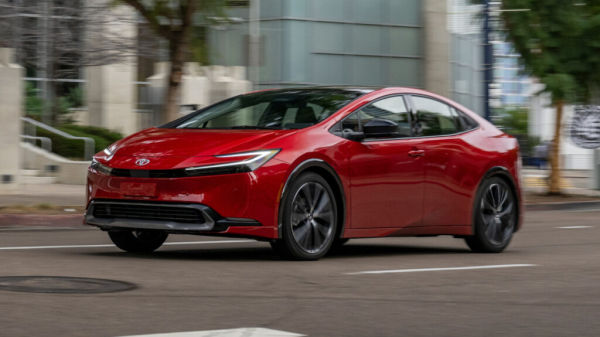
Toyota has sold more than 4.7 million examples of the Prius since the first generation debuted in the late ’90s, and the 2026 model doesn’t deviate from the formula that made earlier iterations so successful. The current generation of the car launched in 2023, and for 2026, it starts from $29,845 (including a $1,295 destination fee). Buyers looking for a top-spec version of the car with all-wheel drive can expect to pay around $38,000. The same 2.0-liter hybrid powertrain can be found in all trims.
Efficiency figures vary between those trims, with the base-spec version offering the highest combined figure of 57 mpg. Adding all-wheel drive on higher trims knocks the combined average down to 49 mpg. While the Prius’ affordability and efficiency have always remained consistent over the decades, the latest generation has benefited from one key change: its styling. Older generations were far from the prettiest-looking cars on the market, but the latest generation has seen its appearance overhauled both inside and out.
When the original Prius was launched, there was nothing else quite like it on the market. Since then, a group of other manufacturers have launched similarly efficient rivals. The latest Prius also has some competition from within Toyota’s lineup, so before you sign the dotted line for a new one, we think these eight alternatives are worth considering. Each one has been put through its paces by Read’s review team, and each is similarly affordable, efficient, and practical.
Toyota Corolla Cross Hybrid
Several appealing alternatives to the Prius exist within Toyota’s lineup, including the 2026 Corolla Cross Hybrid. It’s not as fuel-sipping as the Prius, with ratings of 42 mpg combined and 46 mpg in the city, but it’s still more efficient than most other similarly affordable SUVs. It’s also less distinctively styled than the Prius, although whether that’s a good or bad thing comes down to personal preference. Certainly, the Corolla Cross Hybrid isn’t going to attract any attention, while its comfortable, roomy interior should swallow passengers and cargo without any fuss.
The cheapest hybrid trim starts from $30,990 for the 2026 model year (including a $1,595 destination fee). That’s only around $1,000 more than a base-spec 2026 Prius. The range-topping Hybrid XSE trim costs around $35,000, and includes extras like SofTex faux leather and ambient lighting. All variants of the Corolla Cross Hybrid come with standard all-wheel drive, while the base Prius uses a front-wheel drive layout.
Neither car will be particularly exciting to drive, and the 196 horsepower available from the 2.0-liter hybrid powertrain is identical to the output of the top-spec Prius, so there aren’t any performance gains to be made by opting for one or the other. Mostly, the appeal of the Corolla Cross Hybrid comes down to its SUV styling, but that has already proved to be enough to tempt plenty of buyers away from other Toyota models.
Hyundai Sonata Hybrid
As well as considering the Prius’ SUV rivals, it’s also worth keeping its sedan competition in mind. One such competitor is the Hyundai Sonata Hybrid, which starts from $30,445 (including a $1,245 destination fee). The base-spec Blue trim is the most efficient of all, with a combined rating of 51 mpg, while higher trims of the Sonata Hybrid offer 47 mpg combined. We thought the SEL trim was particularly good value, since it adds extras like heated front seats and wireless phone charging for only around $3,000 more than a base example.
The Hyundai’s hybrid 2.0-liter powertrain makes 192 horsepower, which is within a few horsepower of its Toyota rival. However, unlike the Prius, there is no all-wheel-drive option. Hyundai has garnered a reputation for including strong levels of standard equipment in its budget-focused cars, and the Sonata Hybrid is no different, with a 12.3-inch infotainment touchscreen and dual automatic climate control available in even base examples.
Stepping up to the top-spec Limited trim adds leather upholstery and extra tech, such as a blind-spot monitor, but at almost $40,000, it’s pricier than a fully loaded all-wheel-drive Prius. As such, lower trims are a better bet for buyers looking for the closest rival to Toyota’s hybrid hatchback.
Honda Civic Hatchback Hybrid
Buyers who prefer hatchback styling over an SUV or sedan shouldn’t overlook the Honda Civic Hatchback Hybrid. For the 2025 model year, Honda gave the Civic a refresh, updating its styling and tech while keeping all of the good bits that make the current generation an appealing choice. As a result, it’s even better than before, with better handling and a more eager powertrain than most rivals, on top of being both practical and affordable.
Its efficiency figures are competitive with many of its rivals too, including with the Prius. The most frugal version of the Civic Hybrid’s 2.0-liter hybrid powertrain achieves 49 mpg combined, the same as a top-spec Prius. Granted, buyers of the Toyota get all-wheel drive while the Honda misses out, but that won’t matter as much for drivers in warmer climates. Honda’s pricing should also give Prius buyers pause for thought, since the entry-level hybrid starts from $31,790 (including a $1,195 destination fee), while the top-spec Sport Touring Hybrid trim is available from $34,790.
Toyota Camry
From the 2025 model year onwards, every Toyota Camry comes with a 2.5-liter hybrid powertrain. That’s helped push it closer in efficiency to the Prius than before, with the most frugal variant hitting a combined 51 mpg according to EPA data. Adding all-wheel drive drops that figure to 50 mpg combined for the base-spec LE trim, while higher trims achieve a few mpg less.
It’s still not quite as fuel-sipping as a Prius, but Camry buyers get the benefits of added space and a modest boost in performance. All-wheel drive versions offer 232 horsepower, which we thought was plenty to make the Camry feel responsive around town. Toyota’s usual suite of driver assistance tech is available too, though features like traffic jam assistance and a 360-degree camera are available as part of packages at an additional cost.
The Camry’s pricing structure looks very similar to the Prius for 2026. The base trim is available for $30,595 (including a $1,295 destination fee), which is just a few hundred dollars more than a base-spec Prius. Likewise, a top-spec Camry XSE with all-wheel drive will cost just over $38,000 without any optional extras.
Data from CarEdge suggests that the Camry and Prius will cost a very similar amount to own over a five-year period, with the main difference between the two being that insuring a Prius is predicted to cost more. If low running costs are the main reason you’re considering a new Prius, the Camry is a very compelling alternative.
Kia Niro Hybrid
Part of the appeal of the Prius is that it’s efficient without suffering the charging issues or range limitations of an EV. As a result, although Kia offers the Niro in both all-electric and hybrid form, Prius buyers are likely to only find the hybrid Niro appealing. It’s not a household name in the same way as the Prius, but the Niro Hybrid shouldn’t be overlooked.
The current generation of the car has been on sale for a few years now, but it’s still one of the most efficient cars in its price bracket. The base model starts from $28,885 (including a $1,495 destination fee), and the EPA says it will return 53 mpg combined.
When we tested the current generation car in 2023, we came away impressed with its spaciousness and long list of equipment. We thought its modest 1.6-liter hybrid powertrain, which makes 139 horsepower, felt just fine around town. Predictably, it wasn’t very well suited to high-speed jaunts or spirited driving, but then neither is a Prius. The Niro is also one of the few hybrid cars that can be bought for less than a Prius, and its long warranty should help alleviate any worries about reliability.
Lexus UX300h
While the Lexus UX300h is a pricier alternative to the Prius, it doesn’t carry as much of a premium as some buyers might assume. The base-spec, front-wheel drive UX300h starts from $38,550 (including a $1,395 destination fee), while the all-wheel drive version costs $40,120. Just like the Prius, the Lexus features a 2.0-liter hybrid powertrain making 196 horsepower.
While Lexus’ SUVs generally don’t have a reputation for being driver’s cars, our reviewer was surprised when they tested the 2025 UX300h F Sport Handling. They reported that it felt at home on twistier roads as much as in the city, with its electric motor providing an extra bit of low-end grunt through sharper turns. A base-spec model might not feature the dialed-in suspension of our top-spec test car, but its powertrain remains unchanged.
When it comes to efficiency, it’s a familiar story. A combined rating of 43 mpg isn’t going to match the Prius — no other hybrid on the market does — but it’s still far more efficient than the average new vehicle. Whether the additional badge prestige and fashionable crossover design is worth the extra cost is down to personal preference, but either way, the entry-level Lexus shouldn’t be dismissed.
Toyota Corolla Hybrid
The Prius might boast slightly lower gas costs over the long run, but for upfront costs, the Toyota Corolla Hybrid is the better value choice. The base 2026 model starts from $26,270 (including a $1,295 destination fee), more than $3,000 less than the cheapest Prius. There isn’t a huge amount of difference in efficiency either, since the Corolla Hybrid achieves 50 mpg combined and up to 53 mpg in the city.
Buyers also benefit from Toyota’s enviable reputation for long-term reliability, but the Corolla Hybrid makes a significant compromise in performance compared to the Prius. Its 1.8-liter hybrid powertrain only makes 138 horsepower, and it feels like it. Even keeping up with traffic at higher speeds requires the small engine to work hard. As a result, it’s not quiet, and on longer journeys the engine’s soundtrack might start to grate. Nonetheless, anyone looking for cheap, efficient urban transport should find the Corolla Hybrid’s overall ownership costs hard to beat.
Honda Accord Hybrid
Despite some concerns about their technological complexity, Priuses have proven to be able to last for decades and rack up hundreds of thousands of miles without concern. The Honda Accord is considered to be similarly long-lasting, and in its latest guise, it’s almost as efficient too. The 2026 model’s 2.0-liter hybrid powertrain should be good for a combined 48 mpg, according to the EPA.
Similar to the Toyota, the current generation Accord debuted for the 2023 model year. From the outside, it’s less visually distinctive than a Prius, but it’s still one of the better-looking cars in its price bracket. Inside, its cabin is typical Honda in that it isn’t particularly noteworthy from a design perspective, but everything should still be well screwed into place. Under the hood lurk a respectable 204 ponies. That might only be a few horsepower more than the non-hybrid version, but we found the additional power from the electric motor noticeable on the road.
The Accord Hybrid costs more than its non-hybrid counterpart, but it still sits within affordable territory. The Sport Hybrid trim starts from $34,990 (including a $1,195 destination fee), while the top-spec Touring Hybrid trim creeps north of $40,000. Buyers considering a Prius primarily for its value should find the Accord’s Sport Hybrid trim to be the closest rival, but those with a more generous budget might find the Bose audio system and heated steering wheel of the top-spec Accord worth the extra investment.
How we picked these Prius rivals
Buyers gravitate towards the Prius for its low running costs, impressive reliability, comfortable interior, and affordable asking price. When choosing alternatives, we prioritized cars that met all those key criteria. A member of our review team has thoroughly tested each car to evaluate how well it meets its maker’s promises. Each of our picks is available as a 2026 model, and all listed mpg figures were sourced from the EPA.