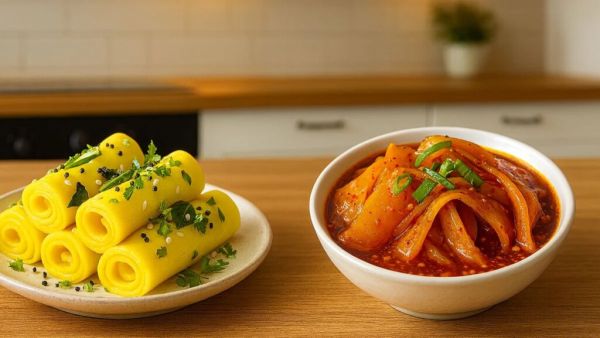
Ever saw a rolled snack on a plate at Delhi’s Majnu Ka Tila market and thought, “Oh, that looks like khandvi”? Now imagine taking a bite and being hit with garlic, chilli and heat instead of something soft and mild. That moment sums up why khandvi and laughing are often confused, and why they shouldn’t be. While they may look alike, these two snacks come from different cultures, use different ingredients, and create very different eating experiences. One is gentle and comforting, the other bold and fiery. Here’s how to tell them apart.
What is Khandvi?
Khandvi is a classic Gujarati snack made from gram flour (besan) and buttermilk. The mixture is cooked slowly, spread into thin sheets, and carefully rolled into delicate spirals.
It is finished with a light tempering of mustard seeds, curry leaves and sesame seeds, and is sometimes topped with coconut or coriander. Soft, mildly tangy and easy on the palate, khandvi is often enjoyed as a tea‑time snack or served as part of a traditional farsan platter.
What Is Laughing?
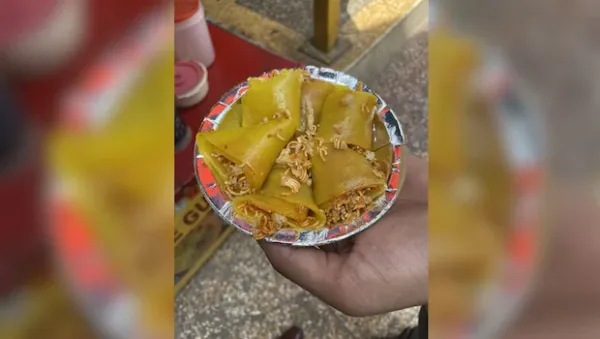
Photo: Reddit
Laphing is a Tibetan cold noodle dish that has become popular as street food, especially in Delhi and hill towns. It is made using mung bean starch or wheat starch, which gives it a slippery, jelly‑like texture.
The starch sheets are rolled and drenched in chilli oil, garlic, soy sauce, vinegar and spice pastes. Served cold, lapping is sharp, spicy and bold — the kind of snack that makes you pause between bites.
Khandvi vs Laughing: The Key Differences
1. Cultural Role
Khandvi is a traditional snack, often homemade or served at family gatherings. Laphing is street food at heart, meant to be eaten quickly and boldly.
2. Ingredients
Khandvi uses besan and buttermilk, keeping the flavor simple. Laphing relies on starch, with flavor coming almost entirely from the sauces and seasonings.
3. Cooking Process
Khandvi requires careful cooking and precision, one mistake and the rolls won’t set. Laphing focuses more on preparation and seasoning than cooking complexity.
4. Texture in the Mouth
Khandvi feels soft, light and melt‑in‑the‑mouth. Laphing is slippery, chewy and intense, giving a far more dramatic mouthfeel.
5. Flavor Intensity
Khandvi is subtle and comforting. Laphing is loud, spicy and unapologetic, often making heat lovers reach for water.
6. After‑Taste
Khandvi leaves a gentle tang. Laughing leaves lingering spice and garlic.
Which One Should You Try?
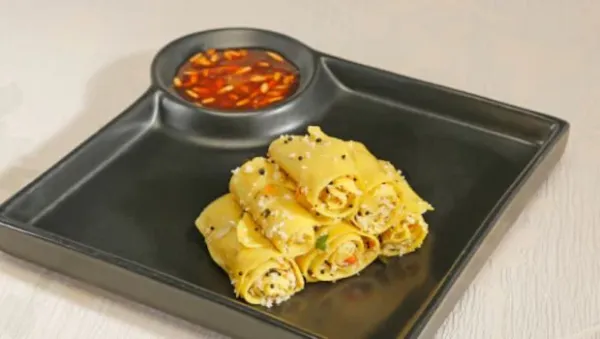
If you enjoy mild flavors and traditional snacks that are easy to eat, khandvi is likely your pick. If you crave heat, sourness and bold street‑style flavours, laughing will speak to you more.
They may look similar on the plate, but khandvi and laughing represent two very different ways of eating, and appreciating, food.
-
How long should you eat cut bananas? Is it safe to eat blackened bananas? Know in detail
-
Cucumber Benefits: Is it more beneficial to eat cucumber peeled or without peeling? Know what is the right way
-
Mother’s Day: A special day of respect and gratitude for motherhood

-
Has the slip arrived from Delhi? Before the expansion of UP cabinet, Akhilesh Yadav took a jibe, demanded to give proper reservation to women.
-
Salute to mother’s love, know the history, importance and way of celebration of this special day.