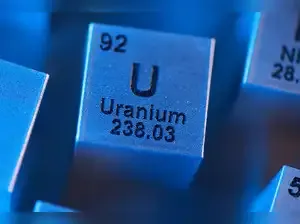
The US Department of Energy's National Nuclear Security Administration (NNSA) on Friday (local time) announced the successful removal of all remaining highly enriched uranium from a legacy research reactor in Venezuela, calling the operation a significant step in reducing nuclear security risks in South America and the US homeland.
According to NNSA, which is a semi-autonomous agency within the US Department of Energy, the mission was carried out in coordination with the Venezuelan Ministry of Science and Technology, the International Atomic Energy Agency (IAEA), experts from the United Kingdom, and US State Department personnel.
"The safe removal of all enriched uranium from Venezuela sends another signal to the world of a restored and renewed Venezuela," said Brandon Williams, NNSA Administrator. "Thanks to President Trump's decisive leadership, the dedicated teams on the ground completed in months what would have normally taken years."
The agency said the RV-1 reactor had supported physics and nuclear research for decades, but after research activities ended in 1991, uranium enriched above the 20 per cent threshold remained as surplus material.
NNSA's Office of Defense Nuclear Nonproliferation (DNN), working alongside experts from the Venezuelan Institute for Scientific Research, removed 13.5 kilograms (about 30 pounds) of uranium from the reactor less than six weeks after an initial site visit.
The uranium was securely packaged into a spent fuel cask and transported roughly 100 miles overland to a Venezuelan port before being loaded onto a specialised carrier supplied by the United Kingdom's Nuclear Transport Solutions. The shipment arrived in the United States in early May and was transferred to the Savannah River Site for processing and reuse.
Dr. Matt Napoli, DNN's Deputy Administrator, who travelled to Venezuela to oversee the operation, praised the teams involved in the mission.
"I couldn't be prouder of the men and women who carried out this vital mission," Napoli said. "NNSA's long history in removing nuclear material and the team's extensive know-how were key to this success."
NNSA said the material will now be processed at the H-Canyon chemical separations facility to obtain high-assay low-enriched uranium for future US nuclear energy programs.
The agency added that since 1996, it and its predecessor offices have removed or confirmed the disposition of more than 7,350 kilograms (16,250 pounds) of highly enriched uranium and plutonium from dozens of countries as part of global nuclear nonproliferation efforts.
According to NNSA, which is a semi-autonomous agency within the US Department of Energy, the mission was carried out in coordination with the Venezuelan Ministry of Science and Technology, the International Atomic Energy Agency (IAEA), experts from the United Kingdom, and US State Department personnel.
"The safe removal of all enriched uranium from Venezuela sends another signal to the world of a restored and renewed Venezuela," said Brandon Williams, NNSA Administrator. "Thanks to President Trump's decisive leadership, the dedicated teams on the ground completed in months what would have normally taken years."
The agency said the RV-1 reactor had supported physics and nuclear research for decades, but after research activities ended in 1991, uranium enriched above the 20 per cent threshold remained as surplus material.
NNSA's Office of Defense Nuclear Nonproliferation (DNN), working alongside experts from the Venezuelan Institute for Scientific Research, removed 13.5 kilograms (about 30 pounds) of uranium from the reactor less than six weeks after an initial site visit.
The uranium was securely packaged into a spent fuel cask and transported roughly 100 miles overland to a Venezuelan port before being loaded onto a specialised carrier supplied by the United Kingdom's Nuclear Transport Solutions. The shipment arrived in the United States in early May and was transferred to the Savannah River Site for processing and reuse.
Dr. Matt Napoli, DNN's Deputy Administrator, who travelled to Venezuela to oversee the operation, praised the teams involved in the mission.
"I couldn't be prouder of the men and women who carried out this vital mission," Napoli said. "NNSA's long history in removing nuclear material and the team's extensive know-how were key to this success."
NNSA said the material will now be processed at the H-Canyon chemical separations facility to obtain high-assay low-enriched uranium for future US nuclear energy programs.
The agency added that since 1996, it and its predecessor offices have removed or confirmed the disposition of more than 7,350 kilograms (16,250 pounds) of highly enriched uranium and plutonium from dozens of countries as part of global nuclear nonproliferation efforts.