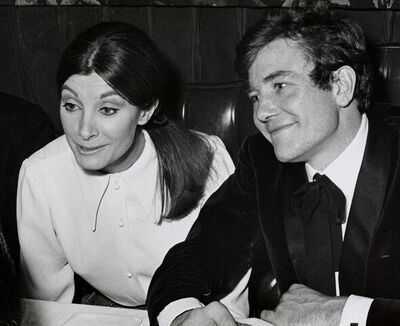
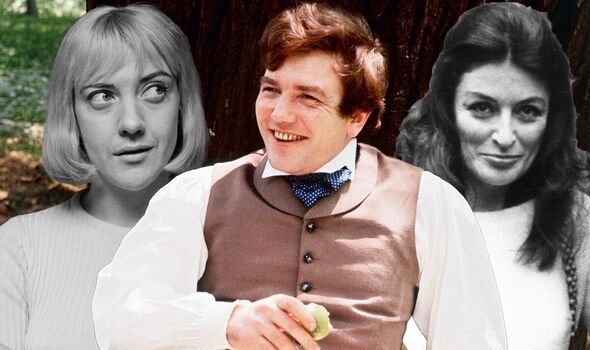
The tone was persuasive, even if the subject matter was unwelcome. "Now, come on, Eileen, you're going to sleep with me, aren't you?" It was 1983 and Albert Finney, then between marriages to second wife Anouk Aimee and his youthful third, travel agent Penelope Delmage, and following the end of his long affair with Brideshead Revisited star Diana Quick, decided a window had presented itself for him to bed his old friend Eileen Atkins.
For her part, the actress had an early start the next day on the film set of The Dresser - Ronald Harwood's thinly-veiled take on the life of the monstrous old actor-manager Sir Donald Wolfit - and had no intention of taking up Finney's offer. She knew Finney from the early days and had seen the young lad from Salford in Lancashire winning such acclaim for his stage performances in Coriolanus at Stratford and John Osborne's Luther in the capital that he was spoken about as Laurence Olivier's heir apparent, before he chose, like Richard Burton and Peter O'Toole, to prioritise making money in films like Saturday Night and Sunday Morning, The Entertainer and then hitting the jackpot with Tom Jones which, with cannily negotiated share of the box office, made him an overnight millionaire.
The joys of the flesh were every bit as much a preoccupation of Finney as the libertine he played in the blockbuster film of Henry Fielding's novel, and Atkins knew she would have to be firm when he spotted her extricating herself from his party in the bar of a hotel in Yorkshire - where they were on location filming for The Dresser - and making her way to her bedroom. He hastily imposed himself between Atkins and the hotel lift's repeatedly opening and shutting doors. "No, I am not going to sleep with you, Albert," Akins told him, firmly. "Oh, come on, Eileen," Finney replied, forcing the doors open yet again. "I will leave the others and join you now. No one will know."
As Atkins, later Dame Elieen, would tell me: "He was obviously a bit pi**ed as he'd been buying drinks for virtually everyone involved in making The Dresser for several hours. We were in North Yorkshire on location, staying at a nice hotel and it was all very jolly.
"But it wasn't just that I had an early call the next morning, I was married, and, in a rather old-fashioned way, I wanted to remain faithful to my husband so there was no way I was going to sleep with him. I told Albert over and again it wasn't going to happen, and he kept saying over and again it was."
Running out of patience, Atkins turned and pointed towards her fellow cast member Cathryn Harrison, granddaughter of Rex Harrison, who had been open about her "crush" on the leading man. "Albert, she's half my age and she's gagging for it, so you say goodnight to me and head over there," Atkins told him.
Finney, one of the most turned round and looked at her for a few moments and told Atkins: "The thing is she's going to be trouble and you're not going to be trouble." But with that, Atkins was finally able to make her escape - the lift doors shutting behind her."
The following morning, as Atkins was taking an early breakfast in bed, there was a knock at the door. Finney walked in with Harrison and announced they were getting engaged. "They weren't, of course, but it was the start of a relationship," Atkins recalled. "Albert told me it turned out to be his most difficult affair, but the upside was that Cathryn was the most passionate woman he had ever been to bed with."
Atkins had first met Finney in Stratford-upon-Avon in the early Sixties when everything seemed possible for a golden generation of actors. Finney was then finding his style cramped by his first wife Jane Wenham and their baby son, Simon. Finney had wed the Southampton-born actress in 1957 when, it was generally agreed, he just hadn't been ready to settle down.
"Really it had been a disaster from the start and it was all coming to an end that day and they were having a terrible row," Atkins recalled.
"They wanted a babysitter for Simon, and, short of cash, I'd called round. Albert was red-faced and furious when he opened the door and just grunted and immediately turned on his heel and headed out into the town. After he'd gone, Jane poured her heart out to me, as well as an entire bottle of whisky.
"She really loved Albert, but could tell he didn't feel the same about her, maybe not even from the start, and he had made it pretty clear to her that he had only married her because he felt he had to. She was aware he was having affairs.
"The latest was with Zoe Caldwell, an actress from Australia who happened to be a great friend of mine. That was what the row had been about."
Atkins began work as a part-time nanny for the Finneys and it soon became obvious that Finney found Wenham's small flat in West Street in Stratford a prison. After four years, although they managed to make the move to Bayswater in London, the marriage was in name only. Atkins remembered being on a bus going by Harrod's one Christmas Eve, when Finney had still to get around to divorcing Wenham, and spotted him emerging with Caldwell, laden with presents.
"I thought how happy they looked. The shop was closing and I'd never seen two people carrying so many gifts. They were roaring with laughter. I thought how they must be literally the happiest people in London," she recalled. "Maybe only an illicit affair can bring that kind of happiness? I was so jealous of Zoe and years later I told her. She said, 'Oh yes, I remember that night very well'."
It turned out they'd had a terrible row before making up over presents at Harrod's. "So what you saw at that moment was totally false," Caldwell told Atkins. It didn't take long for Finney to move on - beginning an affair with Atkins' other great friend Jean Marsh.
"People go on about the Sixties being such a permissive era, but it wasn't that permissive and people would talk about Albert with open disdain," she said. "He seemed to represent to quite a large proportion of women everything that was wrong about men in those days. He loved Jean but he wasn't her intellectual equal and she lost interest in him, but after she'd dropped him he seemed to want to go out with women who looked like her."
Finney had come from a family of bookmakers in the north of England and had known long periods of poverty. He couldn't believe his luck when something that came as easily to him as acting started making him real money and he was determined to make the most of it while it lasted. He gave away his sense of being a little boy in a toyshop when he once memorably observed of an earlier encounter: "There I was having sex on a beach in Hawaii, thinking no other Finney has ever done this. I'm having sex on a beach in Hawaii on behalf of all the other Finneys."
Although Finney was clearly still taking chances where he could find them, when The Dresser reunited him with Atkins, she was in no doubt he was taking the film seriously.
"Like Michael Gambon, and maybe all those working class boys in the business at that time, I think Albert thought it was a bit sissy to actually make it obvious he loved acting, but he really put a lot of effort into The Dresser," she said.
"The fact he was playing the old-actor manager who was so much older than him meant it was necessary for him to be in the make-up chair for three or four hours first thing every day, but he never complained. They had to shave all his hair off which was a big sacrifice for him as he was proud of his hair.
"Some mornings I'd hear him in the dressing room heartily belting out These Boots Are Made for Walking, and, when I asked him why that of all songs, he said, 'I've got to get my hatred out of me for Diana [Quick]'. She had dropped him, of course, and that had been something that had hurt him terribly."
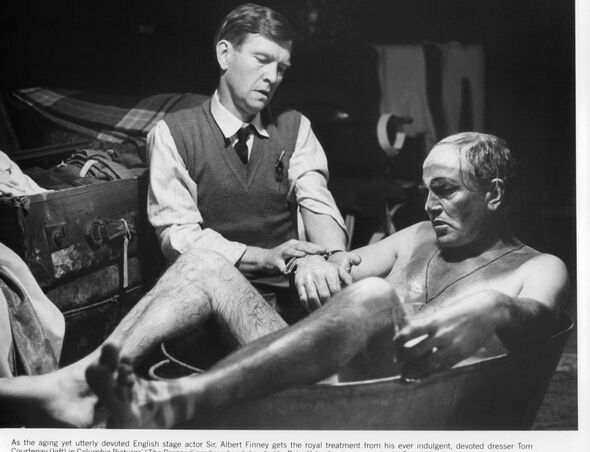
The energies that Finney expended on The Dresser paid off with it opening to excellent reviews and resulting in a Best Actor Oscar nomination for him. The judges - conscious that Finney's co-star Tom Courtenay, who played his camp sidekick Norman in the film, was also in contention - appeared to decide that discretion was the better part of valour and awarded the gold statuette instead to Robert Duvall for Tender Mercies.
As for Atkins, she was pleased she didn't succumb to Finney's advances - she felt the introduction of sex into any of his relationships invariably put a sell-by date on them. By rebuffing his advances, she was able to remain his friend - "maybe even a kind of sister to him" - until his dying day.
- Tim Walker is a journalist, biographer and award-winning playwright
-
AI Scammers Attack Aadhaar Identities: Deepfakes Created from Social Media Photos

-
Major Change for Workers and Companies: Government Implements Four New Labour Codes

-
Tamil Nadu Govt Formation Talks Intensify; VCK Seeks Deputy CM Post From Vijay’s TVK

-
ED Arrests Punjab Minister Sanjeev Arora In Money Laundering Case

-
Big Political Shake-Up In UP? Six New Faces May Take Oath