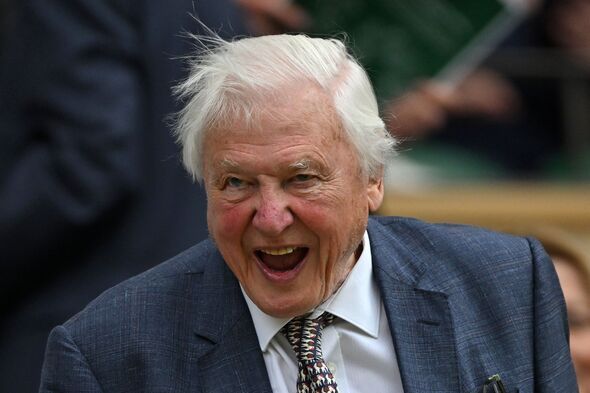
Sir David Attenborough may be well known for his role as a BBC broadcaster, historian, conservationist and author, but he's also done a great deal for the world of sport. The broadcasting great, who celebrates his 100th birthday today (May 8), played a key role in influencing tennis at Wimbledon and snooker in the 1960s.
Attenborough is heralded as being the man to thank for fluorescent tennis balls at Wimbledon, with the ball much more visible on broadcast television. He also pushed for snooker to be broadcast on colour television, sparking the nationwide obsession that we have today.
As pointed out by Alice, who posts on TikTok as @alicefevronia, she shared the interesting fact that not many tennis fans actually know. She asked: "Did you know that we have the legendary David Attenborough to thank for fluorescent tennis balls?
"Until the 1970s, tennis balls were black or white, but he suggested that a fluorescent tennis ball would be much more visible to the cameras, especially as colour TVs were becoming more popular.
"So the International Tennis Federation conducted extensive research to find a colour visible on both colour and black and white TVs.
EXPRESS SPORT ON FB!Get all the best sports news and much more on our Facebook page
"They settled on this greenish yellow, known as optic yellow. And around 55,000 of them will be used during the Wimbledon tournament."
The ITF introduced yellow balls in 1972, however Wimbledon itself didn't make the switch until 1986.
Back in 1969, Attenborough gathered the BBC's top executives to try and broadcast the next big thing - colour television. He pitched snooker an idea to the BBC's then head of sport Bryan Cowgill - a sport in supposed decline - and the tournament Pot Black was soon broadcast on TV screens.
"I had a few colour cameras in existence, and I was absolutely strapped as to how to employ them," Sir David told the BBC. "I wanted to put stuff on BBC Two that didn't appear on anything else. But then I realised I could do 48 hours of transmissions in three days on that one simple screen.
"In terms of production of colour pictures it was an absolute godsend and absolutely invaluable in getting the service on the air. Then there was the sport itself, and the obvious drama with all the characters involved. I watched it all the time when it was on."
Cowgill helped create the Saturday show Grandstand in 1958, and played a huge role in the introduction of adding football highlights show Match of the Day to the BBC's showreel in in 1964 and then Sportsnight (1968).
However, Pot Black was his breakthrough moemnt, with the that was once pastime associated with smoky working-men's clubs, shown live on TV and became an instant hit as one of the channel's most popular shows.
-
3 Zodiac Signs Enter An Inspiring New Era Starting On May 10, 2026

-
How To Unlock Cosmetics And Vehicles In REPO

-
GM agrees to pay $12.75M in California driver privacy settlement

-
RR vs GT: Top 5 Biggest Win Margins For Gujarat Titans In IPL
-
PSA World Squash Championships: Ramit Tandon, Velavan suffer first-round exits