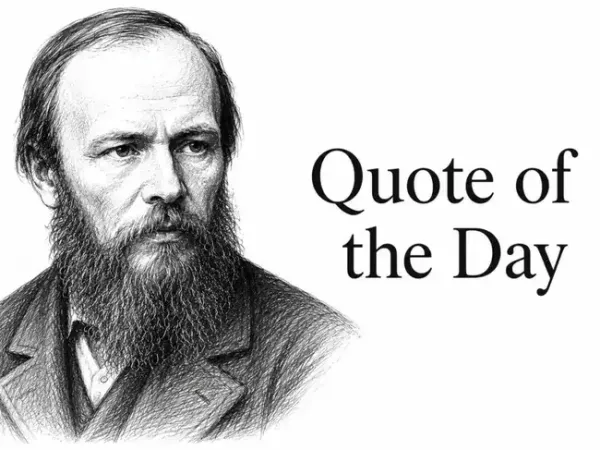
Quote of the Day: Fyodor Dostoevsky was one of Russia’s most influential novelists and philosophers, widely known for exploring the complexities of human psychology, morality, suffering, and redemption. Born in 1821 in Moscow, Dostoevsky endured immense personal hardship throughout his life, including poverty, imprisonment, political persecution, gambling addiction, and chronic illness. These experiences deeply shaped his worldview and later became central themes in his literary works.
Dostoevsky is regarded as a giant of world literature, with works that continue to influence writers, philosophers, and psychologists across generations. Some of his most celebrated novels include Crime and Punishment, The Brothers Karamazov, The Idiot, and Notes from Underground. His writing often examined guilt, faith, alienation, and the contradictions of human nature, making him one of the foundational figures of modern existential thought.
Quote of the Day by Fyodor Dostoevsky
“Happiness does not lie in happiness, but in the achievement of it”
Fyodor Dostoevsky Quote: Meaning interpretation and context
The quote reflects Dostoevsky’s sharp understanding of human behavior and society’s tendency to recognize value too late. Although the quote is widely associated with Dostoevsky, it resonates strongly with the themes found throughout his literary work. Many of his characters struggle with loneliness, rejection, and the desire for recognition while alive.
His stories frequently exposed how society often overlooks individuals until tragedy, death, or loss forces people to appreciate them. The statement also mirrors a broader cultural truth: praise and admiration are often expressed more openly after someone is gone, when regret and reflection replace everyday indifference.
At its core, the quote highlights the irony of human appreciation. People may silently admire someone’s character, talent, or kindness, yet fail to express those feelings while the person is alive. Often, it is only after death that praise becomes public, emotional, and sincere.
The line serves as a commentary on delayed gratitude and society’s habit of taking people for granted. It reminds readers that recognition frequently arrives too late for the person who deserved it.
The quote serves as a reminder to appreciate people while they are still present in our lives and to express gratitude, admiration, and love openly instead of waiting for the “right moment.” It suggests that recognition and kindness should not be reserved only for memorials or farewells, but shared in everyday life when they can truly matter. At the same time, the quote encourages emotional honesty and reflects on society’s tendency to measure a person’s worth only after loss has occurred.
ALSO READ: Quote of the day by Cristiano Ronaldo: 'I think sometimes the best training is to...' - CR7 shares his ultimate performance hack
Dostoevsky is regarded as a giant of world literature, with works that continue to influence writers, philosophers, and psychologists across generations. Some of his most celebrated novels include Crime and Punishment, The Brothers Karamazov, The Idiot, and Notes from Underground. His writing often examined guilt, faith, alienation, and the contradictions of human nature, making him one of the foundational figures of modern existential thought.
Quote of the Day by Fyodor Dostoevsky
“Happiness does not lie in happiness, but in the achievement of it”
Fyodor Dostoevsky Quote: Meaning interpretation and context
The quote reflects Dostoevsky’s sharp understanding of human behavior and society’s tendency to recognize value too late. Although the quote is widely associated with Dostoevsky, it resonates strongly with the themes found throughout his literary work. Many of his characters struggle with loneliness, rejection, and the desire for recognition while alive.
His stories frequently exposed how society often overlooks individuals until tragedy, death, or loss forces people to appreciate them. The statement also mirrors a broader cultural truth: praise and admiration are often expressed more openly after someone is gone, when regret and reflection replace everyday indifference.
At its core, the quote highlights the irony of human appreciation. People may silently admire someone’s character, talent, or kindness, yet fail to express those feelings while the person is alive. Often, it is only after death that praise becomes public, emotional, and sincere.
The line serves as a commentary on delayed gratitude and society’s habit of taking people for granted. It reminds readers that recognition frequently arrives too late for the person who deserved it.
The quote serves as a reminder to appreciate people while they are still present in our lives and to express gratitude, admiration, and love openly instead of waiting for the “right moment.” It suggests that recognition and kindness should not be reserved only for memorials or farewells, but shared in everyday life when they can truly matter. At the same time, the quote encourages emotional honesty and reflects on society’s tendency to measure a person’s worth only after loss has occurred.
ALSO READ: Quote of the day by Cristiano Ronaldo: 'I think sometimes the best training is to...' - CR7 shares his ultimate performance hack