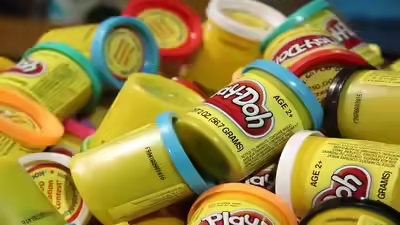
How a Wallpaper Cleaner Became the World-Famous Play-Doh Toy
Long before Play-Doh became one of the world’s most loved children’s toys, it was actually created for a completely different purpose. What is now known as colorful modeling dough once existed as a simple cleaning product designed to remove coal soot from wallpaper.
During the early 1950s, a Cincinnati-based company called Kutol Products was struggling financially. The company’s main product was a soft putty-like substance used to clean black carbon stains left behind by coal heating systems inside homes. At that time, many households relied on coal for warmth, and the smoke often covered walls with thick layers of soot and dust.
Kutol’s cleaning compound worked well because it could lift dirt from wallpaper without damaging the surface. The material was soft, reusable, and non-toxic, making it practical for indoor cleaning. But as the world began changing after World War II, the company suddenly faced a major problem.
The Decline of Coal Heating
As newer and cleaner fuel sources like natural gas and petroleum became more common, people slowly stopped using coal in their homes. Without coal smoke covering walls, the demand for wallpaper cleaner quickly disappeared.
Kutol Products soon found itself close to bankruptcy because the one product keeping the business alive was no longer needed. What once solved a major household problem had suddenly become obsolete.
Everything changed after Joe McVicker, one of the company’s owners, received an unexpected suggestion from his sister-in-law, Kay Zufall.
The Idea That Changed Everything
Kay Zufall worked as a preschool teacher and had recently read about children using modeling materials during art activities. Curious, she introduced Kutol’s soft cleaning putty to her students and noticed that the children absolutely loved playing with it.
The material was easy to shape, soft on the hands, and safe for children to use. What had originally been designed for cleaning walls suddenly revealed a completely new purpose.
Joe McVicker quickly realized the opportunity. The company removed the cleaning detergents from the formula, added pleasant scents, and introduced bright primary colors like red, yellow, and blue. The product was then renamed “Play-Doh,” a title suggested by one of the company’s sales managers.
From Cleaning Product to Childhood Icon
The transformation proved to be a massive success. By 1956, Play-Doh had already started appearing in toy stores and on popular children’s television programs like Captain Kangaroo.
Unlike many modeling clays available at the time, Play-Doh was soft, safe, non-greasy, and easy for children to mold with their hands. Kids could create shapes, flatten them, rebuild them, and continue using the dough again and again.
Its simple design encouraged creativity and imaginative play, helping it become one of the most recognizable toys in the world.
A Global Success Story
Over time, Play-Doh expanded far beyond basic tubs of dough. The brand introduced themed playsets, scented versions, barber shop kits, sparkle dough, and many other creative products that became favorites among children worldwide.
Today, Play-Doh is valued at hundreds of millions of dollars and remains one of the most successful toy brands ever created.
A Lesson in Reinvention
What makes the Play-Doh story remarkable is that it was never originally meant to be a toy. Its success came from a company willing to rethink a failing product in a completely different way.
If coal heating had never disappeared, Play-Doh may have remained nothing more than a wallpaper cleaner. Instead, a simple idea from a preschool teacher transformed an outdated household product into a global childhood icon.
The story remains one of the best examples of how creativity and reinvention can turn failure into extraordinary success.