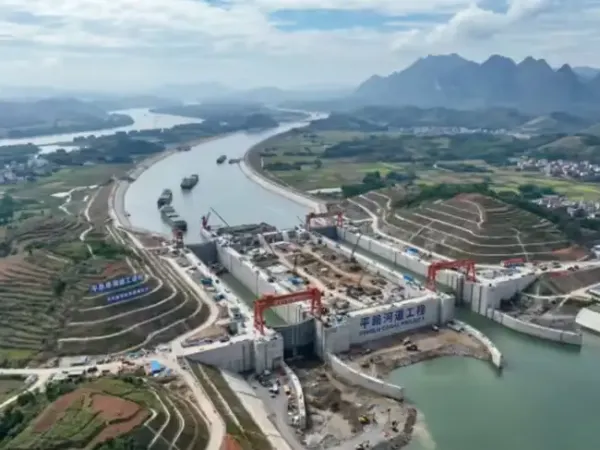
China is undertaking one of its most ambitious infrastructure projects — the construction of a 134-kilometre-long Pinglu Canal in Guangxi province. This inland waterway will directly connect the Xijiang River to the Beibu Gulf, offering a much shorter route to the sea. According to a report by TOI World Desk, the project is expected to significantly reduce transportation costs and time, thereby strengthening China’s dominance in global supply chains.
(With TOI inputs)
China Canal Project: What is the 134-Kilometre Waterway
The Pinglu Canal, currently under construction in southern China’s Guangxi Zhuang Autonomous Region, will link the Xijiang River system with the Beibu Gulf. Once completed, it will allow large cargo vessels to navigate directly, bypassing longer coastal routes through Guangdong province.Why This Massive Canal Matters for Global Trade
The canal is projected to reduce shipping distance by around 561 kilometres and save approximately 5.2 billion yuan (about $750 million) annually in logistics costs. By providing a more efficient route, it will benefit exporters, boost regional economies, and further consolidate China’s position in international trade.Engineering Scale and Environmental Concerns
Building a 134-km canal is an engineering challenge of enormous scale. While Chinese officials claim modern techniques will minimise ecological damage, environmental experts have raised concerns about ecosystem disruption, water diversion, and long-term sustainability.Strategic Importance of the Project
Beyond economics, the canal holds strategic value. It will improve internal supply chain efficiency, reduce dependence on congested coastal routes, and enhance connectivity with Southeast Asia.(With TOI inputs)