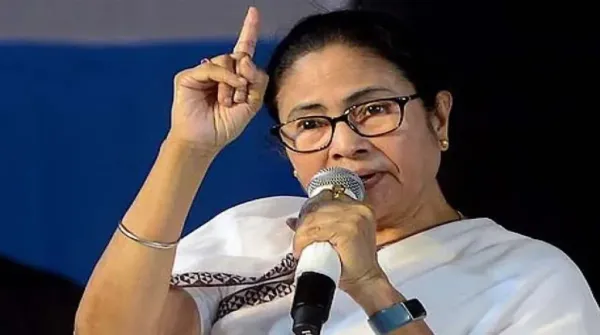
Kolkata/New Delhi: The results of West Bengal Assembly elections have created a stir in the politics of the state. Despite Bharatiya Janata Party (BJP) getting a clear majority and Trinamool Congress (TMC) suffering a crushing defeat, a statement by Chief Minister Mamata Banerjee has shocked everyone. Mamta Banerjee has clearly said that she will not resign from the post. His stubborn stance has now given rise to a new constitutional debate. Everyone wants to know whether a Chief Minister can forcefully remain on the chair even after losing? And if he does not resign, can there be a case against him?
What does the Constitution of India say?
According to the rules of the Indian Constitution, the Chief Minister and his Council of Ministers can remain in office only as long as they have a majority in the Legislative Assembly and the Governor has the confidence in them. As soon as the election results make it clear that the ruling party does not have a majority, the Chief Minister loses the moral and legal basis to continue in office. Constitutional experts believe that after losing the elections, the Chief Minister can remain only in the role of a ‘caretaker’ until a new government is formed. During this period he cannot take any major policy decision.
What are the options available to the Governor if he does not resign?
If a Chief Minister refuses to step down even after losing the election, the Governor cannot sit as a mute spectator. According to experts, in such a situation the Governor has many important powers. The Governor removes the current Chief Minister from the post Dismissed Can do. Apart from this, he can invite the new party that gets majority to form the government. If the situation worsens and the formation of the new government is deliberately obstructed, the Governor will consider it a ‘failure of the constitutional machinery’ in the state. President’s Rule Can also recommend installation.
Can a case be registered against Mamata Banerjee?
According to legal experts, no ‘criminal case’ or lawsuit can be filed directly against a Chief Minister just because he has not resigned. It is primarily a constitutional and part of a political process. However, if a Chief Minister starts acting against the dignity of the Constitution without leaving the post or takes decisions which are not within his jurisdiction, then the Central Government and the Governor can take strict administrative steps. At present, the eyes of the people of Bengal and the entire country are fixed on the next step of Raj Bhavan.
-
Soak mangoes for 30 minutes before eating, if you do not do so then definitely do so from now on.

-
3 Zodiac Signs Attract Financial Success All Week, From May 11 – 17, 2026

-
Southeast Asia’s largest economy welcomes nearly 3.5 million foreign tourists in first quarter

-
Jennifer Lopez, Rahul Khanna, Chrissy Teigen: Why are celebs inviting us into their bathrooms?

-
Working in a cold room all day in the office, skin-hair damage! How to stop?