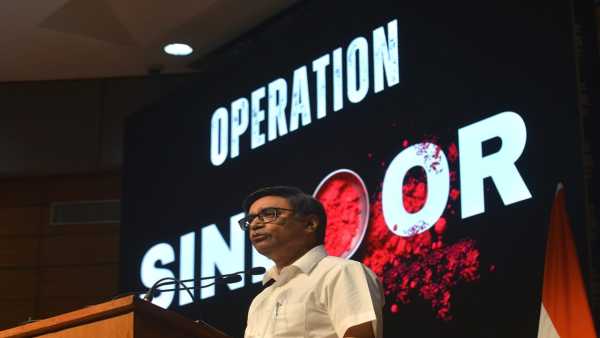
New Delhi: One year after Operation Sindoor, the campaign is being remembered as a defining moment in Indian military history. Launched in response to the Pahalgam terror attack in Jammu and Kashmir and aimed at targeting terror and military infrastructure across the border in Pakistan, Operation Sindoor emerged as a broader “whole-of-nation” effort in which the military, private industry, government agencies and civilian administration worked together in a coordinated manner.
Private industry, ISRO and agencies worked together during operation
One of the major features of Operation Sindoor was the role played by private firms and startups in the development and deployment of loitering munitions, or suicide drones, as well as Counter-UAS systems.
The operation also demonstrated the growing importance of the iDEX framework, through which private innovators provided real-time solutions during combat. At the strategic level, ISRO played a crucial role during the operation. At least 10 satellites were reportedly dedicated around the clock to providing high-resolution surveillance support for the Army, Navy and Air Force.
The operation also saw coordination between multiple government agencies beyond the battlefield. Agencies worked together to counter misinformation in real time and launched media literacy campaigns aimed at helping citizens identify fake news and state-sponsored propaganda.
Instead of different military services competing separately for platforms and resources, the office of the Chief of Defence Staff (CDS) treated procurement and logistics as a single integrated block. This ensured that Army intelligence, Air Force precision and Naval surveillance operated using the same data set.
Combining civil administration, diplomacy and military objectives
Operation Sindoor also reflected close integration between civilian administration and military objectives. Civil servants and district administrators were reportedly briefed alongside military planners to help manage the domestic front during the operation. This included conducting nationwide mock drills to build public confidence, while also managing the information environment to prevent panic and propaganda.
The government also sought to present a unified political front internationally during the operation. It sent seven bipartisan parliamentary delegations to 32 countries, with representation from opposition parties as well. These delegations conveyed India’s joint and resolute fight against terrorism to partner countries across the world, ultimately demonstrating that conflict today is no longer treated as the responsibility of only the Army or Air Force, but is a coordinated national effort.
-
“Celebrating the Double Shift of India’s Working Moms”

-
Jiahao Shen Revisits the Wei–Jin Age Through Ruan Ji and Ji Kang’s Search for Spiritual Survival

-
Fly Bharathi Group & SP Plus AG, Switzerland Announce Landmark Investment Initiative in India
-
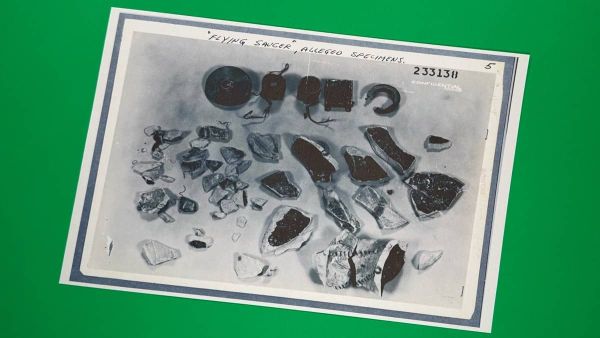
From Aldrin’s Mystery Light To 90-Degree Turns: Pentagon Releases UFO Files As Trump Invites Public To Decide ‘What The Hell Is Going On’
-
Suvendu Adhikari’s Swearing-In As Bengal CM Today; PM To Attend Ceremony As Kolkata Police Enforce Traffic Curbs Amid Heightened Security | Check Routes