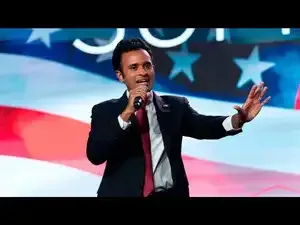
Indian-origin and American-born Vivek Ramaswamy’s victory in the Ohio Republican primary is more than a routine political milestone. It marks the ascent of a figure who has repeatedly clashed with the very movement he depends on. The biotech entrepreneur-turned-politician, once dismissed as a long-shot presidential hopeful, has now secured the GOP nomination for governor. His win, backed by Donald Trump and supported by figures like JD Vance, shows both acceptance and unease within Trump loyalist MAGA crowd. Ramaswamy has not only enraged the MAGA base with provocative ideas but still managed to ride the MAGA wave.
The outsider who tried to inherit MAGA
Ramaswamy first burst into national prominence during the 2024 Republican presidential primaries. He positioned himself as an unapologetic defender of Trump-era ideas while attempting to become their next standard bearer. That balancing act immediately triggered suspicion among Trump loyalists. Unlike traditional challengers, Ramaswamy avoided direct attacks on Trump and instead targeted other Republicans. This earned him visibility but also raised doubts. Many in the MAGA base saw him as overly calculated, a candidate trying to inherit a movement without having built it. His early exit from the race and quick endorsement of Trump helped dispel some of that distrust, yet it never fully disappeared.
What emerged from that campaign was a pattern that would define his politics. Ramaswamy would align himself with MAGA’s core instincts while reserving the right to challenge its assumptions. That dual approach brought both attention and backlash.
Also Read | Vivek Ramaswamy wins Republican nomination for Ohio governor after Trump's endorsement
The “mediocrity” controversy
The most defining rupture came after Trump had won the presidential election and though Ramaswamy had quit DOGE, he was still a leading Republican figure and picked by Trump for Ohio governor elections. He posted a sharply worded critique of American culture on X. He argued that the US had begun to celebrate mediocrity over excellence and contrasted it with what he described as a stronger work ethic among immigrant communities, especially Indians.
The reaction from MAGA circles was immediate and fierce. Critics accused him of insulting American workers and echoing elitist talking points. For a movement built on nationalist pride, the suggestion that native-born Americans were culturally complacent and intellectually deficient struck a raw nerve among the MAGA base.
Despite a huge backlash, Ramaswamy did not fully retreat. Instead, he reframed his argument as a call for national revival. That response was telling. He did not abandon the critique, but he recast it in the language of patriotism. It was one of his clearest examples of tightrope politics. He provokes outrage, then translate it into a message the base could still claim as its own.
Immigration fault lines
The backlash over the “mediocrity” comments fed directly into another major point of friction, immigration. Ramaswamy has consistently supported expanding high-skilled immigration, arguing that the US must compete globally for talent. This stance placed him at odds with a powerful segment of MAGA that prioritises restricting immigration to protect domestic workers. For critics, his views sounded closer to Silicon Valley than to economic nationalism.
Yet Ramaswamy again resisted a full pivot. He framed high-skilled immigration as a tool for American dominance rather than a concession to globalism. By tying the policy to national strength, he attempted to neutralise ideological resistance without abandoning his position. It did not eliminate criticism, but it prevented a complete rupture with the MAGA base.
Faith and the limits of acceptance
If policy disagreements created friction, religion exposed a deeper divide. Ramaswamy, a practicing Hindu, has faced persistent skepticism from parts of the Christian conservative base that forms a core pillar of MAGA. This tension intensifies when his remarks about his religious beliefs are interpreted as rejection of core Christian doctrines. For some voters, this is not a minor problem but a fundamental barrier.
Ramaswamy’s response has been careful. He emphasises shared values such as faith, family and national identity while avoiding direct theological confrontation. It is another balancing act. He neither disavows his own beliefs nor allows the religious issue to dominate his political identity.
A recent viral clip where he said he does not believe Jesus is “the son of God" reignited backlash but he has tried to accept Jesus while still keeping space for his own religious faith.
Identity politics and the paradox of rejection
Ramaswamy has repeatedly called for an end to identity politics. Yet his own rise has been entangled in questions of identity. As an Indian-origin, American-born candidate, he has faced both explicit and subtle pushback from within the right. During his campaigns, including the Ohio race, critics occasionally highlighted his background in ways that suggested he was not fully representative of “traditional” America. At the same time, his denunciation of identity politics drew accusations of hypocrisy, especially after his earlier cultural critiques. Here again, his strategy was not to engage every attack head-on. Instead, he doubled down on a narrative of individual merit and national unity. He sought to make his personal story an example of the American dream rather than a point of division.
Surviving MAGA
Ramaswamy’s victory in Ohio brings these tensions into sharper focus. Backed by Trump and supported by the state’s Republican establishment, he entered the race with clear advantages. His personal wealth, name recognition and early consolidation of votes helped him avoid a primary challenger. Yet the underlying frictions never fully vanished. His campaign unfolded against the backdrop of earlier controversies, from cultural criticism to immigration debates. That he emerged victorious suggests not that those issues disappeared, but that he successfully managed them. His Democratic opponent, Amy Acton, is likely to challenge him on economic and pandemic-related issues. But the more interesting question lies within his own coalition. Can a candidate who has repeatedly unsettled MAGA instincts continue to rely on its support?
Ramaswamy’s political journey so far is defined by contradiction. He has been both insider and outsider, loyalist and critic. He has provoked the MAGA base, absorbed its backlash and then reinterpreted his arguments in ways that keep him within its orbit. His success in the Ohio primary shows that this strategy, risky as it is, can work. It requires constant articulation, a willingness to push boundaries without breaking them. Few politicians attempt it and fewer still succeed. Whether this approach can carry him through the election and beyond is an open question. But one thing is already clear. Ramaswamy has not simply adapted to MAGA base but provoked it and then survived it.
The outsider who tried to inherit MAGA
Ramaswamy first burst into national prominence during the 2024 Republican presidential primaries. He positioned himself as an unapologetic defender of Trump-era ideas while attempting to become their next standard bearer. That balancing act immediately triggered suspicion among Trump loyalists. Unlike traditional challengers, Ramaswamy avoided direct attacks on Trump and instead targeted other Republicans. This earned him visibility but also raised doubts. Many in the MAGA base saw him as overly calculated, a candidate trying to inherit a movement without having built it. His early exit from the race and quick endorsement of Trump helped dispel some of that distrust, yet it never fully disappeared.
What emerged from that campaign was a pattern that would define his politics. Ramaswamy would align himself with MAGA’s core instincts while reserving the right to challenge its assumptions. That dual approach brought both attention and backlash.
Also Read | Vivek Ramaswamy wins Republican nomination for Ohio governor after Trump's endorsement
The “mediocrity” controversy
The most defining rupture came after Trump had won the presidential election and though Ramaswamy had quit DOGE, he was still a leading Republican figure and picked by Trump for Ohio governor elections. He posted a sharply worded critique of American culture on X. He argued that the US had begun to celebrate mediocrity over excellence and contrasted it with what he described as a stronger work ethic among immigrant communities, especially Indians.
The reaction from MAGA circles was immediate and fierce. Critics accused him of insulting American workers and echoing elitist talking points. For a movement built on nationalist pride, the suggestion that native-born Americans were culturally complacent and intellectually deficient struck a raw nerve among the MAGA base.
Despite a huge backlash, Ramaswamy did not fully retreat. Instead, he reframed his argument as a call for national revival. That response was telling. He did not abandon the critique, but he recast it in the language of patriotism. It was one of his clearest examples of tightrope politics. He provokes outrage, then translate it into a message the base could still claim as its own.
Immigration fault lines
The backlash over the “mediocrity” comments fed directly into another major point of friction, immigration. Ramaswamy has consistently supported expanding high-skilled immigration, arguing that the US must compete globally for talent. This stance placed him at odds with a powerful segment of MAGA that prioritises restricting immigration to protect domestic workers. For critics, his views sounded closer to Silicon Valley than to economic nationalism.
Yet Ramaswamy again resisted a full pivot. He framed high-skilled immigration as a tool for American dominance rather than a concession to globalism. By tying the policy to national strength, he attempted to neutralise ideological resistance without abandoning his position. It did not eliminate criticism, but it prevented a complete rupture with the MAGA base.
Faith and the limits of acceptance
If policy disagreements created friction, religion exposed a deeper divide. Ramaswamy, a practicing Hindu, has faced persistent skepticism from parts of the Christian conservative base that forms a core pillar of MAGA. This tension intensifies when his remarks about his religious beliefs are interpreted as rejection of core Christian doctrines. For some voters, this is not a minor problem but a fundamental barrier.
Ramaswamy’s response has been careful. He emphasises shared values such as faith, family and national identity while avoiding direct theological confrontation. It is another balancing act. He neither disavows his own beliefs nor allows the religious issue to dominate his political identity.
A recent viral clip where he said he does not believe Jesus is “the son of God" reignited backlash but he has tried to accept Jesus while still keeping space for his own religious faith.
Identity politics and the paradox of rejection
Ramaswamy has repeatedly called for an end to identity politics. Yet his own rise has been entangled in questions of identity. As an Indian-origin, American-born candidate, he has faced both explicit and subtle pushback from within the right. During his campaigns, including the Ohio race, critics occasionally highlighted his background in ways that suggested he was not fully representative of “traditional” America. At the same time, his denunciation of identity politics drew accusations of hypocrisy, especially after his earlier cultural critiques. Here again, his strategy was not to engage every attack head-on. Instead, he doubled down on a narrative of individual merit and national unity. He sought to make his personal story an example of the American dream rather than a point of division.
Surviving MAGA
Ramaswamy’s victory in Ohio brings these tensions into sharper focus. Backed by Trump and supported by the state’s Republican establishment, he entered the race with clear advantages. His personal wealth, name recognition and early consolidation of votes helped him avoid a primary challenger. Yet the underlying frictions never fully vanished. His campaign unfolded against the backdrop of earlier controversies, from cultural criticism to immigration debates. That he emerged victorious suggests not that those issues disappeared, but that he successfully managed them. His Democratic opponent, Amy Acton, is likely to challenge him on economic and pandemic-related issues. But the more interesting question lies within his own coalition. Can a candidate who has repeatedly unsettled MAGA instincts continue to rely on its support?
Ramaswamy’s political journey so far is defined by contradiction. He has been both insider and outsider, loyalist and critic. He has provoked the MAGA base, absorbed its backlash and then reinterpreted his arguments in ways that keep him within its orbit. His success in the Ohio primary shows that this strategy, risky as it is, can work. It requires constant articulation, a willingness to push boundaries without breaking them. Few politicians attempt it and fewer still succeed. Whether this approach can carry him through the election and beyond is an open question. But one thing is already clear. Ramaswamy has not simply adapted to MAGA base but provoked it and then survived it.