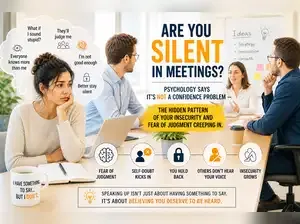
In almost every workplace meeting, there are a few people who rarely speak. They listen, take notes, and observe, but contribute little verbally. This silence is often misunderstood as a lack of confidence, preparation, or interest. However, psychology suggests a more nuanced explanation. People who stay quiet in meetings are not necessarily disengaged; they may be processing information differently, navigating workplace dynamics, or managing internal pressures that shape how and when they speak.
Introverts often prefer to think deeply and speak only when they feel their input adds value. In fast-paced meetings, this can make them appear silent, even though they are actively engaged.
Another key concept is evaluation apprehension, where individuals hesitate to speak due to fear of being judged. This is closely linked to social anxiety and workplace performance pressure.
Research cited by the American Psychological Association shows that fear of negative evaluation can significantly reduce participation in group settings. Employees may worry about saying something incorrect, being misunderstood, or facing criticism.
This connects to the concept of psychological safety, popularised by Amy Edmondson. In environments where individuals feel safe to express ideas without fear of embarrassment or punishment, participation increases. In contrast, low psychological safety leads to silence.
Some individuals have a reflective cognitive style, meaning they prefer to analyse information thoroughly before responding. This aligns with Dual Process Theory, which distinguishes between fast, intuitive thinking and slow, deliberate thinking.
People who rely on slower, analytical thinking may need more time to form responses. In meetings that move quickly, they may choose to remain silent rather than offer incomplete thoughts.
Group dynamics also play a role. The bystander effect, a concept studied by John Darley and Bibb Latané, suggests that individuals are less likely to act when others are present.
In meetings, this can translate into silence. When multiple people are involved, individuals may assume someone else will speak, reducing their own likelihood of contributing.
Silence can also be a learned response. Employees who have previously been interrupted, ignored, or criticised may choose to withdraw in future meetings.
This behaviour aligns with learned helplessness, where repeated negative experiences reduce the motivation to act. Over time, individuals may believe that speaking up will not make a difference.
Similarly, remote work has highlighted participation gaps. Virtual meetings often amplify silence, as individuals may feel less comfortable interrupting or speaking without clear cues.
Research on active listening shows that individuals who listen more tend to understand group dynamics better. Their contributions, when they choose to speak, are often thoughtful and well-structured.
This misinterpretation highlights the importance of understanding different communication styles rather than assuming one approach fits all.
Not always. It can reflect thoughtful processing or lack of psychological safety rather than insecurity.
Silence Is Not Always Insecurity: The Introversion Factor
One of the most common explanations lies in personality differences. According to personality research, introverts tend to process information internally before speaking. Psychologist Carl Jung introduced the idea that introversion is not about shyness but about energy orientation.Introverts often prefer to think deeply and speak only when they feel their input adds value. In fast-paced meetings, this can make them appear silent, even though they are actively engaged.
Evaluation Apprehension and Fear of Judgment
Another key concept is evaluation apprehension, where individuals hesitate to speak due to fear of being judged. This is closely linked to social anxiety and workplace performance pressure.Research cited by the American Psychological Association shows that fear of negative evaluation can significantly reduce participation in group settings. Employees may worry about saying something incorrect, being misunderstood, or facing criticism.
Power Dynamics and Psychological Safety
Silence in meetings is also influenced by workplace hierarchy. When employees feel that their opinions are not valued or may be dismissed, they are less likely to speak.This connects to the concept of psychological safety, popularised by Amy Edmondson. In environments where individuals feel safe to express ideas without fear of embarrassment or punishment, participation increases. In contrast, low psychological safety leads to silence.
Cognitive Processing Styles: Thinking Before Speaking
Some individuals have a reflective cognitive style, meaning they prefer to analyse information thoroughly before responding. This aligns with Dual Process Theory, which distinguishes between fast, intuitive thinking and slow, deliberate thinking.People who rely on slower, analytical thinking may need more time to form responses. In meetings that move quickly, they may choose to remain silent rather than offer incomplete thoughts.
The Bystander Effect in Group Settings
Group dynamics also play a role. The bystander effect, a concept studied by John Darley and Bibb Latané, suggests that individuals are less likely to act when others are present.In meetings, this can translate into silence. When multiple people are involved, individuals may assume someone else will speak, reducing their own likelihood of contributing.
Past Experiences and Learned Behaviour
Silence can also be a learned response. Employees who have previously been interrupted, ignored, or criticised may choose to withdraw in future meetings.This behaviour aligns with learned helplessness, where repeated negative experiences reduce the motivation to act. Over time, individuals may believe that speaking up will not make a difference.
Real-Life Examples in Modern Work Culture
In recent years, companies have begun addressing this issue. Leaders like Satya Nadella have emphasised inclusive communication, encouraging quieter employees to share their perspectives.Similarly, remote work has highlighted participation gaps. Virtual meetings often amplify silence, as individuals may feel less comfortable interrupting or speaking without clear cues.
The Hidden Strength of Quiet Employees
Psychologists note that quiet individuals often bring valuable strengths, such as deep thinking, careful analysis, and strong listening skills.Research on active listening shows that individuals who listen more tend to understand group dynamics better. Their contributions, when they choose to speak, are often thoughtful and well-structured.
Why Silence Can Be Misinterpreted
Despite these strengths, silence is often misread in professional settings. It may be seen as disengagement or lack of initiative, which can affect career growth.This misinterpretation highlights the importance of understanding different communication styles rather than assuming one approach fits all.
How to Encourage More Participation
Psychologists suggest practical ways to create more inclusive meetings:- Pause and invite input from quieter members
- Share agendas in advance to allow preparation time
- Create smaller discussion groups for easier participation
- Build psychological safety through supportive leadership