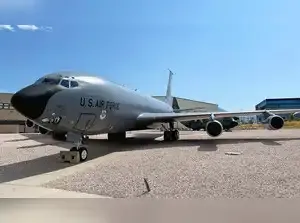
The sudden disappearance of a KC-135 Stratotanker over Qatar has triggered global attention. The US military aircraft, often called a “flying gas station,” reportedly issued a 7700 distress signal while flying over the Persian Gulf. That single code—used worldwide to indicate an emergency—has raised serious questions. Yet, despite the alarm, there is still no official confirmation of a crash or hostile action from US Central Command or the Pentagon.
The aircraft had taken off from Al Dhafra Air Base and was operating in a region already strained by geopolitical tensions. Flight tracking platforms like Flightradar24 showed unusual movement patterns before the signal loss. Reports indicate the plane circled mid-air before descending, which adds complexity to the situation.
The KC-135 tanker is not a glamorous fighter jet. It does not make headlines in peacetime. But without it, the entire architecture of American air power in the Middle East quietly collapses. The aircraft serves as a flying gas station — a lifeline that keeps bombers, fighters, and surveillance planes aloft for hours beyond their natural range.
Lose one KC-135 tanker, and entire missions get scrubbed. Lose one in a contested zone, under murky circumstances, and the strategic implications run far deeper than the loss of the airframe itself.
A 7700 squawk does not always mean disaster. In high-tension zones like the Persian Gulf, electronic interference, GPS jamming, and tactical maneuvers often disrupt signals. That nuance matters. It separates speculation from verified risk. And right now, facts remain limited.
So what really happened to the KC-135 Stratotanker over Qatar? And why does this incident feel bigger than just a missing aircraft?
This is significant. A 7700 alert is not issued casually. It can indicate mechanical failure, medical emergency, or onboard system malfunction. However, in conflict-heavy zones, external factors like signal interference can also trigger irregular readings.
Flight tracking data, publicly visible through open-source intelligence platforms, painted an unsettling picture. The KC-135 tanker departed Al Dhafra Air Base in the United Arab Emirates, a major U.S. hub for regional air operations. It entered a holding pattern — flying slow circles, a classic sign that a crew is troubleshooting a problem — before beginning a controlled descent. Its heading appeared to point toward Al Udeid Air Base in Qatar, the largest U.S. military air hub in the region.
Then the signal disappeared.
About an hour after the 7700 code was first detected, the KC-135 tanker's ADS-B transponder — the system that broadcasts real-time position data — went completely dark. Two H125 light utility helicopters were launched from Al Udeid shortly after, suggesting that someone with authority knew something had gone wrong and was responding to it. That response alone confirms this was not routine.
Importantly, neither CENTCOM nor the Pentagon has confirmed any crash, forced landing, or loss of the aircraft. No debris, no rescue mission, no official emergency declaration. That absence of confirmation is telling. It suggests the situation may not be as catastrophic as initial reports imply.
Aircraft operating here often face disruptions. Radar drops. Transponder glitches. Temporary communication blackouts. These events can trigger emergency codes—even if the aircraft itself is not in immediate danger.
Another possibility is a technical issue. The KC-135 is a decades-old platform. While heavily upgraded, it still relies on legacy systems. A mechanical fault, pressurization issue, or fuel system anomaly could explain the distress call.
Yet, without official confirmation, every explanation remains speculative. The key takeaway: a 7700 signal signals urgency, not necessarily catastrophe.
In this case, the KC-135 Stratotanker missing over Qatar may not be missing at all. It may have landed safely at a military base not visible on civilian radar. Or it could still be airborne under restricted tracking protocols.
There’s also precedent. Similar incidents in the region have occurred where aircraft briefly disappeared from tracking systems due to jamming or operational secrecy. In most cases, they later reappeared or were confirmed safe.
So far, no hostile action has been confirmed. No claim of attack. No acknowledgment from Iran. That silence is critical. It suggests caution is needed before drawing conclusions.
That attack fundamentally changed how defense planners think about KC-135 tanker operations in the region. The aircraft is enormous, slow, and fuel-laden. It has to fly predictable patterns to do its job — holding steady while fighters maneuver alongside to refuel. That predictability makes it trackable. And in an environment where Iran-backed forces have demonstrated the will and the capability to strike such assets, operating a KC-135 tanker over the Persian Gulf is no longer the routine mission it once was.
In modern warfare, that capability is decisive. Without aerial refueling, long-range missions become limited. With it, aircraft can stay airborne for hours longer, project power farther, and respond faster.
The KC-135 has been in service for over 60 years. It supports not just the US Air Force, but also allied operations. It can carry cargo, evacuate wounded personnel, and serve as a strategic logistics asset.
That’s why any KC-135 Stratotanker distress signal draws attention. It’s not just about one aircraft. It’s about what that aircraft represents in a volatile region.
There is no official confirmation that the KC-135 Stratotanker is lost or crashed. Authorities, including US Central Command, have not reported any wreckage, emergency landing, or rescue operation. In many cases, military aircraft disappear from public radar due to operational secrecy or electronic interference, not because of an actual accident.
Q2. Does it indicate a crash or emergency attack?
A 7700 distress signal signals a general emergency but does not automatically mean a crash or attack. In high-tension zones like the Persian Gulf, GPS jamming and signal disruptions can trigger such alerts. Without official confirmation from the Pentagon, the situation remains uncertain but not necessarily catastrophic.
The aircraft had taken off from Al Dhafra Air Base and was operating in a region already strained by geopolitical tensions. Flight tracking platforms like Flightradar24 showed unusual movement patterns before the signal loss. Reports indicate the plane circled mid-air before descending, which adds complexity to the situation.
The KC-135 tanker is not a glamorous fighter jet. It does not make headlines in peacetime. But without it, the entire architecture of American air power in the Middle East quietly collapses. The aircraft serves as a flying gas station — a lifeline that keeps bombers, fighters, and surveillance planes aloft for hours beyond their natural range.
Lose one KC-135 tanker, and entire missions get scrubbed. Lose one in a contested zone, under murky circumstances, and the strategic implications run far deeper than the loss of the airframe itself.
A 7700 squawk does not always mean disaster. In high-tension zones like the Persian Gulf, electronic interference, GPS jamming, and tactical maneuvers often disrupt signals. That nuance matters. It separates speculation from verified risk. And right now, facts remain limited.
So what really happened to the KC-135 Stratotanker over Qatar? And why does this incident feel bigger than just a missing aircraft?
KC-135 Stratotanker distress signal over Qatar: what we know so far
The KC-135 Stratotanker distress signal incident unfolded rapidly. After departing from Al Dhafra, the aircraft entered operational airspace over the Gulf. Data suggests it followed a circular holding pattern before initiating descent. Shortly after, the transponder emitted a 7700 code, signaling a general emergency.This is significant. A 7700 alert is not issued casually. It can indicate mechanical failure, medical emergency, or onboard system malfunction. However, in conflict-heavy zones, external factors like signal interference can also trigger irregular readings.
Flight tracking data, publicly visible through open-source intelligence platforms, painted an unsettling picture. The KC-135 tanker departed Al Dhafra Air Base in the United Arab Emirates, a major U.S. hub for regional air operations. It entered a holding pattern — flying slow circles, a classic sign that a crew is troubleshooting a problem — before beginning a controlled descent. Its heading appeared to point toward Al Udeid Air Base in Qatar, the largest U.S. military air hub in the region.
Then the signal disappeared.
About an hour after the 7700 code was first detected, the KC-135 tanker's ADS-B transponder — the system that broadcasts real-time position data — went completely dark. Two H125 light utility helicopters were launched from Al Udeid shortly after, suggesting that someone with authority knew something had gone wrong and was responding to it. That response alone confirms this was not routine.
Importantly, neither CENTCOM nor the Pentagon has confirmed any crash, forced landing, or loss of the aircraft. No debris, no rescue mission, no official emergency declaration. That absence of confirmation is telling. It suggests the situation may not be as catastrophic as initial reports imply.
Why did the KC-135 Stratotanker issue a 7700 distress signal?
Understanding the KC-135 Stratotanker distress signal requires context. The Persian Gulf region is known for electronic warfare activity. GPS spoofing and signal jamming are increasingly common, especially amid rising tensions involving Iran and allied groups.Aircraft operating here often face disruptions. Radar drops. Transponder glitches. Temporary communication blackouts. These events can trigger emergency codes—even if the aircraft itself is not in immediate danger.
Another possibility is a technical issue. The KC-135 is a decades-old platform. While heavily upgraded, it still relies on legacy systems. A mechanical fault, pressurization issue, or fuel system anomaly could explain the distress call.
Yet, without official confirmation, every explanation remains speculative. The key takeaway: a 7700 signal signals urgency, not necessarily catastrophe.
Is the KC-135 Stratotanker missing or just off radar?
The phrase “missing aircraft” can be misleading. In aviation terms, “missing” often simply means lost from public tracking systems. Military aircraft frequently disable or limit transponder data for security reasons.In this case, the KC-135 Stratotanker missing over Qatar may not be missing at all. It may have landed safely at a military base not visible on civilian radar. Or it could still be airborne under restricted tracking protocols.
There’s also precedent. Similar incidents in the region have occurred where aircraft briefly disappeared from tracking systems due to jamming or operational secrecy. In most cases, they later reappeared or were confirmed safe.
So far, no hostile action has been confirmed. No claim of attack. No acknowledgment from Iran. That silence is critical. It suggests caution is needed before drawing conclusions.
The March 2026 precedent nobody has forgotten
This is not the first KC-135 tanker the United States has lost in recent months. In March 2026, a KC-135 was destroyed in a strike in western Iraq. All six crew members on board were killed. The Islamic Resistance in Iraq — an umbrella coalition of Iran-backed armed factions — claimed responsibility. It was one of the deadliest single incidents for U.S. Air Force personnel in years, and it sent a clear message: these aircraft, long considered safe behind the front lines, are now being targeted.That attack fundamentally changed how defense planners think about KC-135 tanker operations in the region. The aircraft is enormous, slow, and fuel-laden. It has to fly predictable patterns to do its job — holding steady while fighters maneuver alongside to refuel. That predictability makes it trackable. And in an environment where Iran-backed forces have demonstrated the will and the capability to strike such assets, operating a KC-135 tanker over the Persian Gulf is no longer the routine mission it once was.
What is the KC-135 Stratotanker and why it matters in global conflicts
The KC-135 Stratotanker is not just another aircraft. It is a backbone of US military air operations. Built by Boeing, this aircraft enables mid-air refueling, extending the range and endurance of fighter jets, bombers, and surveillance planes.In modern warfare, that capability is decisive. Without aerial refueling, long-range missions become limited. With it, aircraft can stay airborne for hours longer, project power farther, and respond faster.
The KC-135 has been in service for over 60 years. It supports not just the US Air Force, but also allied operations. It can carry cargo, evacuate wounded personnel, and serve as a strategic logistics asset.
That’s why any KC-135 Stratotanker distress signal draws attention. It’s not just about one aircraft. It’s about what that aircraft represents in a volatile region.
FAQs:
Q1. Is the aircraft confirmed lost or safe?There is no official confirmation that the KC-135 Stratotanker is lost or crashed. Authorities, including US Central Command, have not reported any wreckage, emergency landing, or rescue operation. In many cases, military aircraft disappear from public radar due to operational secrecy or electronic interference, not because of an actual accident.
Q2. Does it indicate a crash or emergency attack?
A 7700 distress signal signals a general emergency but does not automatically mean a crash or attack. In high-tension zones like the Persian Gulf, GPS jamming and signal disruptions can trigger such alerts. Without official confirmation from the Pentagon, the situation remains uncertain but not necessarily catastrophic.