
For close to a decade, localisation — often framed as In-Country Value (ICV) — has been a cornerstone of the UAE’s industrial strategy. It has delivered tangible progress: increased local procurement, strengthened supplier ecosystems, and created manufacturing jobs.
However, the next phase of economic transformation demands a shift in mindset. The question is no longer how much value is retained locally, but how value is created in the first place.
The next level of ICV (In-Country Value) is about embedding localisation into the design of products, supply chains, and industrial ecosystems, so that local value creation becomes a natural outcome rather than a forced constraint.
Vasily Khramov.
From measuring value to designing for value
Traditional ICV models focus on outcomes: local spend, workforce nationalization, or supplier participation. While necessary, these metrics are backward-looking. The next level requires a forward-looking approach — designing products and systems in ways that make localisation economically viable and globally competitive.
This is particularly relevant to the UAE’s industrial ambitions. The “Operation 300bn” strategy aims to expand the industrial sector’s contribution to GDP to over twice its current size by 2031. Achieving this will not come from incremental improvements alone. It requires rethinking how products are conceived and manufactured.
In many industries, products are designed in ways that lock in dependence on global supply chains, including highly specialised components, fragmented production, or proprietary technologies. In such cases, local manufacturing becomes structurally uncompetitive, regardless of incentives.
By contrast, design-for-localisation principles such as modular architectures, standardized components, and revised specifications can unlock local production by aligning product requirements with domestic supplier capabilities. Localisation, in this sense, is not imposed; it is engineered.
Localisation as a competitiveness lever: Designing for value, resilience, and speed to market
A common misconception is that localisation comes at the expense of competitiveness. In reality, when designed properly, it strengthens it.
Up to 80 per cent of product cost, complexity, and supplier dependency is determined at the design stage. If products are designed with narrow specifications and limited supplier options, localisation will always struggle. If they are designed for flexibility and local capabilities, local participation increases naturally, often with cost advantages.
Critically, it strengthens resilience. Recent disruptions have exposed the fragility of global supply chains. The traditional response, adding more suppliers or inventory, addresses symptoms, not root causes. A more durable solution lies in design: products can be engineered to allow component substitution, multiple material inputs, and compatibility with different manufacturing environments. This reduces structural dependency on single sources and creates resilience by design, not just operational redundancy.
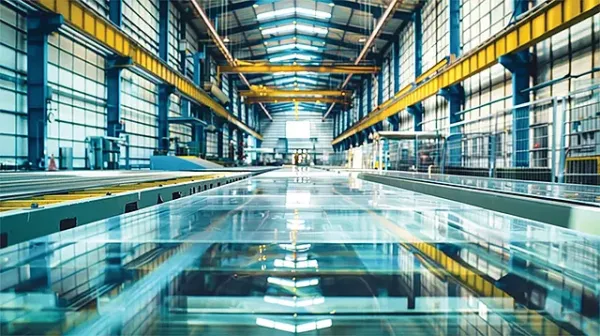
To capture these benefits, companies must shift from viewing localisation as compliance to treating it as a core strategic lever. This is where advanced analytics and AI can play a transformative role. Digital tools can identify which components or processes are most suitable for localisation, simulate cost and risk trade-offs, and optimise product design to local customer requirements. AI-enabled product design tools drive faster feedback loops, increase in positive customer sentiment and product success rate.
Enablers: Talent, capabilities, and infrastructure
Delivering the next level of ICV requires strengthening three foundational enablers.
Talent: Localisation depends on a new profile of industrial talent, combining engineering expertise with digital skills and design thinking. This goes beyond traditional operational roles. The UAE’s continued investment in education, applied research, and industry-linked training will be critical to building these capabilities at scale.
Capabilities: Value is disproportionately created in design, R&D, and systems engineering. Expanding local capabilities in these areas will have a multiplier effect on localisation outcomes, shifting the UAE from a production base to a design and innovation hub.
Infrastructure: The UAE has built world-class physical infrastructure; the priority now is making it fit for advanced manufacturing, with reliable utilities, strong digital connectivity, and shared labs. In parallel, stronger ecosystem infrastructure must link large players with SMEs and academia to widen value chain participation.
Finally, investment infrastructure, including blended finance from sovereign, development, and private capital, is key to de-risking and accelerating local manufacturing and supplier development.
A system-level transformation
The next level of ICV is not a single initiative; it is a system-level transformation. It requires alignment across policy, industry, and R&D. It demands a shift from measuring localisation outcomes to designing for value creation.
The UAE is uniquely positioned to lead this transformation, with its institutional agility, strong industrial base, and strategic ambition.
— Vasily Khramov is Partner at Kearney Middle East & Africa — Strategic Operations Practice.
-
'Curing diseased democracy': Why are voters attracted to political outsiders?

-
DC vs CSK, IPL 2026: Delhi Capitals, Chennai Super Kings in Must-Win Clash as Playoff Race Intensifies

-
All eyes on 'The Devil Wears Prada 2' stars as they bring couture drama to Met Gala 2026

-
Kiran Mazumdar-Shaw names niece Claire as Biocon successor

-
Road Rash! 39 Injured, 3 Critical After Speeding Truck Collides With Bus; Passengers Break Rear Glass To Escape -- VIDEO