
Labour's Welsh heartlands are the stuff of legend, forged in the coal and steel mining valleys where socialism spread as easily as the sound of choral singers. The area produced political heavyweights with the same frequency as iconic fly-halves on the rugby field.
Nye Bevan and Neil Kinnock were forged in the valleys, while a quarter of the party's leaders held seats there. Labour has topped the polls in Wales at every general election since 1922 and led the Welsh Government since it was first created in 1999. All that is about to change.
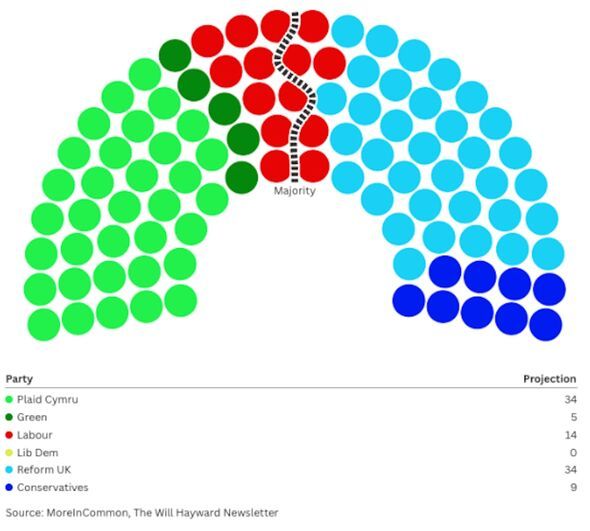
By the end of this week Labour will be wiped off the political map in, quite possibly, the most most dramatic change in history.
The immediate future for Wales now is Plaid Cymru and Reform UK with the two parties going head to head in Thursday's Senedd elections.
Modern Wales is a land of corporate business parks, renewable energy companies and eco-tourism firms.
It is also a nation in serious economic difficulty and public-sector decline.
As is often the case with this current UK government, the problem stems from antipathy towards Sir Keir Starmer.
The list of problems in Wales is a long one.
Immigration, NHS waiting lists, a flatlining economy, poor education standards and Labour's hated 20mph speed limit are totemic.
Westminster's failure to deliver has turned voters to Nigel Farage's party in their droves, many hoping for a more radical approach than the Conservatives to shock Wales out of its current malaise.
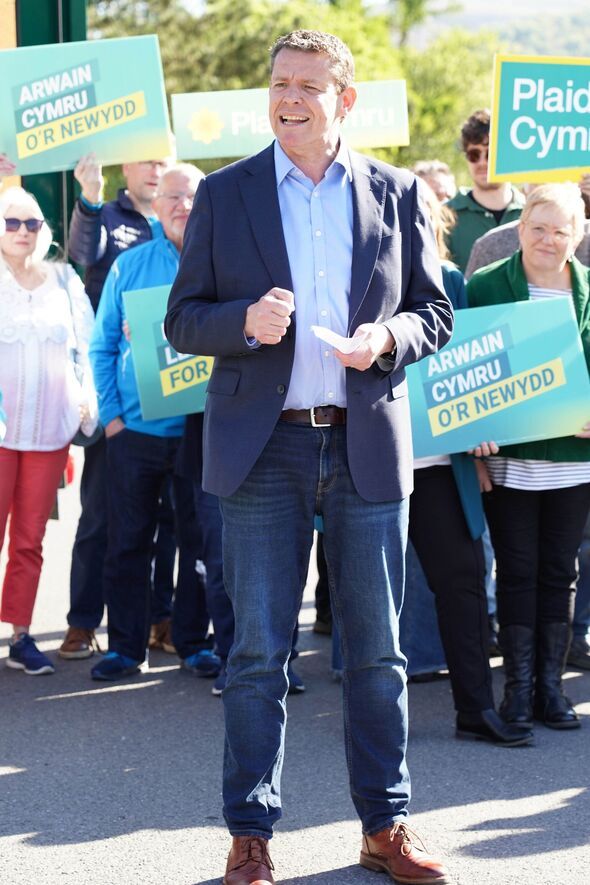
The response to this has seen a rise in support for the Welsh Nationalists.
Rhun ap Iorwerth, the Plaid Cymru leader, has also claimed people are "fed up of Labour", with the Welsh electorate "crying out for new leadership and new ideas".
Plaid, which has never run Wales, promises a new economic agency to drive growth, more GPs and help with childcare costs.
Polling suggests Plaid will emerge as the largest party in Wales on May 8 but not secure the 49 seats needed for a majority in the 96-seat Senedd.
A fully proportional representation voting system for the first time in the Senedd's history and 16 new mega constituencies has added to the sense among voters that historic change is coming.
It is impossible to overstate how seismic a loss for Labour, Wales would be.
Downing Street is watching developments nervously, with good reason.
The 2026 Senedd vote is akin to 2007, the year the SNP finished top in the Holyrood elections in Scotland.
That has brought about two decades of nationalist dominance north of the border. A repeat could happen west of the border, although Farage's party might have something to say about that.
What's clear though, from this Friday the "Land of Song" will be singing to a different tune.
-
Sustained reforms will help India maintain growth momentum, says ADB’s Albert Park

-
India could consider tweaking inflation target if growth stays robust, global shocks persist: RBI DG

-
Gokula Education Foundation (Medical) launches RISM, a globally aligned STEM and Management university focused on AI, aerospace, and future-ready skills

-
Why are gold and silver prices up today, and will gold touch $4,600 and silver reach $80 in next jump? Full explainer on market signals and investor outlook

-
Euler Motors doubles FY26 revenue to Rs 402 crore, losses expand