
Listen to this article in summarized format
Loading...
××
Subscribe to

Unlock AI Briefing and Premium Content
New Year Offer 24 Hours Left
Subscribe NowAlready a member? Sign In
What's Included
- Exclusive Stories
- Daily ePaper Access
- Smart Market Tools
- Curated Investment Ideas
- Ad-lite Experience
Subscription

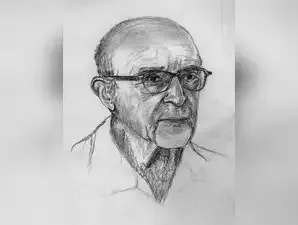
Quote of the Day: A powerful Quote of the Day often does more than inspire—it quietly challenges the way we see ourselves and the world. Some quotes don’t belong to a single moment in time; they stretch across generations, becoming more relevant as society evolves. That’s exactly the case with the insight offered by Carl Rogers, a pioneering figure in psychology whose ideas reshaped how we understand human growth, learning, and emotional well-being. His words continue to echo in classrooms, therapy rooms, and everyday conversations about self-improvement.
In a world that changes faster than ever—where careers shift, knowledge evolves, and identities are constantly redefined—the importance of a Quote of the Day lies in its ability to ground us. It acts as a reminder, a moment of pause, and sometimes even a quiet correction. Rogers’ philosophy, rooted in empathy and personal growth, feels especially relevant today. His quote doesn’t just speak to education in the academic sense—it speaks to life itself, urging us to remain flexible, curious, and open to transformation.
The Quote of the Day today by Carl Rogers reads:
“The only person who is educated is the one who has learned how to learn and change.”
This line captures the essence of Rogers’ belief that true education is not about memorising facts or collecting degrees, but about developing the ability to adapt, question, and evolve. Before diving deeper into its meaning, it’s worth understanding the life and work of the man behind these words—a thinker whose ideas helped redefine modern psychology.
Carl Ransom Rogers was born on January 8, 1902, in Oak Park, Illinois, in the United States. Raised in a disciplined and religious household, Rogers initially followed a path that seemed far removed from psychology. He attended the University of Wisconsin, where he began his academic journey, but his intellectual curiosity soon took a different turn, as per information sourced from APA and Britannica.
Interestingly, Rogers originally planned to become a minister. This decision led him to enroll at Union Theological Seminary in New York City. However, during his time there, he was exposed to new ways of thinking, particularly through courses in educational psychology at Teachers College, Columbia University. These experiences shifted his perspective dramatically. Within two years, he left the seminary and committed himself fully to psychology—a decision that would ultimately influence generations of therapists and thinkers.
Rogers went on to earn his M.A. in 1928 and his Ph.D. in 1931 from Columbia University’s Teachers College. During his doctoral studies, he worked closely with children at the Society for the Prevention of Cruelty to Children in Rochester, New York. This early exposure to real-life emotional struggles laid the foundation for his lifelong focus on human behaviour, empathy, and personal development.
Carl Rogers’ professional life was marked by a steady evolution of ideas that challenged traditional approaches to psychology. From 1935 to 1940, he lectured at the University of Rochester and published The Clinical Treatment of the Problem Child in 1939, drawing from his hands-on experience with troubled children, as per information sourced from APA and Britannica.
In 1940, Rogers became a professor of clinical psychology at Ohio State University. It was here that he wrote one of his most influential books, Counseling and Psychotherapy (1942). In this work, Rogers introduced a revolutionary idea: instead of the therapist directing the conversation, the client should lead the process. This marked the beginning of what would later be known as client-centred therapy, or nondirective psychotherapy.
At its core, Rogers’ approach emphasised a genuine, empathetic relationship between therapist and client. He believed that individuals have the capacity to understand and resolve their own problems, provided they are in an environment of acceptance and understanding. This idea became closely tied to his concept of unconditional positive regard, a principle that continues to influence modern therapy.
Rogers later joined the University of Chicago (1945–1957), where he established a counseling centre and conducted extensive research into the effectiveness of psychotherapy. His findings were published in Client-Centered Therapy (1951) and Psychotherapy and Personality Change (1954), helping to bring scientific credibility to therapeutic practices.
From 1957 to 1963, he taught at the University of Wisconsin, Madison, where he wrote On Becoming a Person (1961), one of his most widely read works. In 1963, he moved to La Jolla, California, where he helped found the Center for Studies of the Person. His later works, including Carl Rogers on Personal Power (1977) and Freedom to Learn for the 80’s (1983), continued to explore themes of personal growth, education, and human potential.
Throughout his career, Rogers received numerous honours. He served as president of the American Psychological Association in 1947 and was later awarded its Distinguished Professional Contribution Award. His influence extended beyond academia—he even worked internationally to promote communication and conflict resolution, travelling to regions such as Northern Ireland, South Africa, Brazil, and the Soviet Union, as per information sourced from APA and Britannica.
At first glance, Rogers’ quote may seem simple, but it carries a profound message about what it truly means to be educated.
“The only person who is educated is the one who has learned how to learn and change.”
This statement challenges the traditional idea that education is something you complete—a degree you earn, a course you finish, or a syllabus you master. Rogers flips this idea on its head. For him, education is not a destination; it’s a continuous process.
To “learn how to learn” means developing curiosity, critical thinking, and the ability to question assumptions. It’s about being open to new ideas, even when they challenge long-held beliefs. In today’s fast-changing world, this skill is more valuable than ever. Information is constantly evolving, and what we know today may become outdated tomorrow.
Equally important is the ability to change. Rogers emphasises that true learning must lead to transformation. It’s not enough to absorb information—we must be willing to adapt our perspectives, behaviours, and decisions based on what we learn. This requires humility, self-awareness, and a willingness to grow.
In many ways, the quote reflects Rogers’ broader philosophy of humanistic psychology. He believed that people are naturally inclined toward growth and self-improvement, but this potential can only be realised in an environment that encourages openness and acceptance.
The quote also resonates beyond education. It applies to personal relationships, careers, and even societal progress. Individuals and societies that resist change often struggle to move forward, while those that embrace learning and adaptability are better equipped to thrive.
In his later years, Carl Rogers shifted his focus toward applying his humanistic principles on a global scale. During the 1970s and 1980s, he worked on international conflict resolution, conducting workshops that promoted communication, creativity, and empathy across cultural divides.
He collaborated with his daughter Natalie Rogers and other psychologists to develop Person-Centered Approach Workshops, which focused on personal growth and cross-cultural understanding. These initiatives reflected his belief that the same principles that heal individuals can also help heal societies.
Rogers continued his work until his death on February 4, 1987, in La Jolla, California, at the age of 85. By the time of his passing, he had firmly established himself as one of the founders of humanistic psychology and a transformative figure in modern therapeutic practice.
His legacy lives on not just in textbooks, but in the everyday practices of therapists, educators, and individuals striving for personal growth.
Beyond today’s Quote of the Day, Carl Rogers left behind several powerful statements that continue to inspire reflection and self-awareness:
“The curious paradox is that when I accept myself just as I am, then I can change.”
“The only person who is educated is the one who has learned how to learn and change.”
“What is most personal is most universal.”
“What I am is good enough if I would only be it openly.”
Each of these quotes reflects Rogers’ deep belief in authenticity, acceptance, and the human capacity for growth. Together, they form a philosophy that encourages us to look inward, embrace who we are, and remain open to becoming something more.
As a Quote of the Day, Rogers’ insight about learning and change serves as a gentle but firm reminder: education is not about reaching a finish line—it’s about staying in motion. In a time when knowledge is constantly evolving, the ability to learn, unlearn, and relearn has become one of the most essential skills a person can have.
More than a psychologist, Carl Rogers was a thinker who believed in the potential of every individual. His words continue to guide not just students or professionals, but anyone trying to navigate the complexities of life. And perhaps that’s what makes this quote so enduring—it doesn’t just define education, it redefines how we live.
In a world that changes faster than ever—where careers shift, knowledge evolves, and identities are constantly redefined—the importance of a Quote of the Day lies in its ability to ground us. It acts as a reminder, a moment of pause, and sometimes even a quiet correction. Rogers’ philosophy, rooted in empathy and personal growth, feels especially relevant today. His quote doesn’t just speak to education in the academic sense—it speaks to life itself, urging us to remain flexible, curious, and open to transformation.
Quote of the Day Today May 4
The Quote of the Day today by Carl Rogers reads:
“The only person who is educated is the one who has learned how to learn and change.”
This line captures the essence of Rogers’ belief that true education is not about memorising facts or collecting degrees, but about developing the ability to adapt, question, and evolve. Before diving deeper into its meaning, it’s worth understanding the life and work of the man behind these words—a thinker whose ideas helped redefine modern psychology.
Early Life and Education of Carl Rogers
Carl Ransom Rogers was born on January 8, 1902, in Oak Park, Illinois, in the United States. Raised in a disciplined and religious household, Rogers initially followed a path that seemed far removed from psychology. He attended the University of Wisconsin, where he began his academic journey, but his intellectual curiosity soon took a different turn, as per information sourced from APA and Britannica.
Interestingly, Rogers originally planned to become a minister. This decision led him to enroll at Union Theological Seminary in New York City. However, during his time there, he was exposed to new ways of thinking, particularly through courses in educational psychology at Teachers College, Columbia University. These experiences shifted his perspective dramatically. Within two years, he left the seminary and committed himself fully to psychology—a decision that would ultimately influence generations of therapists and thinkers.
Rogers went on to earn his M.A. in 1928 and his Ph.D. in 1931 from Columbia University’s Teachers College. During his doctoral studies, he worked closely with children at the Society for the Prevention of Cruelty to Children in Rochester, New York. This early exposure to real-life emotional struggles laid the foundation for his lifelong focus on human behaviour, empathy, and personal development.
Career, Contributions, and the Rise of Client-Centred Therapy
Carl Rogers’ professional life was marked by a steady evolution of ideas that challenged traditional approaches to psychology. From 1935 to 1940, he lectured at the University of Rochester and published The Clinical Treatment of the Problem Child in 1939, drawing from his hands-on experience with troubled children, as per information sourced from APA and Britannica.
In 1940, Rogers became a professor of clinical psychology at Ohio State University. It was here that he wrote one of his most influential books, Counseling and Psychotherapy (1942). In this work, Rogers introduced a revolutionary idea: instead of the therapist directing the conversation, the client should lead the process. This marked the beginning of what would later be known as client-centred therapy, or nondirective psychotherapy.
At its core, Rogers’ approach emphasised a genuine, empathetic relationship between therapist and client. He believed that individuals have the capacity to understand and resolve their own problems, provided they are in an environment of acceptance and understanding. This idea became closely tied to his concept of unconditional positive regard, a principle that continues to influence modern therapy.
Rogers later joined the University of Chicago (1945–1957), where he established a counseling centre and conducted extensive research into the effectiveness of psychotherapy. His findings were published in Client-Centered Therapy (1951) and Psychotherapy and Personality Change (1954), helping to bring scientific credibility to therapeutic practices.
From 1957 to 1963, he taught at the University of Wisconsin, Madison, where he wrote On Becoming a Person (1961), one of his most widely read works. In 1963, he moved to La Jolla, California, where he helped found the Center for Studies of the Person. His later works, including Carl Rogers on Personal Power (1977) and Freedom to Learn for the 80’s (1983), continued to explore themes of personal growth, education, and human potential.
Throughout his career, Rogers received numerous honours. He served as president of the American Psychological Association in 1947 and was later awarded its Distinguished Professional Contribution Award. His influence extended beyond academia—he even worked internationally to promote communication and conflict resolution, travelling to regions such as Northern Ireland, South Africa, Brazil, and the Soviet Union, as per information sourced from APA and Britannica.
The Meaning Behind the Quote of the Day
At first glance, Rogers’ quote may seem simple, but it carries a profound message about what it truly means to be educated.
“The only person who is educated is the one who has learned how to learn and change.”
This statement challenges the traditional idea that education is something you complete—a degree you earn, a course you finish, or a syllabus you master. Rogers flips this idea on its head. For him, education is not a destination; it’s a continuous process.
To “learn how to learn” means developing curiosity, critical thinking, and the ability to question assumptions. It’s about being open to new ideas, even when they challenge long-held beliefs. In today’s fast-changing world, this skill is more valuable than ever. Information is constantly evolving, and what we know today may become outdated tomorrow.
Equally important is the ability to change. Rogers emphasises that true learning must lead to transformation. It’s not enough to absorb information—we must be willing to adapt our perspectives, behaviours, and decisions based on what we learn. This requires humility, self-awareness, and a willingness to grow.
In many ways, the quote reflects Rogers’ broader philosophy of humanistic psychology. He believed that people are naturally inclined toward growth and self-improvement, but this potential can only be realised in an environment that encourages openness and acceptance.
The quote also resonates beyond education. It applies to personal relationships, careers, and even societal progress. Individuals and societies that resist change often struggle to move forward, while those that embrace learning and adaptability are better equipped to thrive.
Later Life and Legacy
In his later years, Carl Rogers shifted his focus toward applying his humanistic principles on a global scale. During the 1970s and 1980s, he worked on international conflict resolution, conducting workshops that promoted communication, creativity, and empathy across cultural divides.
He collaborated with his daughter Natalie Rogers and other psychologists to develop Person-Centered Approach Workshops, which focused on personal growth and cross-cultural understanding. These initiatives reflected his belief that the same principles that heal individuals can also help heal societies.
Rogers continued his work until his death on February 4, 1987, in La Jolla, California, at the age of 85. By the time of his passing, he had firmly established himself as one of the founders of humanistic psychology and a transformative figure in modern therapeutic practice.
His legacy lives on not just in textbooks, but in the everyday practices of therapists, educators, and individuals striving for personal growth.
Iconic Quotes by Carl Rogers
Beyond today’s Quote of the Day, Carl Rogers left behind several powerful statements that continue to inspire reflection and self-awareness:
“The curious paradox is that when I accept myself just as I am, then I can change.”
“The only person who is educated is the one who has learned how to learn and change.”
“What is most personal is most universal.”
“What I am is good enough if I would only be it openly.”
Each of these quotes reflects Rogers’ deep belief in authenticity, acceptance, and the human capacity for growth. Together, they form a philosophy that encourages us to look inward, embrace who we are, and remain open to becoming something more.
As a Quote of the Day, Rogers’ insight about learning and change serves as a gentle but firm reminder: education is not about reaching a finish line—it’s about staying in motion. In a time when knowledge is constantly evolving, the ability to learn, unlearn, and relearn has become one of the most essential skills a person can have.
More than a psychologist, Carl Rogers was a thinker who believed in the potential of every individual. His words continue to guide not just students or professionals, but anyone trying to navigate the complexities of life. And perhaps that’s what makes this quote so enduring—it doesn’t just define education, it redefines how we live.