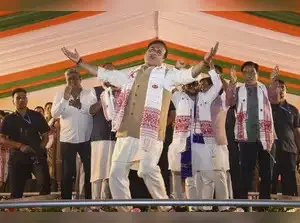
As the 2026 Assam Assembly election results trickle in, the Bharatiya Janata Party (BJP) is emerging as the only party able to buck the anti-incumbency sentiment while incumbents in West Bengal, Kerala and Tamil Nadu seem to be heading for defeat, The BJP is expected to win Puducherry, where its a junior partner of AINRC, and Assam, where BJP Chief Minister Himanta Biswa Sarma had launched an aggressive campaign built around infrastructure expansion, welfare delivery, improved connectivity and a politics focused on protecting indigenous identity.
Sarma is on the verge of becoming the Assam CM for the second time and winning a third consecutive term for the NDA. Sarma’s leadership has not only fended off a spirited challenge from a Congress-led alliance but has also redefined the state’s electoral math through a blend of aggressive cultural posturing and hyper-local governance. The anticipated victory, with leads touching 79 in a 126-member house, serves as a powerful validation of his unique brand of politics. Sarma has managed to transform potential anti-incumbency into a wave of renewed trust in his leadership.
One of the most critical structural pillars of Sarma’s success was the tactical utilisation of the 2023 delimitation exercise, which fundamentally altered the voter composition across several key districts. By redrawing constituency boundaries, the ruling alliance effectively diluted the influence of minority-dominated voting blocs that historically favoured the Congress or the AIUDF.
With the state marking its first assembly polls after the delimitation exercise in 2023, many analysts believe the redrawn constituencies may work to BJP’s advantage. The number of seats in lower Assam and the Barak Valley, where Muslim voters have been a decisive factor, has come down to 22 from 35. In several of these seats, BJP’s ally AGP has their fielded candidates. This administrative realignment could have acted as a force multiplier for the BJP, allowing Sarma to focus his campaign energy on seats where the indigenous narrative carried the most weight.
Sarma’s campaign was characterised by a sharp, unapologetic focus on protecting the inidgenous people from demographic threat. Throughout the last week of the campaign, his rhetoric centered on the infiltrator issue, promising voters that a return to power would ensure a permanent solution to illegal immigration. This strategy, more than just campaign talk, was backed by high-profile eviction drives and the promise of more to come, which resonated deeply with the core Assamese electorate fearful of losing political and land rights. By turning the election into a battle for the identity of the state, he could have consolidated the Hindu vote across various linguistic and ethnic divides, making it difficult for the opposition to breach his fortress.
Beyond the high-decibel debates on identity, Sarma’s campaign was fueled by a robust performance regarding direct benefit transfers and infrastructure development. The "Orunodoi" scheme, which provides monthly financial assistance to nearly 2.6 million women, acted as a silent electoral engine, creating a massive, loyal base of beneficiaries. Latest ground reports indicate that female voter turnout reached a historic high of 86.5%, a surge many analysts attributed to Sarma's gender-focused welfare policies.
By combining large-scale projects like the expansion of the bridge network over the Brahmaputra with micro-level financial empowerment, Sarma convinced the electorate that the double-engine government was synonymous with tangible material progress.
The final blow to the opposition’s hopes was the targeted dismantling of their top leadership’s local influence. While Gaurav Gogoi was projected as a formidable challenger following his 2024 Lok Sabha success, the vote counting shows him losing his personal seat in Jorhat, a big blow that underscores Sarma’s tactical dominance. Sarma’s strategy involved an relentless "new faces" policy, where he replaced stale incumbents with fresh candidates to neutralise local grievances, a move that kept the party’s machinery agile. By pinning down opposition stalwarts in their own backyards and leveraging the BJP’s superior organisational depth, Sarma ensured that the Congress-led Asom Sonmilito Morcha remained a fragmented coalition rather than a unified threat.
Assembly Elections 2026
Election Results 2026 Live Updates: Who's ahead in which state
West Bengal Election Results 2026 Live Updates
TN Election Result 2026 Live Updates
The strategic mapping
One of the most critical structural pillars of Sarma’s success was the tactical utilisation of the 2023 delimitation exercise, which fundamentally altered the voter composition across several key districts. By redrawing constituency boundaries, the ruling alliance effectively diluted the influence of minority-dominated voting blocs that historically favoured the Congress or the AIUDF.
With the state marking its first assembly polls after the delimitation exercise in 2023, many analysts believe the redrawn constituencies may work to BJP’s advantage. The number of seats in lower Assam and the Barak Valley, where Muslim voters have been a decisive factor, has come down to 22 from 35. In several of these seats, BJP’s ally AGP has their fielded candidates. This administrative realignment could have acted as a force multiplier for the BJP, allowing Sarma to focus his campaign energy on seats where the indigenous narrative carried the most weight.
The infiltrator narrative
Sarma’s campaign was characterised by a sharp, unapologetic focus on protecting the inidgenous people from demographic threat. Throughout the last week of the campaign, his rhetoric centered on the infiltrator issue, promising voters that a return to power would ensure a permanent solution to illegal immigration. This strategy, more than just campaign talk, was backed by high-profile eviction drives and the promise of more to come, which resonated deeply with the core Assamese electorate fearful of losing political and land rights. By turning the election into a battle for the identity of the state, he could have consolidated the Hindu vote across various linguistic and ethnic divides, making it difficult for the opposition to breach his fortress.
Welfare delivery and the "Orunodoi" effect
Beyond the high-decibel debates on identity, Sarma’s campaign was fueled by a robust performance regarding direct benefit transfers and infrastructure development. The "Orunodoi" scheme, which provides monthly financial assistance to nearly 2.6 million women, acted as a silent electoral engine, creating a massive, loyal base of beneficiaries. Latest ground reports indicate that female voter turnout reached a historic high of 86.5%, a surge many analysts attributed to Sarma's gender-focused welfare policies.
By combining large-scale projects like the expansion of the bridge network over the Brahmaputra with micro-level financial empowerment, Sarma convinced the electorate that the double-engine government was synonymous with tangible material progress.
Neutralising the opposition leadership
The final blow to the opposition’s hopes was the targeted dismantling of their top leadership’s local influence. While Gaurav Gogoi was projected as a formidable challenger following his 2024 Lok Sabha success, the vote counting shows him losing his personal seat in Jorhat, a big blow that underscores Sarma’s tactical dominance. Sarma’s strategy involved an relentless "new faces" policy, where he replaced stale incumbents with fresh candidates to neutralise local grievances, a move that kept the party’s machinery agile. By pinning down opposition stalwarts in their own backyards and leveraging the BJP’s superior organisational depth, Sarma ensured that the Congress-led Asom Sonmilito Morcha remained a fragmented coalition rather than a unified threat.