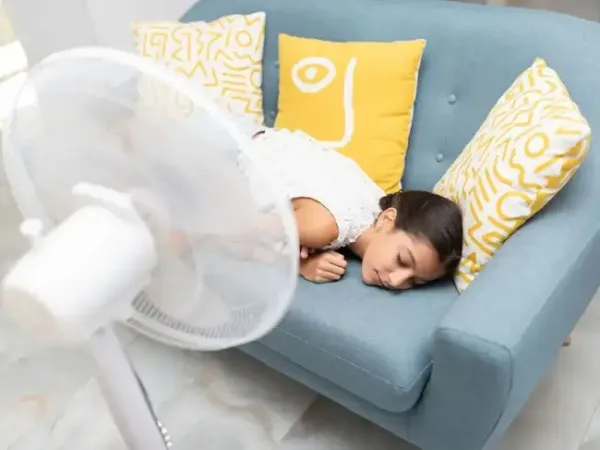
As temperatures start climbing in May and nights become uncomfortable, many people turn to a simple fix, switching on a fan before going to sleep. It feels practical, even necessary at times, especially when the room feels stuffy and there’s work the next morning. But some health experts say this everyday habit may not be as harmless as it seems, particularly for certain people.
While sleeping with a fan is not dangerous for everyone, there are situations where it can make existing issues worse or trigger discomfort.
Healthline also notes that fans can circulate dust and pollen, which may lead to symptoms like sneezing, watery eyes, itchy throat, or even breathing difficulty. Over time, this can disturb sleep quality without people realising the reason.
People who sleep with their mouth open may notice this more. As Dr Dintyala explained, those who sleep with their mouth open could wake up with an unwanted sore throat. It’s something many ignore, thinking it’s just a random morning irritation.
It also mentions that while a fan won’t directly make you sick, it may worsen symptoms if you’re already under the weather. So if someone already has a cold or sinus issue, sleeping under a fan might make the night feel longer than usual.
The issue usually happens when the fan is directed straight at the body for hours. Adjusting the direction or reducing speed might help, but many don’t think about it until the discomfort shows up.
For comparison, a soft whisper is about 30 decibels, while a fan or AC can go higher depending on speed. This may lead to repeated awakenings or a feeling of not being fully rested in the morning.
Experts generally agree that fans are not a serious health risk for most people. But they can become a problem if someone already has allergies, sensitive airways, or sleep issues. Regular cleaning of fan blades, keeping the room dust-free, and not pointing the fan directly at the body are small steps that may reduce the impact.
At the end of the day, it comes down to how your body reacts. For some, a fan is the only way to get through hot nights. For others, it might quietly be the reason behind disturbed sleep or minor health complaints that keep repeating.
While sleeping with a fan is not dangerous for everyone, there are situations where it can make existing issues worse or trigger discomfort.
Circulating dust and allergens
One of the most talked about concerns is how fans move air around constantly. As per Unilad, Dr. Kiran Dintyala told Sleep Advisor that a fan can blow around dust and pollen particles, which can irritate those with allergies and asthma. This becomes more noticeable if the room or fan blades are not cleaned regularly.Healthline also notes that fans can circulate dust and pollen, which may lead to symptoms like sneezing, watery eyes, itchy throat, or even breathing difficulty. Over time, this can disturb sleep quality without people realising the reason.
Dry air causing throat and sinus issues
Another issue is dryness. According to the same doctor, fans can also cause the air around you to dry out, causing issues such as bronchitis, sinusitis, nosebleeds, and dehydration coming to fruition. This drying effect doesn’t just stop at the air, it can affect the body directly.People who sleep with their mouth open may notice this more. As Dr Dintyala explained, those who sleep with their mouth open could wake up with an unwanted sore throat. It’s something many ignore, thinking it’s just a random morning irritation.
Congestion and mucus build-up
Healthline explains that constant air circulation can dry out the nose and throat, which then triggers the body to produce more mucus. That overreaction can lead to congestion, headaches, or even snoring.It also mentions that while a fan won’t directly make you sick, it may worsen symptoms if you’re already under the weather. So if someone already has a cold or sinus issue, sleeping under a fan might make the night feel longer than usual.
Muscle stiffness and body aches
This one is less obvious but still reported. Healthline says concentrated circulating air may cause your muscles to tense up or cramp. Some people wake up feeling stiffness in the neck or shoulders without understanding why.The issue usually happens when the fan is directed straight at the body for hours. Adjusting the direction or reducing speed might help, but many don’t think about it until the discomfort shows up.
Sleep disturbance due to noise
While some people like the steady hum of a fan, others may not sleep as well with it. Sleep Foundation highlights that even low-level noise can affect sleep cycles. Sounds as low as 33 to 48 decibels can have noticeable effects on sleep.For comparison, a soft whisper is about 30 decibels, while a fan or AC can go higher depending on speed. This may lead to repeated awakenings or a feeling of not being fully rested in the morning.
Experts generally agree that fans are not a serious health risk for most people. But they can become a problem if someone already has allergies, sensitive airways, or sleep issues. Regular cleaning of fan blades, keeping the room dust-free, and not pointing the fan directly at the body are small steps that may reduce the impact.
At the end of the day, it comes down to how your body reacts. For some, a fan is the only way to get through hot nights. For others, it might quietly be the reason behind disturbed sleep or minor health complaints that keep repeating.