
Ather Energy cofounder and CEO Tarun Mehta has criticised the government’s stance on excluding startups from the production-linked incentive (PLI) scheme
Notably, the existing auto PLI scheme, overseen by the Ministry of Heavy Industries, mandates steep eligibility thresholds, including ₹10,000 Cr in global automotive revenue and ₹3,000 Cr in fixed assets
Mehta argued that many new-age EV companies today lead not just in innovation but also in volumes and market share across multiple segments
Ather Energy cofounder and CEO Tarun Mehta has criticised the government’s stance on excluding startups from the production-linked incentive (PLI) scheme for automobiles and auto components, arguing that the current framework risks undermining India’s EV ambitions.
His remarks came after a senior government official told ET Auto that PLI schemes are “not meant for startups but for global champions”, effectively ruling out the inclusion of electric-first OEMs.
Notably, the existing auto PLI scheme, overseen by the Ministry of Heavy Industries, mandates steep eligibility thresholds, including ₹10,000 Cr in global automotive revenue and ₹3,000 Cr in fixed assets, criteria for auto OEMs, which most EV startups fail to meet.
In a post on social media platform X, Mehta said he finds it “hard to believe” that policymakers would intentionally exclude startups at a time when India’s EV ecosystem has been significantly shaped by electric-first companies.
Over the past decade, he said, startups have invested heavily in product development, software, power electronics and localisation, often without the backing of legacy scale, helping build a “vibrant and dynamic” EV market.
He argued that many new-age EV companies today lead not just in innovation but also in volumes and market share across multiple segments. Mehta said Ather has invested thousands of crores in R&D and manufacturing, employs over 4,000 people directly, and has committed another ₹2,000 Cr towards a new greenfield facility in Maharashtra, all without PLI support.
Cost Disadvantage & Policy Mismatch
At the heart of Mehta’s critique is what he called a structural imbalance in the policy design. By prioritising legacy scale over EV-specific capabilities, the PLI scheme effectively places emerging manufacturers at a 13-16% cost disadvantage, he said.
This differential, according to Mehta, could shape long-term market outcomes by discouraging investments in innovation-led segments such as battery systems, indigenous platforms and software — areas where startups have been leading.
Further, Mehta urged policymakers to “calibrate” the PLI framework, suggesting more flexible eligibility norms aligned with R&D intensity and domestic value addition (DVA).
He also pushed back against the perception that startups lag in localisation, stating that DVA benchmarks are similar across both PLI and non-PLI players, with electric-first companies often leading indigenous development efforts.
The government, on other hand, has termed PLI for automobiles and auto components as a success, citing over ₹35,000 Cr in investments, production of nearly 14 Lakh EVs, and creation of close to 49,000 jobs. Major beneficiaries include legacy automakers such as Tata Motors, Mahindra & Mahindra and Maruti Suzuki, among others.
Shares of Ather were trading 0.40% lower at ₹935 on the BSE at 14:45 IST.
-
Viral Post: Odisha Techie Gets ₹10,000 Back After Uber Driver Tracks Him Down — Internet Applauds

-
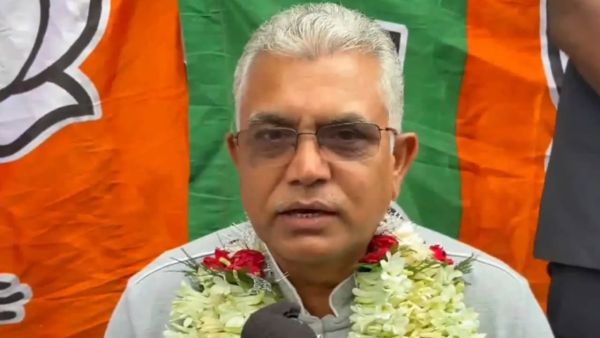
BJP’s Dilip Ghosh hails public trust after Kharagpur Sadar victory
-
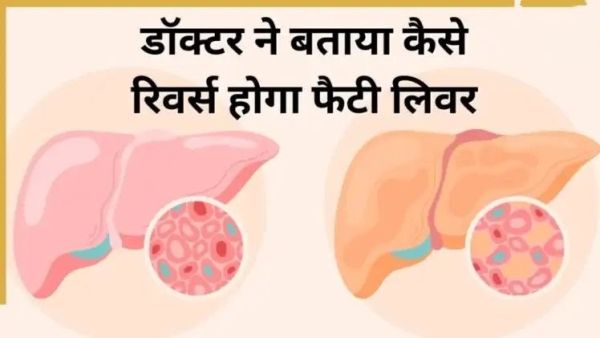
Grade-2 fatty liver will be cured without medicine, doctor said these 2 changes in lifestyle can show effect in 6 months – News Himachali News Himachali
-
Chinese giant TCL will change its attire in India! Preparation to sell 51% stake of Indian plant
-
Does eating mangoes in summer really cause pimples on the face? Know the right way and time to eat mangoes