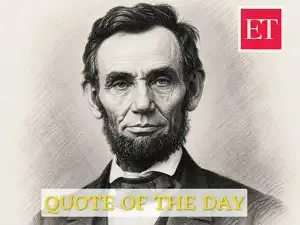
Quote of the Day: A powerful Quote of the Day often reaches far beyond its moment, offering insight into human behavior, leadership, and decision-making. Few figures embody this kind of enduring wisdom better than Abraham Lincoln, whose words continue to resonate across generations. Known for his clarity of thought and grounded perspective, Lincoln often used simple imagery to communicate complex truths. His quote about holding onto an elephant captures a timeless lesson about judgment, restraint, and recognizing when persistence becomes counterproductive. That is precisely why a Quote of the Day remains important—it encourages reflection, helping individuals apply historical wisdom to modern challenges.
The Quote of the Day today by Abraham Lincoln reads:
“When you have got an elephant by the hind leg, and he is trying to run away, it's best to let him run.”
This striking metaphor reflects Lincoln’s practical approach to life and leadership. It also mirrors his own journey—one shaped by struggle, persistence, and the ability to make difficult decisions. Born on February 12, 1809, near Hodgenville, Kentucky, Lincoln rose from humble beginnings in a backwoods cabin to become the 16th president of the United States (1861–1865). His life story remains one of the most compelling examples of self-made success in history.
Lincoln’s childhood was marked by hardship and simplicity. Raised in rural Kentucky and later Indiana, he grew up in poverty, helping his family clear land and survive on the frontier. His father, Thomas Lincoln, was a hardworking pioneer, while his mother, Nancy Hanks Lincoln, played a crucial role in shaping his early character before her death when he was just nine years old, as per information sourced from Britannica.
Despite limited access to formal education, amounting to less than a year of schooling, Lincoln developed a deep love for reading. Books like Robinson Crusoe, Aesop’s Fables, and the Bible became his teachers. His stepmother, Sarah Bush Johnston, encouraged his intellectual curiosity, nurturing a habit that would define his future.
As a young man, Lincoln tried his hand at various occupations. He worked as a rail-splitter, flatboatman, storekeeper, postmaster, and surveyor. These experiences grounded him in the realities of ordinary life, shaping his empathy and understanding of the common man.
Eventually, Lincoln turned to law. Teaching himself through borrowed books, he passed the bar examination in 1836 and began practicing law in Springfield, Illinois. Over time, he became one of the most respected lawyers in the state, known for his honesty, fairness, and ability to simplify complex issues, as per information sourced from Britannica.
His entry into politics followed naturally. Serving in the Illinois State Legislature and later in the U.S. House of Representatives (1847–1849), Lincoln gained recognition for his thoughtful positions and clear communication. Though his early political career faced setbacks, including defeats and criticism, he remained resilient.
Lincoln’s greatest test came when he was elected president in 1860. The United States was deeply divided over slavery, and soon after his election, several Southern states seceded, leading to the American Civil War.
As president, Lincoln faced immense pressure. He had to preserve the Union while navigating political divisions, military challenges, and moral dilemmas. His leadership during this period defined his legacy. Through perseverance and strategic thinking, he guided the nation through its most turbulent chapter.
One of his most significant achievements was the emancipation of enslaved people. His actions, including the Emancipation Proclamation, helped redefine the purpose of the war and paved the way for the abolition of slavery in the United States, as per information sourced from Britannica.
Lincoln’s appeal lies not only in his achievements but also in his humanity. His speeches reflected deep moral conviction, and his ability to connect with people made him a lasting symbol of democracy and equality, as per information sourced from Britannica.
The meaning of today’s Quote of the Day lies in its vivid imagery. Trying to hold onto an elephant by the hind leg is not only futile but dangerous. Lincoln uses this metaphor to highlight the importance of recognizing limits—knowing when to persist and when to step back.
In practical terms, the quote suggests that some situations cannot be controlled or forced. Whether in politics, business, or personal life, there are moments when holding on too tightly can lead to failure or harm. Letting go, in such cases, is not a sign of weakness but of wisdom.
This perspective aligns with Lincoln’s own leadership style. During the Civil War, he often adjusted strategies based on changing circumstances. He understood that rigid thinking could lead to disaster, while flexibility could open the door to better outcomes.
The quote also speaks to emotional intelligence. It reminds us that not every battle is worth fighting, and not every problem can be solved through sheer effort. Sometimes, the best course of action is to step aside, reassess, and allow events to unfold naturally.
In today’s fast-paced world, Lincoln’s words remain highly relevant. People often cling to failing plans, unhealthy relationships, or unrealistic expectations simply because they have already invested time and effort. This quote challenges that mindset.
It encourages individuals to evaluate situations realistically. Are you trying to control something beyond your power? Are you holding onto an idea that is no longer working? If so, letting go might be the smarter choice.
For leaders, the quote is particularly meaningful. Effective leadership requires the ability to adapt, delegate, and sometimes withdraw from unproductive paths. Lincoln’s wisdom serves as a reminder that strength lies not just in persistence, but in discernment.
Lincoln’s presidency ended tragically. Just days after the Civil War effectively concluded, he was assassinated on April 15, 1865, in Washington, D.C. His death shocked the nation, but his legacy only grew stronger. Today, he is remembered as the “Great Emancipator” and a symbol of unity and resilience. The Lincoln Memorial in Washington, D.C., stands as a testament to his enduring impact. His life story—from a log cabin to the White House—continues to inspire millions around the world.
Beyond today’s Quote of the Day, Abraham Lincoln left behind many memorable lines that reflect his wisdom and insight:
“Let none falter, who thinks he is right, and we may succeed.”
“Always bear in mind that your own resolution to succeed, is more important than any other one thing.
“A man watches his pear-tree day after day, impatient for the ripening of the fruit. Let him attempt to force the process and he may spoil both fruit and tree. But let him patiently wait, and the ripe pear at the length falls into his lap.”
“We shall sooner have the fowl by hatching the egg than by smashing it.”
“Public sentiment is everything. With public sentiment, nothing can fail; without it nothing can succeed.”
“No policy that does not rest upon philosophical public opinion can be permanently maintained.”
“If a man will stand up and assert, and repeat and re-assert, that two and two do not make four, I know nothing in the power of argument that can stop him.”
“If a man says he knows a thing, then he must show how he knows it.
As a Quote of the Day, Lincoln’s observation about letting go when faced with the impossible offers a powerful reminder of balance in life. It challenges the idea that persistence alone guarantees success and instead highlights the value of judgment and adaptability.
More than a century after his death, Abraham Lincoln’s words continue to guide conversations about leadership, resilience, and human nature. His insights, grounded in experience and empathy, remain as relevant today as they were in his time—offering clarity in moments of uncertainty and wisdom in the face of complexity.
Quote of the Day Today
The Quote of the Day today by Abraham Lincoln reads:
“When you have got an elephant by the hind leg, and he is trying to run away, it's best to let him run.”
This striking metaphor reflects Lincoln’s practical approach to life and leadership. It also mirrors his own journey—one shaped by struggle, persistence, and the ability to make difficult decisions. Born on February 12, 1809, near Hodgenville, Kentucky, Lincoln rose from humble beginnings in a backwoods cabin to become the 16th president of the United States (1861–1865). His life story remains one of the most compelling examples of self-made success in history.
Early Life and Humble Beginnings
Lincoln’s childhood was marked by hardship and simplicity. Raised in rural Kentucky and later Indiana, he grew up in poverty, helping his family clear land and survive on the frontier. His father, Thomas Lincoln, was a hardworking pioneer, while his mother, Nancy Hanks Lincoln, played a crucial role in shaping his early character before her death when he was just nine years old, as per information sourced from Britannica.
Despite limited access to formal education, amounting to less than a year of schooling, Lincoln developed a deep love for reading. Books like Robinson Crusoe, Aesop’s Fables, and the Bible became his teachers. His stepmother, Sarah Bush Johnston, encouraged his intellectual curiosity, nurturing a habit that would define his future.
Rise Through Determination and Self-Education
As a young man, Lincoln tried his hand at various occupations. He worked as a rail-splitter, flatboatman, storekeeper, postmaster, and surveyor. These experiences grounded him in the realities of ordinary life, shaping his empathy and understanding of the common man.
Eventually, Lincoln turned to law. Teaching himself through borrowed books, he passed the bar examination in 1836 and began practicing law in Springfield, Illinois. Over time, he became one of the most respected lawyers in the state, known for his honesty, fairness, and ability to simplify complex issues, as per information sourced from Britannica.
His entry into politics followed naturally. Serving in the Illinois State Legislature and later in the U.S. House of Representatives (1847–1849), Lincoln gained recognition for his thoughtful positions and clear communication. Though his early political career faced setbacks, including defeats and criticism, he remained resilient.
Leadership During the Civil War
Lincoln’s greatest test came when he was elected president in 1860. The United States was deeply divided over slavery, and soon after his election, several Southern states seceded, leading to the American Civil War.
As president, Lincoln faced immense pressure. He had to preserve the Union while navigating political divisions, military challenges, and moral dilemmas. His leadership during this period defined his legacy. Through perseverance and strategic thinking, he guided the nation through its most turbulent chapter.
One of his most significant achievements was the emancipation of enslaved people. His actions, including the Emancipation Proclamation, helped redefine the purpose of the war and paved the way for the abolition of slavery in the United States, as per information sourced from Britannica.
Lincoln’s appeal lies not only in his achievements but also in his humanity. His speeches reflected deep moral conviction, and his ability to connect with people made him a lasting symbol of democracy and equality, as per information sourced from Britannica.
The Meaning Behind the Quote
The meaning of today’s Quote of the Day lies in its vivid imagery. Trying to hold onto an elephant by the hind leg is not only futile but dangerous. Lincoln uses this metaphor to highlight the importance of recognizing limits—knowing when to persist and when to step back.
In practical terms, the quote suggests that some situations cannot be controlled or forced. Whether in politics, business, or personal life, there are moments when holding on too tightly can lead to failure or harm. Letting go, in such cases, is not a sign of weakness but of wisdom.
This perspective aligns with Lincoln’s own leadership style. During the Civil War, he often adjusted strategies based on changing circumstances. He understood that rigid thinking could lead to disaster, while flexibility could open the door to better outcomes.
The quote also speaks to emotional intelligence. It reminds us that not every battle is worth fighting, and not every problem can be solved through sheer effort. Sometimes, the best course of action is to step aside, reassess, and allow events to unfold naturally.
Lessons for Modern Times
In today’s fast-paced world, Lincoln’s words remain highly relevant. People often cling to failing plans, unhealthy relationships, or unrealistic expectations simply because they have already invested time and effort. This quote challenges that mindset.
It encourages individuals to evaluate situations realistically. Are you trying to control something beyond your power? Are you holding onto an idea that is no longer working? If so, letting go might be the smarter choice.
For leaders, the quote is particularly meaningful. Effective leadership requires the ability to adapt, delegate, and sometimes withdraw from unproductive paths. Lincoln’s wisdom serves as a reminder that strength lies not just in persistence, but in discernment.
Later Life and Enduring Legacy
Lincoln’s presidency ended tragically. Just days after the Civil War effectively concluded, he was assassinated on April 15, 1865, in Washington, D.C. His death shocked the nation, but his legacy only grew stronger. Today, he is remembered as the “Great Emancipator” and a symbol of unity and resilience. The Lincoln Memorial in Washington, D.C., stands as a testament to his enduring impact. His life story—from a log cabin to the White House—continues to inspire millions around the world.
Iconic Quotes by Abraham Lincoln
Beyond today’s Quote of the Day, Abraham Lincoln left behind many memorable lines that reflect his wisdom and insight:
“Let none falter, who thinks he is right, and we may succeed.”
“Always bear in mind that your own resolution to succeed, is more important than any other one thing.
“A man watches his pear-tree day after day, impatient for the ripening of the fruit. Let him attempt to force the process and he may spoil both fruit and tree. But let him patiently wait, and the ripe pear at the length falls into his lap.”
“We shall sooner have the fowl by hatching the egg than by smashing it.”
“Public sentiment is everything. With public sentiment, nothing can fail; without it nothing can succeed.”
“No policy that does not rest upon philosophical public opinion can be permanently maintained.”
“If a man will stand up and assert, and repeat and re-assert, that two and two do not make four, I know nothing in the power of argument that can stop him.”
“If a man says he knows a thing, then he must show how he knows it.
As a Quote of the Day, Lincoln’s observation about letting go when faced with the impossible offers a powerful reminder of balance in life. It challenges the idea that persistence alone guarantees success and instead highlights the value of judgment and adaptability.
More than a century after his death, Abraham Lincoln’s words continue to guide conversations about leadership, resilience, and human nature. His insights, grounded in experience and empathy, remain as relevant today as they were in his time—offering clarity in moments of uncertainty and wisdom in the face of complexity.