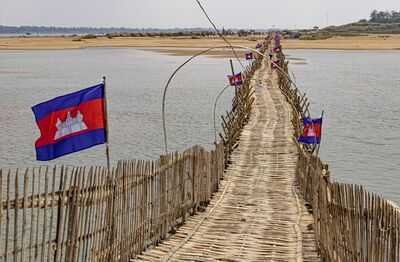
While the Bamboo Bridge of Kampong Cham is a masterpiece of local engineering, thrill-seekers and dangerous bridge enthusiasts often rank it among the most nerve-wracking crossings on the planet. Connecting to Koh Paen Island across the Mekong River in Cambodia and often cited as the longest bamboo bridge in the world, it is a seasonal masterpiece that is literally built and dismantled by hand every single year.
As the Mekong's water levels drop during the dry season - January to May - the bridge is painstakingly assembled over the space of a month using around 50,000 bamboo poles and secured with wire. Stretching roughly 3,280 feet (1,000 metres or 1 kilometer ), the bridge is surprisingly sturdy.
While it was once the primary route for cars and trucks, it is now mostly used by pedestrians, cyclists and motorcyclists. While locals have used it safely for generations, the bridge appears to defy every modern safety law. For a traveller unaccustomed to it, crossing is an exercise in pure adrenaline.
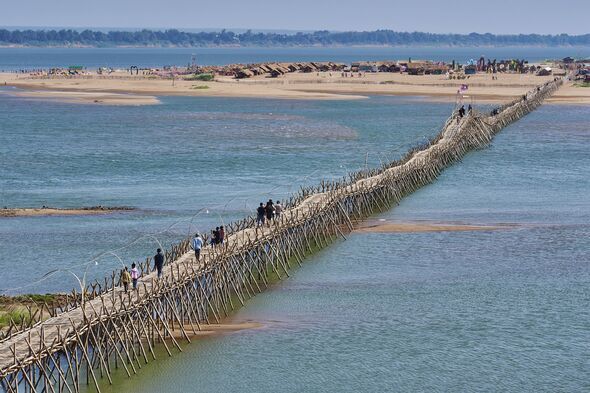
Once the waters have receded and currents have subsided, construction on a new bridge commences. First, tall bamboo poles are rammed into the riverbed, and then a layer of split bamboo matting is laid on top to create the surface. More poles at different angles brace the foundation.
Crossing it is not just a heart-pumping adventure - it's also a sensory experience. As you move across the bridge, the bamboo below flexes and bounces under pressure, creating a loud rattling sound. There are no steel cables or concrete barriers here. In many sections, there is nothing between you and the swirling currents of the Mekong other than a few thin, vertical bamboo sticks.
"None of the thousands upon thousands of horizontal-running bamboo striations are quite level, so it's a slippery, bumpy ride," wrote Emily Lush on Wander Lush.
"Speeding motorbikes send shock waves across the bridge, threatening to throw unsteady travellers off their feet and onto a menacing row of blunt bamboo spikes that line the bridge's edge."
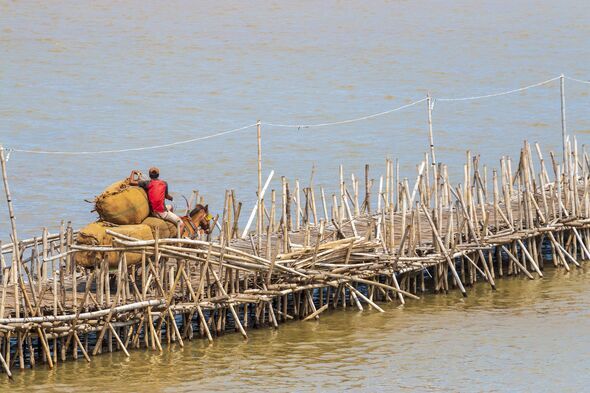
Before the monsoon rains arrive and the river swells, the bridge is taken down piece by piece. If left up, the powerful Mekong currents would simply wash it away. The bamboo is then stored or repurposed until the next cycle.
For decades, this was the only way for the around 1,000 families on Koh Paen Island to reach the mainland without a boat. In 2018, a permanent concrete bridge was completed nearby, leading many to fear the bamboo tradition would die out. However, the local community has kept the tradition alive for tourism and cultural heritage. While the concrete bridge handles the heavy logistics and 24/7 transport, the bamboo bridge remains the soul of Kampong Cham, drawing visitors who want to experience the unique crossing.
Locals can use the bridge for free. However, international visitors are asked to pay a small fee of 2,000 Riel (£0.37) to cross it.
-
Are You Storing Your Cheese The Wrong Way?

-
Just change one letter of email ID to clean up! 10 Crore Khowal organization in cyber crime

-
Rahul, Nissanka fuel DC’s 7-wicket win against RR – Tezzbuzz

-
‘Leave the day, the whole season is going bad…’ Pandya heartbroken after Mumbai Indians’ defeat

-
CSK vs MI: Who will score runs on the Chepauk ground, know the nature of the pitch and will the weather of Chennai become a hindrance?