US Navy warship lost power and propulsion for hours USS Higgins outage raises Indo Pacific security and naval readiness concerns
The USS Higgins suffered a complete power and propulsion failure during Indo-Pacific operations after an internal electrical fault forced a shutdown of its entire grid, leaving nearly 300 sailors aboard a motionless, radar-blind, and defenseless warship for several hours. Critical systems including the Aegis Combat System and missile launch capabilities went offline, with only emergency generators sustaining basic functions, rendering it electronically blind and mechanically immobile at the worst possible time and in the worst possible place.
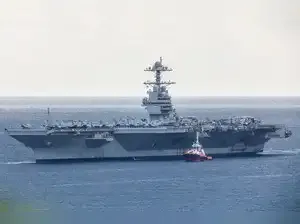
This was not an isolated incident happening in isolation. Just days earlier, the USS Gerald R. Ford — the Navy's crown jewel, a $13 billion supercarrier — suffered a fire onboard, triggering alarm across defense circles. Now, with the Higgins going dark, a troubling pattern is beginning to take shape. Two major US Navy warships. Two crises. Days apart. The Navy has not offered a unified explanation, but the optics are impossible to ignore.
The USS Higgins incident began with what officials described as an "engineering casualty" — the Navy's clinical term for an internal system failure. Early reports suggest sparking or smoke forced operators to shut down the ship's entire electrical grid as a precaution. What followed was hours of near-total vulnerability. Propulsion offline. Combat systems down. Radar dark. The ship sat motionless and undefended, relying only on emergency diesel generators — which can sustain basic life support and communications but cannot power the Aegis combat system, vertical launch batteries, or the engines that move a 9,000-ton warship through open ocean.
~300: Crew aboard USS Higgins during blackout
70+: Arleigh Burke destroyers in US Navy fleet
1999: Year USS Higgins was commissioned
The electrical failure on the USS Higgins reportedly stemmed from internal sparking or smoke within the ship's power distribution systems — the arteries through which every capability flows. Modern destroyers are almost entirely dependent on their electrical grids. Propulsion systems on Arleigh Burke-class ships use gas turbine engines, but even those require electrical control systems to function. When the grid collapsed, the ship lost not just lights but everything that made it a weapon. It became, in the assessment of naval analysts, "dead in the water" — a phrase that carries genuine operational meaning, not just metaphor.
For several hours, the Higgins sat in the Indo-Pacific with no ability to maneuver, no radar coverage, no anti-missile defenses active, and no weapons systems operational. The emergency diesel generators kept the crew breathing and the radios working. But they could not restore what the ship had lost: the ability to act, to react, and to survive a hostile encounter. Power has since been restored, and no injuries were reported. But the window of vulnerability — measured in hours, in one of the world's most watched maritime corridors — is not something that disappears from strategic calculations simply because the lights came back on.
Defense analysts caution against drawing hasty conclusions from coincidence. Technical failures happen across every navy in the world, and no fleet operates for decades without incidents. But the coincidence argument weakens when the incidents cluster. The US Navy is simultaneously managing record deployment tempos in the Indo-Pacific, aging platforms that stretch maintenance windows, and an accelerating integration of new digital systems with legacy hardware. These three pressures do not operate independently. They compound each other.
The Indo-Pacific stretches across approximately 100 million square kilometers and encompasses the world's busiest shipping lanes, the Taiwan Strait, the South China Sea, and the approaches to the Korean Peninsula. Any US Navy warship that loses power and propulsion here is not merely immobile — it is a visible signal of capability, or the lack of it, to every adversary monitoring the region.
The USS Higgins was commissioned in 1999. That makes her 27 years old — mid-life for a destroyer class designed to serve 35 to 40 years with modernization. But modernization is resource-intensive, and the Navy has faced sustained budgetary and scheduling pressures that push maintenance cycles beyond their designed intervals. Ships that are deployed cannot be in drydock. Ships that are in drydock cannot fulfill the operational commitments that combatant commanders require. The tension between readiness and presence is not new. But it becomes visible when a warship loses power and propulsion for hours in contested waters.
This creates a single-point vulnerability that no amount of redundancy entirely eliminates. The Higgins had backup diesel generators — as every Arleigh Burke does — and they worked as designed. But backup power on a warship is triage, not restoration. It sustains the crew. It does not sustain the ship's war-fighting capability. The Aegis radar system, which requires enormous electrical load to operate, went offline. The vertical launch system — the ship's primary offensive and defensive weapons battery — was inoperable. In the Indo-Pacific, with regional tensions running higher than at any point since the Cold War, that is a window of exposure that adversaries note, study, and file away.
The Navy's investigation will likely focus on the cause of the sparking or smoke — whether it was a component failure, a maintenance gap, or a design-related vulnerability under specific operating conditions. What the investigation cannot fully address is the structural reality: as long as warships are electrically integrated at this level of complexity, an electrical casualty will always carry catastrophic operational consequences. The Higgins incident is a stress test that revealed what was always true. It just revealed it publicly, in the wrong ocean, at a difficult moment in the Navy's recent history.
The investigation into the Higgins engineering casualty will produce findings. Those findings will likely inform maintenance updates, inspection protocols, or procedural changes — the institutional mechanisms through which the Navy learns from failure. This is the process working as it should. But the broader questions that the Gerald Ford fire and the Higgins blackout together raise are not answered by a single investigation. They are questions about tempo, funding, maintenance philosophy, and the gap between the Navy the United States needs and the Navy it currently operates.
The Navy has confirmed the incident and stated that the cause is under formal investigation. No injuries were reported. Power has been restored. The USS Higgins is operational again. But operational again is not the same as nothing happened. Something did happen. A warship went dark in the Indo-Pacific. Its crew sat aboard a vessel that could not maneuver or defend itself for several hours in a region where that matters enormously. The ship came back online. The moment it revealed will take longer to process — and longer still to forget.
This was not an isolated incident happening in isolation. Just days earlier, the USS Gerald R. Ford — the Navy's crown jewel, a $13 billion supercarrier — suffered a fire onboard, triggering alarm across defense circles. Now, with the Higgins going dark, a troubling pattern is beginning to take shape. Two major US Navy warships. Two crises. Days apart. The Navy has not offered a unified explanation, but the optics are impossible to ignore.
The USS Higgins incident began with what officials described as an "engineering casualty" — the Navy's clinical term for an internal system failure. Early reports suggest sparking or smoke forced operators to shut down the ship's entire electrical grid as a precaution. What followed was hours of near-total vulnerability. Propulsion offline. Combat systems down. Radar dark. The ship sat motionless and undefended, relying only on emergency diesel generators — which can sustain basic life support and communications but cannot power the Aegis combat system, vertical launch batteries, or the engines that move a 9,000-ton warship through open ocean.
~300: Crew aboard USS Higgins during blackout
70+: Arleigh Burke destroyers in US Navy fleet
1999: Year USS Higgins was commissioned
What Exactly Happened to the USS Higgins
The USS Higgins is an Arleigh Burke-class guided-missile destroyer, commissioned in 1999 and considered a cornerstone of American surface naval power. These ships carry the Aegis Combat System, one of the most sophisticated integrated weapons platforms ever built, capable of simultaneously tracking hundreds of airborne targets and engaging ballistic missiles mid-flight. They are, in naval terms, not just warships but floating command centers. When one goes dark, it is not merely a maintenance problem. It is a strategic event.The electrical failure on the USS Higgins reportedly stemmed from internal sparking or smoke within the ship's power distribution systems — the arteries through which every capability flows. Modern destroyers are almost entirely dependent on their electrical grids. Propulsion systems on Arleigh Burke-class ships use gas turbine engines, but even those require electrical control systems to function. When the grid collapsed, the ship lost not just lights but everything that made it a weapon. It became, in the assessment of naval analysts, "dead in the water" — a phrase that carries genuine operational meaning, not just metaphor.
For several hours, the Higgins sat in the Indo-Pacific with no ability to maneuver, no radar coverage, no anti-missile defenses active, and no weapons systems operational. The emergency diesel generators kept the crew breathing and the radios working. But they could not restore what the ship had lost: the ability to act, to react, and to survive a hostile encounter. Power has since been restored, and no injuries were reported. But the window of vulnerability — measured in hours, in one of the world's most watched maritime corridors — is not something that disappears from strategic calculations simply because the lights came back on.
Two Crises, Days Apart — Is the US Navy Facing a Systemic Problem?
The USS Gerald R. Ford fire preceded the Higgins blackout by only days. The Gerald Ford is America's most advanced aircraft carrier, the lead ship of a new class designed to project power across the globe. A fire onboard — whatever its cause — undermines the central premise of carrier strike group operations: that the flagship is the most survivable, most reliable asset in the theater. Two incidents, two different ship classes, two different kinds of failures, separated by a matter of days. That is a pattern worth examining.Defense analysts caution against drawing hasty conclusions from coincidence. Technical failures happen across every navy in the world, and no fleet operates for decades without incidents. But the coincidence argument weakens when the incidents cluster. The US Navy is simultaneously managing record deployment tempos in the Indo-Pacific, aging platforms that stretch maintenance windows, and an accelerating integration of new digital systems with legacy hardware. These three pressures do not operate independently. They compound each other.
The Indo-Pacific stretches across approximately 100 million square kilometers and encompasses the world's busiest shipping lanes, the Taiwan Strait, the South China Sea, and the approaches to the Korean Peninsula. Any US Navy warship that loses power and propulsion here is not merely immobile — it is a visible signal of capability, or the lack of it, to every adversary monitoring the region.
The USS Higgins was commissioned in 1999. That makes her 27 years old — mid-life for a destroyer class designed to serve 35 to 40 years with modernization. But modernization is resource-intensive, and the Navy has faced sustained budgetary and scheduling pressures that push maintenance cycles beyond their designed intervals. Ships that are deployed cannot be in drydock. Ships that are in drydock cannot fulfill the operational commitments that combatant commanders require. The tension between readiness and presence is not new. But it becomes visible when a warship loses power and propulsion for hours in contested waters.
The Electrical Vulnerability at the Heart of Modern Naval Warfare
There is a fundamental tension in the design of modern warships that the USS Higgins incident throws into sharp relief. The more capable a ship becomes, the more electrically dependent it is. The Arleigh Burke class draws on gas turbine propulsion, radar arrays, electronic warfare suites, data links, satellite communications, vertical launch systems — all of it woven together through the ship's electrical plant. The power grid is not one system among many. It is the system on which all other systems depend.This creates a single-point vulnerability that no amount of redundancy entirely eliminates. The Higgins had backup diesel generators — as every Arleigh Burke does — and they worked as designed. But backup power on a warship is triage, not restoration. It sustains the crew. It does not sustain the ship's war-fighting capability. The Aegis radar system, which requires enormous electrical load to operate, went offline. The vertical launch system — the ship's primary offensive and defensive weapons battery — was inoperable. In the Indo-Pacific, with regional tensions running higher than at any point since the Cold War, that is a window of exposure that adversaries note, study, and file away.
The Navy's investigation will likely focus on the cause of the sparking or smoke — whether it was a component failure, a maintenance gap, or a design-related vulnerability under specific operating conditions. What the investigation cannot fully address is the structural reality: as long as warships are electrically integrated at this level of complexity, an electrical casualty will always carry catastrophic operational consequences. The Higgins incident is a stress test that revealed what was always true. It just revealed it publicly, in the wrong ocean, at a difficult moment in the Navy's recent history.
What the Higgins Incident Reveals About Fleet Readiness
Fleet readiness is a number the Navy tracks obsessively and shares selectively. The percentage of ships certified as fully mission-capable is one of the most politically sensitive metrics in defense budgeting. When a US Navy warship loses power and propulsion for hours in the Indo-Pacific, the question of fleet readiness stops being an abstract figure in a Congressional report and becomes a concrete and visible reality. Other nations' intelligence services track these incidents. Allies take note. Deterrence is partly psychological, and a disabled destroyer in contested waters is a data point that enters every adversary's assessment.The investigation into the Higgins engineering casualty will produce findings. Those findings will likely inform maintenance updates, inspection protocols, or procedural changes — the institutional mechanisms through which the Navy learns from failure. This is the process working as it should. But the broader questions that the Gerald Ford fire and the Higgins blackout together raise are not answered by a single investigation. They are questions about tempo, funding, maintenance philosophy, and the gap between the Navy the United States needs and the Navy it currently operates.
The Navy has confirmed the incident and stated that the cause is under formal investigation. No injuries were reported. Power has been restored. The USS Higgins is operational again. But operational again is not the same as nothing happened. Something did happen. A warship went dark in the Indo-Pacific. Its crew sat aboard a vessel that could not maneuver or defend itself for several hours in a region where that matters enormously. The ship came back online. The moment it revealed will take longer to process — and longer still to forget.