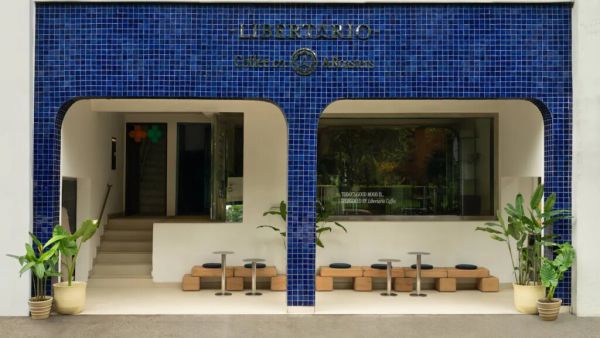
There are coffee shops, and then there are coffee experiences. Libertario Coffee Co. & Roasters, which recently opened its doors in Delhi, is firmly in the second category. Born out of three decades of Colombian coffee expertise, from farming and exporting to roasting and hospitality, this brand has quietly built a presence across Colombia, Mexico, the United States, Chile, and Costa Rica before landing in India. The question was never whether the coffee would be good. The question was whether India, a country that takes its chai seriously and is only now warming up to serious coffee culture, was ready for a brand this intentional. After an afternoon inside Libertario, the answer is a resounding yes.
Walking In: The Café
The first thing that hits you about Libertario is the calm. Not the performative, Instagram-aesthetic calm of a café that has been styled within an inch of its life, but something more settled. The interiors carry a warm, earthy tone, cream and navy blue, natural wood, ceramic mugs with the Libertario name pressed into them, and warm lighting that makes the whole place feel like it is always a pleasant hour of the day. There is a deliberate absence of clutter. The space communicates one thing clearly: everything here is thought about. The long wooden bar is where the pour-overs happen, and it is genuinely worth sitting there for a bit, watching the baristas work with the kind of focused precision you usually only see in documentary footage. The café is the kind of place where you come in for one cup and leave two hours later, mildly surprised at how quickly the time went.
The Coffee Philosophy

Before getting into what you actually taste, it helps to understand how Libertario thinks about coffee. They do not offer an endless, disorienting list of options. Instead, they have built five distinct coffee profiles, each with a name and a personality. Paz is the balanced, accessible one, a medium-roast blend of Colombian beans from Huila and Indian beans from Tamil Nadu, with notes of caramel, sugar cane, and milk chocolate. Libre is a medium-roast natural-process blend from Tamil Nadu, described as vibrant and intense, with notes of cherry, brown sugar, and dark chocolate. Impact is a single-origin, organically grown Tamil Nadu coffee processed washed, offering notes of blackberry, plum, and dark chocolate. Voyage is the rare one, a single-origin Geisha from Yercaud processed using red honey, with notes of jasmine, black tea, honey, and lavender. And then there is Rebel, the most experimental of the lot, a Geisha from Yercaud processed through carbonic maceration, with notes of rose, orange blossom, raspberry, and dark chocolate.
Founder and CEO Miguel Villaquirán explains the thinking behind this approach: “Our coffee menu is built around defined flavor profiles, and we select coffees from different origins that best express those profiles. That naturally allows us to work with both Indian and Latin American coffees in a way that feels deliberate, not forced.” He adds that their non-negotiables when sourcing are consistency, cup quality, and traceability, because, as he says, building a café brand requires reliability, not just one-off excellence.
The Espresso Tasting: Paz, Libre, and Voyage
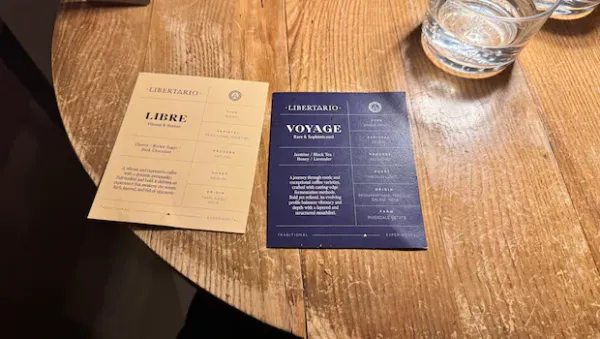
Three of the five profiles were tried as espressos, and the differences between them were striking, even for someone who does not spend most of their waking hours thinking about coffee.
Paz comes first, and it earns its reputation as the house staple. The aroma is immediately inviting, warm, slightly sweet, with something almost biscuity about it. As an espresso, it is smooth and round, without any of the sharp, aggressive quality that puts people off black coffee. The mouthfeel is medium-bodied, and the caramel note from the Colombian beans is genuinely present rather than just a descriptor on a menu card. The finish is clean and balanced. This is the coffee for someone who wants to understand what the brand is about in a single sip.
Libre is where things get more interesting. The aroma shifts noticeably; there is a fruitier, more fermented quality to it, which comes from the natural processing of the Tamil Nadu beans. As an espresso, it is bolder and more assertive, with the cherry and dark chocolate notes coming through clearly. The mouthfeel is slightly thicker and more coating than Paz, and there is a brightness in the mid-palate that lingers pleasantly. If Paz is the approachable one, Libre is the one who asks for your full attention.
Voyage is the wildcard. Made from a Geisha varietal and processed using red honey, this is the most delicate and unusual of the three. The aroma alone is worth pausing over; there is something genuinely floral and perfumed about it, a quality you would not typically associate with espresso. In the cup, the jasmine and black tea notes are unmistakable, and the honey quality from the processing method adds a softness that makes this feel almost like a different kind of drink entirely. The mouthfeel is lighter, almost silky. It is the most sophisticated of the three, and the most rewarding if you give it the time it deserves.
The Pour-Over Tasting: Impact and Rebel
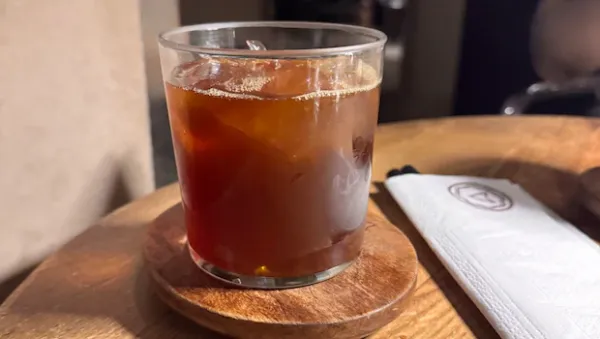
The pour-over format was used for the two single-origin naturals, and it suits them well, slower brewing brings out more nuance and allows the coffees to breathe.
Impact, the organic Tamil Nadu coffee, has an aroma that is deep and earthy, with a subtle fruitiness that becomes clearer as the cup cools. As a pour-over, it is structured and clean, with the blackberry and dark chocolate notes developing gradually rather than hitting all at once. The mouthfeel is medium-full, and there is a pleasant acidity that keeps it from feeling heavy. It is the kind of coffee that makes you want a second cup, which is the clearest compliment you can give.
Rebel is the one that genuinely surprises. Carbonic maceration is a winemaking technique that has made its way into specialty coffee processing, and it produces flavors that are wildly unexpected. The aroma is almost wine-like, there is a floral, rose-like quality and something almost effervescent about it. In the pour-over, the raspberry note is distinct and bright, and the dark chocolate provides a grounding base that stops it from feeling too unusual. The mouthfeel is lively and lightly sparkling in sensation. This is not a coffee for every day, but it is the one you will talk about after.
The Coconut Cloud Matcha
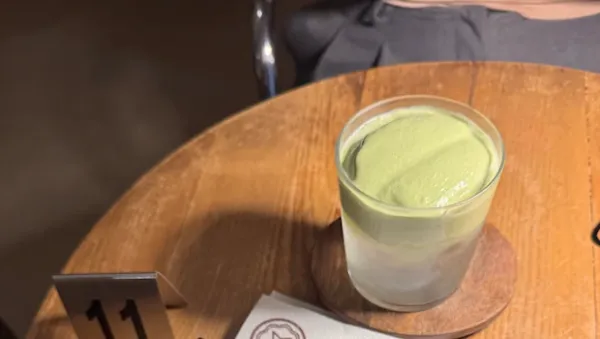
Not every visit to Libertario needs to be about coffee, which brings us to the Coconut Cloud Matcha. The matcha here is sourced from Kagoshima, Japan, certified ceremonial grade, Yabukita and Saemidori varietal, stone ground, spring 2025 harvest, and shaded for 10 days. The drink itself is coconut water topped with a light, airy matcha foam, and it is a revelation. The coconut water provides a subtle sweetness and a tropical quality that does not overpower, while the matcha foam is grassy and clean without any of the bitter, chalky quality that matcha can sometimes carry. It is refreshing and complex and genuinely worth ordering on its own terms, not just as the non-coffee option.
The Interview: What Miguel Villaquirán Wants You to Know
When asked what specialty coffee should feel like beyond a score on paper, Villaquirán says: “It should feel expressive, but also clean and structured, so that the complexity is something you can enjoy, not struggle to understand. At its best, specialty coffee should leave you with a sense that there’s more to discover, without ever feeling inaccessible.”
On adapting for India specifically, he explains that while the coffee program remains consistent, with the same flavor profiles and the same standards, the beverage menu has been developed with the local palate in mind. “Nothing feels added for the sake of it. Even when we adapt, it still needs to feel like Libertario.” His personal recommendation for a first visit is straightforward: a black coffee from the Paz profile and an empanada, the Colombian fried puff pastry served with salsa verde and hot sauce. And when asked what he hopes someone writes about Libertario India a year from now, his answer says everything about the brand’s ambitions: “A place you come for great coffee, but end up staying for the way it makes you feel.”
One More Thing: The Food
The food menu at Libertario deserves its own piece, but in brief: it is as thoughtfully curated as the beverages. Each dish comes with a coffee pairing suggestion, which is a small detail that tells you a lot about how seriously the brand takes the relationship between food and drink. The Libertario Benedict, a buttery croissant layered with chicken ham, poached eggs, and Hollandaise, is paired with the Rebel Pour Over. The empanadas, which come in four fillings: mushroom and cheese, exotic vegetable, smoked chipotle chicken, and braised lamb, are paired with the Paz Pour Over and the Iced Brown Sugar Latte, respectively. Even the desserts follow the logic: Mona’s Tiramisu, made with Paz espresso and a hint of Old Monk rum, is naturally paired with a Paz Macchiato.
Why Libertario Matters Right Now
India’s specialty coffee scene is growing rapidly, but it is also crowded. What sets Libertario apart is not just the quality of the coffee, which is genuinely excellent, but the clarity of the vision behind it. This is a brand that knows exactly what it is, and every element of the experience, the interiors, the profiles, the staff, the menu pairings, reflects that. It is a place built around the idea that coffee is worth exploring, not just consuming. For Delhi’s growing community of coffee drinkers who are ready for something beyond a cold brew in a paper cup, Libertario has arrived at exactly the right time.
-
Zeekr dual flagships command Auto China 2026, redefining the premium market

-
Saudi Arabia Reduces International Sports Investments Amid Financial Challenges

-
ISL 2025-26: Late goals against FC Goa take Jamshedpur FC atop standings

-
Co-op introduces 1 major change to UK stores

-
Donald Trump had 3-word response for Piers Morgan about King Charles