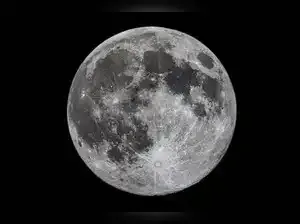
If you step outside tonight, you’ll witness one of spring’s most talked-about celestial events: the Flower Moon lighting up the sky. The May full moon reaches peak illumination on May 1, offering a bright but slightly unusual view.
What makes this year different isn’t just the timing, it’s the size. This full moon is also a micromoon, meaning it will appear smaller and dimmer than usual. For casual observers, the difference is subtle, but for skywatchers, it’s a fascinating twist.
The moon’s orbit isn’t perfectly circular, it’s elliptical. So sometimes it swings closer, and other times it drifts farther away. Tonight’s Flower Moon falls into that “farther away” category.
For most viewers, it will still look stunning, but photographers and astronomy enthusiasts may notice the reduced size and brightness.
May is associated with blooming flowers across much of the Northern Hemisphere, making “Flower Moon” a fitting title. Over time, publications like The Old Farmer's Almanac helped popularize these names globally.
The May full moon will be fully illuminated during the day, but the best viewing happens just after sunset.
As it rises:
At the end of the month, a second full moon, known as a Blue Moon—will appear on May 31. This happens because the lunar cycle lasts about 29.5 days, allowing two full moons to fit into a single calendar month.
That’s where the phrase “once in a blue moon” comes from, though in reality, it occurs roughly every two to three years.
Yes, and you don’t need expensive gear.
A smartphone can work if you:
Because it’s a micromoon, meaning the moon is at its farthest point from Earth, making it appear slightly smaller and dimmer.
What makes this year different isn’t just the timing, it’s the size. This full moon is also a micromoon, meaning it will appear smaller and dimmer than usual. For casual observers, the difference is subtle, but for skywatchers, it’s a fascinating twist.
What is a “micromoon” and why does it matter?
A micromoon occurs when the moon is at its farthest point from Earth in its orbit, known as apogee. Unlike a supermoon, which looks larger and brighter, a micromoon can appear about 10–14% smaller.The moon’s orbit isn’t perfectly circular, it’s elliptical. So sometimes it swings closer, and other times it drifts farther away. Tonight’s Flower Moon falls into that “farther away” category.
For most viewers, it will still look stunning, but photographers and astronomy enthusiasts may notice the reduced size and brightness.
Why is it called the “Flower Moon”
The name Flower Moon comes from seasonal traditions rooted in Native American culture. These names were used to track time based on nature’s cycles.May is associated with blooming flowers across much of the Northern Hemisphere, making “Flower Moon” a fitting title. Over time, publications like The Old Farmer's Almanac helped popularize these names globally.
Best time to watch the Flower Moon tonight
The May full moon will be fully illuminated during the day, but the best viewing happens just after sunset.As it rises:
- It may appear golden or orange near the horizon
- This effect is caused by Rayleigh scattering
- The moon will climb higher and turn its usual bright white later in the night
A bigger surprise: Two full moons in May
Here’s where things get even more interesting. May 2026 doesn’t stop at one full moon, it delivers two.At the end of the month, a second full moon, known as a Blue Moon—will appear on May 31. This happens because the lunar cycle lasts about 29.5 days, allowing two full moons to fit into a single calendar month.
That’s where the phrase “once in a blue moon” comes from, though in reality, it occurs roughly every two to three years.
What to expect in the night sky
Tonight’s sky won’t just feature the moon. Keep an eye out for:- Spica shining nearby
- Arcturus glowing high above
- Venus visible near the horizon
- Jupiter appearing close by
Can you photograph the Flower Moon?
Yes, and you don’t need expensive gear.A smartphone can work if you:
- Use a tripod or stable surface
- Adjust exposure and ISO in “pro” mode
- Shoot during moonrise for dramatic colors