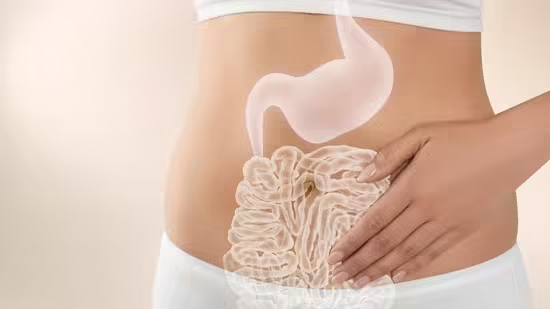
Your gut health’s balance depends on a complex system of microorganisms that live in your digestive tract. These microbes are responsible for several key physiological and psychological functions, including digestion, immunity, metabolism, and even concentration and mood regulation. Many of the gut axes, from the gut-immune to the gut-skin axis, reflect these bidirectional pathways where both systems influence each other. Ultimately, they all can be traced back to the activity and balance of microorganisms in your gut microbiome.
The extent of microorganisms living in the gut is vast, almost trillions in number, as the microbiologist added, “The gut is home to trillions of microorganisms that require a diverse and stable environment. Some foods, when consumed by the host, provide nourishment to beneficial microorganisms (i.e., beneficial bacteria)”
Here are some of the foods you need to eat, as recommended by the microbiologist:
1. Fibre-rich vegetables
The microbiologist recommended eating veggies, but knowing which ones is very important, because not all vegetables have the same effect.
He advised eating two types of vegetables: leafy greens and cruciferous vegetables. Why? Dr Dhar listed the reasons along with some of the best examples:
Leafy greens
- Good sources of insoluble fibre, which provide substrate for microbiota diversity.
- Spinach, fenugreek, mustard greens, and kale
Cruciferous vegetables
- Contain compounds that benefit beneficial bacteria and aid in the detoxification process.
- Broccoli, cauliflower, cabbage, and Brussels sprouts
What happens if you eat these veggies on a daily basis? “Eating vegetables will promote short-chain fatty acid production in the colon, which strengthens the colonic barrier and reduces inflammation.”
2. Fermented food
The second set of food is fermented, which Dr Dhar highlighted as an important part of gut health. He shared that fermented foods like homemade dahi, chaas, pakhala, idli, dosa batter, and kanji are good for your gut.
So, how do fermented foods improve gut balance, and in turn, support overall wellbeing? “Fermented foods contain live cultures that directly improve digestion and assist in nutrient breakdown,” he said, explaining how they support the gut microbiome more directly.
Moreover, fermented foods are especially valuable after illness or any dietary disruptions, as during that time microbial balance is disturbed, but fermented foods, Dr Dhar observed, help to re-establish this balance and improve digestion.
3. Prebiotic-rich foods
The third and final recommendation on this list belongs to prebiotic-rich food. The biologist believes that bacteria require prebiotics as they are their energy source.
What are some of the sources and nutrient profiles? Dr Dhar revealed, “Prebiotic-rich foods, i.e., garlic, onion, leek, banana, oat, barley, chickpea, and lentil, contain substantial quantities of both soluble and insoluble fibre.”
Next, when you eat prebiotic foods, what happens to the bacteria in your digestive gut? The microbiologist explained that the beneficial bacteria ‘grow and multiply,’ and, in the process, they overtake or suppress the growth of harmful bacteria.
The other benefits of prebiotics, as per Dr Dhar, include regularised bowel function, better nutrient absorption, and long-term survival and stability of beneficial microbes.
Note to readers: This article is for informational purposes only and not a substitute for professional medical advice. Always seek the advice of your doctor with any questions about a medical condition.
-
You can take Royal Safar in a budget of 10 thousand! Visit the countries where the Indian rupee is worth a fortune…

-
Sandwich Recipe: Make curd sandwich quickly in the morning rush, children and adults alike will like the taste.

-
Lentil Face Pack: Beneficial Home Remedies for Skin

-
Chat with AI is now in Incognito mode, WhatsApp brings new privacy feature

-
KKR Playoff Qualification Scenario IPL 2026: How Can Kolkata Knight Riders Still Qualify For Playoffs After RCB Defeat?