General Motors just took a $1.1 billion hit in the first quarter of 2026. That’s the price of dialing back parts of its electric vehicle push.
Here’s the thing—this isn’t GM giving up on EVs. It’s GM adjusting to reality. Demand hasn’t ramped up as fast as expected, costs are still stubbornly high, and the path to profits is longer than anyone hoped. So instead of forcing it, GM is shifting attention to something that’s quietly working in its favor.
Super Cruise Is Having a Moment
That “something” is Super Cruise, and it’s turning into a serious asset. Drivers have now logged over a billion miles using the system. That’s not a lab test. That’s real-world usage, across highways, traffic, and everything in between.
Even more interesting is the business side. Subscriptions are up 70% year over year. After the free trial period, people are actually paying to keep it. In a world where carmakers struggle with margins, that kind of recurring revenue starts to look very attractive.
From Hands-Free to Hands-Off
GM isn’t stopping at hands-free driving. The next step is Level 3 autonomy—where you don’t need to keep your eyes on the road in certain conditions.
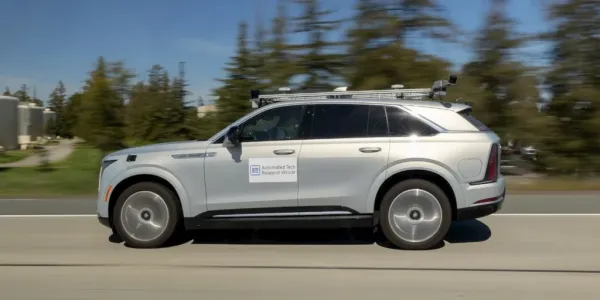
According to CEO Mary Barrathat leap is already in motion. The upcoming Cadillac Escalade IQ is expected to carry this tech by 2028, complete with LiDAR sensors to better “see” the world around it.
Behind the scenes, GM is running massive simulations, basically compressing decades of driving into a single day of testing. At the same time, real-world trials are already happening in places like California and Michigan.
AI Is Writing the Playbook
One detail that stands out: GM says nearly 90% of the code for its autonomy systems is now generated by AI.
That’s a big shift. It means faster development, quicker iterations, and the ability to test scenarios humans wouldn’t even think of. AI isn’t just inside the car anymore—it’s shaping how the car is built.
The Tesla Shadow Still Looms
Of course, GM isn’t alone in this race. Tesla still holds a massive lead with its Full Self Driving platform. It has more users, more miles, and a strong head start.
But GM’s approach is a bit different. Instead of focusing only on EVs, it wants autonomy to work across both electric and traditional petrol-powered vehicles. That’s a much larger playing field—if they can pull it off.
The Hard Part No One Talks About
And that’s the catch.
Building advanced autonomy into modern EVs is relatively straightforward they’re designed for it. But retrofitting or scaling that tech across older combustion platforms? That’s complicated. These vehicles weren’t built with high computing power or advanced sensors in mind.
GM hasn’t fully explained how it plans to solve that yet. But solving it could unlock scale in a way competitors might struggle to match.
Where This Leaves GM
What this really means is simple: the game is no longer just about electric cars.
Autonomy is shaping up to be the next big differentiator. And for GM, Super Cruise isn’t just a feature anymore, it’s becoming a business model.
If the momentum continues, GM might end up winning not by selling more cars, but by making every car smarter and charging for it over time.
-
The 37 MPs calling on Keir Starmer to step down after election humiliation

-
Banish black mould from washing machine seals in 15 minutes

-
Trump Mobile T1 Smartphone Delays Frustrate Supporters

-
Elizabeth Smart Expresses Hope for Missing Nancy Guthrie's Survival

-
Tomato soup will taste 'so so good' if you add 1 simple ingredient