Pope Gregory I, also known as Gregory the Great, was one of the most important leaders in early Christian history. Born around 540 AD in Rome, he came from a wealthy and respected family. Despite his privileged background, Gregory chose a life of service and faith, eventually becoming one of the most influential popes of the early Middle Ages. Before becoming pope, Gregory worked as a government official in Rome. He later gave up his political career to become a monk, dedicating his life to prayer and spiritual growth. His deep religious commitment and strong leadership skills led to his election as pope in 590 AD, during a difficult time marked by war, famine, and disease.
As pope, Gregory focused on helping the poor and strengthening the Church. He used church resources to provide food and support to people in need, especially during times of crisis. His leadership helped stabilize Rome when the city was struggling, and he became known as a compassionate and practical leader. One of Gregory’s most lasting contributions was his role in spreading Christianity. He famously sent missionaries to England, helping to convert the Anglo-Saxons to Christianity. This mission played a major role in shaping the religious future of Europe.
Gregory also made important contributions to church music and worship. He is often associated with the development of Gregorian chant, a style of church music that became widely used in Christian worship. Although not all of it was created by him, his influence helped organize and promote this form of music.
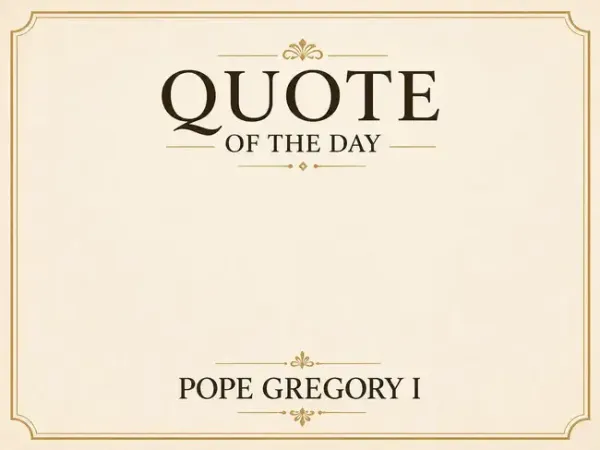
Quote of the day
Quote of the day - "The universe is not rich enough to buy the vote of an honest man," is widely attributed to by Pope Gregory I.
Meaning of the quote
The quote by Pope Gregory I highlights the true value of integrity. It means that a person who is truly honest cannot be influenced or corrupted by money, power, or rewards - no matter how great they may be. This quote teaches that honesty is priceless. An honest person stands firm in their values and makes decisions based on what is right, not on personal gain. Even if offered great wealth or benefits, they will not compromise their principles. It also reflects the idea of moral strength. In a world where people can sometimes be tempted by greed or pressure, maintaining honesty requires courage and character. Gregory is emphasizing that true integrity cannot be bought or sold.
In addition, Gregory was a prolific writer. His works on theology, leadership, and morality were widely read and influenced Christian thought for centuries. Gregory emphasized humility, service, and strong moral values, encouraging leaders to care for their people. Pope Gregory I’s legacy is significant because he combined spiritual leadership with practical action. Gregory was not just a religious figure but also a problem-solver who worked to improve the lives of those around him.
Pope Gregory I is still remembered as one of the greatest popes in history. His life teaches the importance of compassion, leadership, and dedication to a higher purpose, making him a lasting symbol of faith and service.
As pope, Gregory focused on helping the poor and strengthening the Church. He used church resources to provide food and support to people in need, especially during times of crisis. His leadership helped stabilize Rome when the city was struggling, and he became known as a compassionate and practical leader. One of Gregory’s most lasting contributions was his role in spreading Christianity. He famously sent missionaries to England, helping to convert the Anglo-Saxons to Christianity. This mission played a major role in shaping the religious future of Europe.
Gregory also made important contributions to church music and worship. He is often associated with the development of Gregorian chant, a style of church music that became widely used in Christian worship. Although not all of it was created by him, his influence helped organize and promote this form of music.
Quote of the day
Quote of the day - "The universe is not rich enough to buy the vote of an honest man," is widely attributed to by Pope Gregory I.
Meaning of the quote
The quote by Pope Gregory I highlights the true value of integrity. It means that a person who is truly honest cannot be influenced or corrupted by money, power, or rewards - no matter how great they may be. This quote teaches that honesty is priceless. An honest person stands firm in their values and makes decisions based on what is right, not on personal gain. Even if offered great wealth or benefits, they will not compromise their principles. It also reflects the idea of moral strength. In a world where people can sometimes be tempted by greed or pressure, maintaining honesty requires courage and character. Gregory is emphasizing that true integrity cannot be bought or sold.
In addition, Gregory was a prolific writer. His works on theology, leadership, and morality were widely read and influenced Christian thought for centuries. Gregory emphasized humility, service, and strong moral values, encouraging leaders to care for their people. Pope Gregory I’s legacy is significant because he combined spiritual leadership with practical action. Gregory was not just a religious figure but also a problem-solver who worked to improve the lives of those around him.
Pope Gregory I is still remembered as one of the greatest popes in history. His life teaches the importance of compassion, leadership, and dedication to a higher purpose, making him a lasting symbol of faith and service.