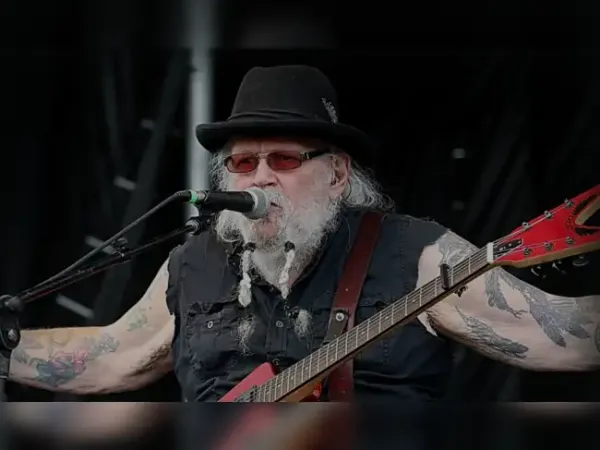
Country music legend David Allan Coe died in hospital intensive care at approximately 5 p.m. ET on Wednesday, April 29, 2026. The Music Universe, citing a representative, confirmed the passing of the 86-year-old artist, who had been facing a period of declining health.
Best known for shaping the outlaw country movement and for hits like “You Never Even Called Me By My Name,” Coe remained one of country music’s most distinctive and controversial voices for decades.
David Allan Coe leaves behind his wife, Kimberly Hastings Coe, son Tyler Mahan Coe (podcaster, author, and guitarist), and daughter Tanya Coe (country singer), as noted by Men's Journal.
David Allan Coe's exact cause of death was not known beyond his declining health issues. Rolling Stone also confirmed “The Mysterious Rhinestone Cowboy” star’s demise without reporting the exact cause of death. Speaking to The Music Universe, the representative said, “David is a musical treasure,” and that even in his years of declining health, “David appreciated all of the fans.”
However, Coe had previously been diagnosed with COVID-19 and had faced multiple health complications over the years.
As per a Saving Country Music article published in September 2021, David Allan Coe celebrated his 82nd birthday on September 6 in the hospital after being admitted in August following a positive COVID-19 test and low oxygen levels. He never had to be intubated and was instead treated with supplemental oxygen and high doses of vitamins.
The outlet later reported that Coe had finally been discharged from the hospital and was continuing to recover and regain strength at home. He remained on supplemental oxygen and was said to be working toward returning to live performances.
Coe also experienced several other ailments over the years, including knee replacement surgery in April 2019. According to the outlet, he was also diagnosed with an inner ear infection in February 2018 that was first falsely reported as a stroke.
David Allan Coe was one of country music’s most rebellious and influential voices, widely known as a pioneer of the outlaw country movement. Born in Akron, Ohio, Coe had a troubled early life and spent much of his youth in and out of reform schools and correctional facilities.
During his time in prison, he reportedly became friends with Screamin’ Jay Hawkins, who inspired him to seriously pursue music. It is believed the two even wrote songs together while behind bars.
After leaving prison, Coe moved to Nashville to chase a career in country music. He was later signed by Plantation Records and released his debut album, “Penitentiary Blues,” in 1970.
With his gritty voice, fearless lyrics, and outlaw image, Coe built a reputation as the “outlaw’s outlaw.” His music often included stories of prison life, drug use, rebellion, and explicit themes, making him both controversial and unforgettable.
Coe became one of Nashville’s most respected songwriters before finding major success as a solo artist. He wrote Billie Jo Spears’s 1972 song “Souvenirs and California Mem’rys” and Tanya Tucker’s chart-topping 1973 hit “Would You Lay With Me (In a Field of Stone),” which helped establish his name in country music.
His own breakthrough came in 1975 with “You Never Even Called Me By My Name,” featured on his album “Once Upon a Rhyme.” The song, written by Steve Goodman and John Prine, became his signature track and remains one of outlaw country’s most iconic songs.
Later, after moving to Key West, Florida, Coe released independent albums including “Nothing Sacred” (1978) and the controversial “Underground Album” (1982).
He returned to chart success in the 1980s with major hits like “The Ride” (1983) and “Mona Lisa Lost Her Smile” (1984), further cementing his legacy. In later years, he also collaborated on “Rebel Meets Rebel,” a project with Dimebag Darrell, Vinnie Paul, and Rex Brown, blending country music with heavy metal.
Best known for shaping the outlaw country movement and for hits like “You Never Even Called Me By My Name,” Coe remained one of country music’s most distinctive and controversial voices for decades.
David Allan Coe leaves behind his wife, Kimberly Hastings Coe, son Tyler Mahan Coe (podcaster, author, and guitarist), and daughter Tanya Coe (country singer), as noted by Men's Journal.
David Allan Coe’s cause of death
David Allan Coe's exact cause of death was not known beyond his declining health issues. Rolling Stone also confirmed “The Mysterious Rhinestone Cowboy” star’s demise without reporting the exact cause of death. Speaking to The Music Universe, the representative said, “David is a musical treasure,” and that even in his years of declining health, “David appreciated all of the fans.”
However, Coe had previously been diagnosed with COVID-19 and had faced multiple health complications over the years.
David Allan Coe’s past health issues
As per a Saving Country Music article published in September 2021, David Allan Coe celebrated his 82nd birthday on September 6 in the hospital after being admitted in August following a positive COVID-19 test and low oxygen levels. He never had to be intubated and was instead treated with supplemental oxygen and high doses of vitamins.
The outlet later reported that Coe had finally been discharged from the hospital and was continuing to recover and regain strength at home. He remained on supplemental oxygen and was said to be working toward returning to live performances.
Coe also experienced several other ailments over the years, including knee replacement surgery in April 2019. According to the outlet, he was also diagnosed with an inner ear infection in February 2018 that was first falsely reported as a stroke.
Who was David Allan Coe?
David Allan Coe was one of country music’s most rebellious and influential voices, widely known as a pioneer of the outlaw country movement. Born in Akron, Ohio, Coe had a troubled early life and spent much of his youth in and out of reform schools and correctional facilities.
During his time in prison, he reportedly became friends with Screamin’ Jay Hawkins, who inspired him to seriously pursue music. It is believed the two even wrote songs together while behind bars.
After leaving prison, Coe moved to Nashville to chase a career in country music. He was later signed by Plantation Records and released his debut album, “Penitentiary Blues,” in 1970.
With his gritty voice, fearless lyrics, and outlaw image, Coe built a reputation as the “outlaw’s outlaw.” His music often included stories of prison life, drug use, rebellion, and explicit themes, making him both controversial and unforgettable.
David Allan Coe's hit albums
Coe became one of Nashville’s most respected songwriters before finding major success as a solo artist. He wrote Billie Jo Spears’s 1972 song “Souvenirs and California Mem’rys” and Tanya Tucker’s chart-topping 1973 hit “Would You Lay With Me (In a Field of Stone),” which helped establish his name in country music.
His own breakthrough came in 1975 with “You Never Even Called Me By My Name,” featured on his album “Once Upon a Rhyme.” The song, written by Steve Goodman and John Prine, became his signature track and remains one of outlaw country’s most iconic songs.
Later, after moving to Key West, Florida, Coe released independent albums including “Nothing Sacred” (1978) and the controversial “Underground Album” (1982).
He returned to chart success in the 1980s with major hits like “The Ride” (1983) and “Mona Lisa Lost Her Smile” (1984), further cementing his legacy. In later years, he also collaborated on “Rebel Meets Rebel,” a project with Dimebag Darrell, Vinnie Paul, and Rex Brown, blending country music with heavy metal.