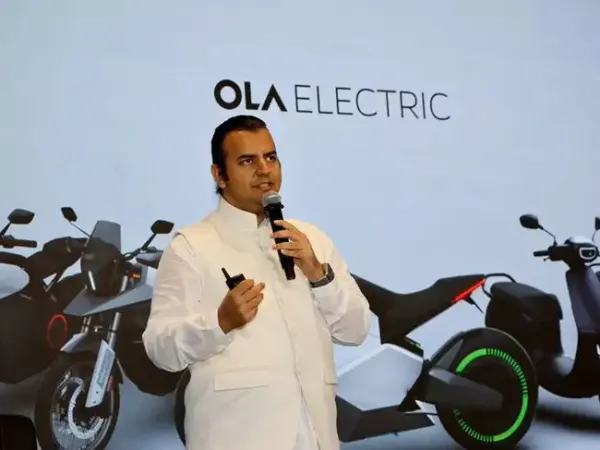
Bhavish Aggarwal, CEO, Ola Electric
EV manufacturer Ola Electric Technologies has been downgraded by the rating agency ICRA, citing low sales, continued losses, and a delayed timeline to profitability, even as the company works to improve unit economics and cut costs.
“While the company retained a leadership position in the e2W segment in FY2025, its market position weakened sharply throughout FY2026, with volumes declining each quarter,” ICRA stated in its report.
The agency attributed the downgrade to rising competition in the EV segment and the government’s subsidy rationalisation, both of which have weighed on demand and margins. It also flagged company-specific issues, including weakening brand perception and gaps in service execution, which have hindered Ola Electric’s operating performance over the past year.
In FY26, India’s electric two-wheeler (e2W) market posted a nearly 22% year-on-year jump, with most legacy players and startups gaining market share at the expense of Ola Electric, which led the segment until the previous year.
The market is now dominated by legacy players Bajaj Auto and TVS Motor, while companies such as Ather Energy, Hero MotoCorp, and River are also increasing their market share.
In March, Ola Electric sold only 10,118 vehicles, accounting for a 5.4% market share—a sharp decline from the 22.1% share it held in April 2025.
For FY26, the EV maker sold 164,000 vehicles, less than half of the 344,000 units it sold in FY25, according to vehicle registration data sourced from the government-run Vahan portal, a proxy for the number of units sold in that period.
Overall, the e2W market in India remains in a nascent growth phase, with penetration levels of around 6.7% in FY2026.
Ola Electric narrowed its losses in the December quarter to Rs 487 crore, compared with Rs 564 crore in the same quarter of the previous fiscal year. The company's revenue from operations fell 55% year-on-year (YoY) to Rs 470 crore.
ICRA noted that while Ola cut costs through headcount reductions, network consolidation, and tighter cost controls, the timing of its breakeven “remains highly contingent on demand recovery rather than further cost compression.”
“The company has witnessed some uptick in volumes since March 2026; the durability of the recovery and resultant operating-leverage gains remain to be seen,” the rating agency said.
Ola Electric’s push into battery cell manufacturing and stationary energy storage is viewed as a long-term positive, strengthening its localisation strategy and reducing import dependence. However, these investments come with near- to medium-term risks, as the projects require significant capital and have limited revenue visibility at this stage.
ICRA noted that the company is likely to attract funding for its cell manufacturing plans, given investor interest in next-generation technologies. Any successful fundraise would be key to stabilising the battery business and improving its medium-term outlook.
Ola Electric shares on Wednesday closed at Rs 36.30 on the NSE, 1.37% higher than in the previous trading session.
“While the company retained a leadership position in the e2W segment in FY2025, its market position weakened sharply throughout FY2026, with volumes declining each quarter,” ICRA stated in its report.
The agency attributed the downgrade to rising competition in the EV segment and the government’s subsidy rationalisation, both of which have weighed on demand and margins. It also flagged company-specific issues, including weakening brand perception and gaps in service execution, which have hindered Ola Electric’s operating performance over the past year.
In FY26, India’s electric two-wheeler (e2W) market posted a nearly 22% year-on-year jump, with most legacy players and startups gaining market share at the expense of Ola Electric, which led the segment until the previous year.
The market is now dominated by legacy players Bajaj Auto and TVS Motor, while companies such as Ather Energy, Hero MotoCorp, and River are also increasing their market share.
In March, Ola Electric sold only 10,118 vehicles, accounting for a 5.4% market share—a sharp decline from the 22.1% share it held in April 2025.
For FY26, the EV maker sold 164,000 vehicles, less than half of the 344,000 units it sold in FY25, according to vehicle registration data sourced from the government-run Vahan portal, a proxy for the number of units sold in that period.
Overall, the e2W market in India remains in a nascent growth phase, with penetration levels of around 6.7% in FY2026.
Ola Electric narrowed its losses in the December quarter to Rs 487 crore, compared with Rs 564 crore in the same quarter of the previous fiscal year. The company's revenue from operations fell 55% year-on-year (YoY) to Rs 470 crore.
ICRA noted that while Ola cut costs through headcount reductions, network consolidation, and tighter cost controls, the timing of its breakeven “remains highly contingent on demand recovery rather than further cost compression.”
“The company has witnessed some uptick in volumes since March 2026; the durability of the recovery and resultant operating-leverage gains remain to be seen,” the rating agency said.
Ola Electric’s push into battery cell manufacturing and stationary energy storage is viewed as a long-term positive, strengthening its localisation strategy and reducing import dependence. However, these investments come with near- to medium-term risks, as the projects require significant capital and have limited revenue visibility at this stage.
ICRA noted that the company is likely to attract funding for its cell manufacturing plans, given investor interest in next-generation technologies. Any successful fundraise would be key to stabilising the battery business and improving its medium-term outlook.
Ola Electric shares on Wednesday closed at Rs 36.30 on the NSE, 1.37% higher than in the previous trading session.