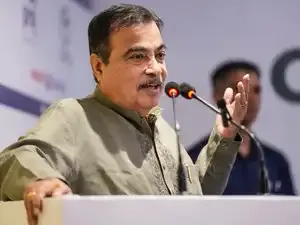
Union Minister of Road, Transport and Highways Nitin Gadkari has cautioned that there is no future of petrol and diesel vehicles, as concerns around air pollution and country's heavy dependence on fossil fuel imports continue to rise. Amid the widespread debate on whether alternative fuels will gain a significant share in auto supply chains, he said that Original Equipment Manufacturers (OEMs) must mull switching from fossil fuels towards cleaner alternatives.
“There is no future for diesel and petrol vehicles. If you (OEMs) are planning to expand only in that direction, then as a friend, I can say your future is not good,” Gadkari said at the Busworld India 2026 summit, urging manufacturers and fleet operators to accelerate the shift towards the cleaner fuels such as hydrogen, ethanol, CNG, LNG and electric-powered fleet.
Also read: India proposes new vehicle rules to allow higher ethanol-blended fuels
"We import fossil fuels worth ₹22 lakh crore. This is not only an economic challenge, but also a major pollution problem. Our policy is: import substitute, cost-effective, pollution-free, and indigenous," Gadkari noted.
On flex-fuel, the minister asserted the use of ethanol is a key alternative fuel, noting that India is producing ethanol from broken rice, corn, bamboo, rice straw, sugarcane, molasses. Highlighting the "huge potential" of ethanol as a fuel, Gadkari said that 20 per cent ethanol blending is already taking place, and the goverment is now working on flex engines.
Gadkari's comments come at a time when the Centre has proposed changes to the vehicle fuel framework with a plan to formally introduce higher ethanol blends such as E85 and E100 as part of its strategy to cut dependence on imported petroleum.
The proposal, as reported by Reuters, seeks to expand beyond the current E20 benchmark by creating regulatory space for vehicles compatible with significantly higher ethanol content.
“There is no future for diesel and petrol vehicles. If you (OEMs) are planning to expand only in that direction, then as a friend, I can say your future is not good,” Gadkari said at the Busworld India 2026 summit, urging manufacturers and fleet operators to accelerate the shift towards the cleaner fuels such as hydrogen, ethanol, CNG, LNG and electric-powered fleet.
Also read: India proposes new vehicle rules to allow higher ethanol-blended fuels
"We import fossil fuels worth ₹22 lakh crore. This is not only an economic challenge, but also a major pollution problem. Our policy is: import substitute, cost-effective, pollution-free, and indigenous," Gadkari noted.
Hydrogen: Fuel of the future
Speaking at the summit, Gadkari also highlighted that hydrogen is the "fuel of the future" and the ministry has started pilot projects with hydrogen trucks and hydrogen buses, in collaboration with Tata Motors, Volvo, Indian Oil, BPCL, and NTPC across 10 routes.On flex-fuel, the minister asserted the use of ethanol is a key alternative fuel, noting that India is producing ethanol from broken rice, corn, bamboo, rice straw, sugarcane, molasses. Highlighting the "huge potential" of ethanol as a fuel, Gadkari said that 20 per cent ethanol blending is already taking place, and the goverment is now working on flex engines.
Gadkari's comments come at a time when the Centre has proposed changes to the vehicle fuel framework with a plan to formally introduce higher ethanol blends such as E85 and E100 as part of its strategy to cut dependence on imported petroleum.
The proposal, as reported by Reuters, seeks to expand beyond the current E20 benchmark by creating regulatory space for vehicles compatible with significantly higher ethanol content.