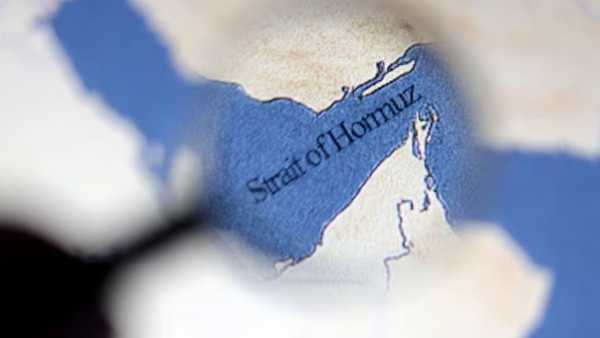
New Delhi: Global oil markets are already rattled by tensions around the Strait of Hormuz, but a quieter and potentially more disruptive threat is emerging beneath the surface. The same narrow waterway that carries a significant share of the world’s oil also hosts a dense network of undersea fibre-optic cables, the backbone of global internet connectivity. With geopolitical risks on the increase, analysts caution that destruction of these cables would extend much further into other sectors other than the energy industry, reported by Independent.
This vulnerability has been brought to the spotlight by recent threats by Iran, which point to submarine cables as a weak link in the online infrastructure of the region. These cables also connect India and Southeast Asia to Europe by passing via Gulf states and Egypt; thus, the strait is a strategic point of passage of global data. Analysts indicate that any interference with this may slow down the internet connection, disrupt financial systems, and affect digital economies in continents.
Why undersea cables matter?
Subsea cables are fibre-optic cables which are laid out on the ocean floor and which carry almost all global data traffic. The International Telecommunication Union reveals that approximately 99 per cent of international internet traffic is passing through these cables. They underpin cloud computing and banking systems and normal everyday communication.
Energy and geopolitical analyst Masha Kotkin says that even small disturbances can have a ripple effect. A slower connection, disrupted e-commerce, and delayed monetary dealings can rapidly turn into larger losses in the economy. Gulf nations such as the UAE and Saudi Arabia, which are investing heavily in AI and digital infrastructure, are particularly dependent on these networks.
Key cable networks in the Strait
The Strait of Hormuz is home to several great cable systems. These are the Asia-Africa-Europe 1 (AAE-1), which serves Southeast Asia to Europe, and the FALCON network, serving India and Sri Lanka to the Middle East and North Africa. Gulf Bridge International also links several countries in the Gulf, such as Iran.
More projects are being implemented, including new networks pioneered by Qatar-based companies to enhance the connectivity in the region. These are the cables that will be required in the high-speed transmission of data and enable the future digital aspirations of the region.
What are the risks?
Cable faults have not increased significantly over the years, even with the increasing infrastructure. According to data provided by the International Cable Protection Committee, there are approximately 150-200 incidents per year. The majority do not involve intentional assaults. Rather, 70-80% are due to human factors such as fishing or ship anchors.
However, conflict increases the risk. Professionals caution that broken or floating ships may accidentally cut cables. Another case of this happened in 2024, when a ship that was stranded in the Red Sea drifted and severed several cables with its anchor. According to the research director of TeleGeography, Alan Mauldin, natural causes like earthquakes and underwater currents are equally dangerous.
Repair challenges in conflict zones
The repair of damaged cables is technically easy but logistically difficult. Repair ships also need access permits to the territorial waters, which may be withheld in case of conflict. The operations are further complicated by insurance risks and naval mines.
Mauldin states that the biggest obstacle is the process of gaining permissions. The companies also need to survey the seabed again, particularly when there is debris or sunken vessels, after the end of conflicts to make sure that the cables are placed safely.
Are there alternatives?
Experts do not see any actual alternative to subsea cables. The satellite systems, such as the low-Earth orbit networks, such as Starlink, are not capable of the same volume of data and are much more costly. They are also dependent on ground infrastructure, thus limiting their autonomy.
Although the land-based path may offer partial resilience, it cannot be fully used to counteract significant impacts of undersea networks. With ongoing tensions in the Strait of Hormuz, stability in both energy and digital lifelines is not only intertwined but also at stake more than ever.
-
Child dies after cobra bite in Kerala

-
Karnataka orders inspection of hospital buildings after deadly Bengaluru wall collapse

-
Lucknow Student Achieves Top Marks in ICSE Class 10 Results

-
Akhilesh Yadav Criticizes BJP Government's Alleged Misuse of Power

-
AMU Nigerian Student's '3 Idiots'-Style Hindi Speech Goes Viral - WATCH