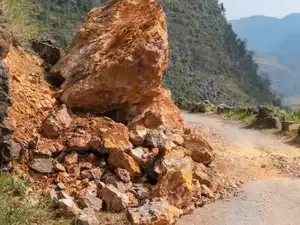
The surface of rocks may seem solid, stable in a steady state, but beneath their sturdier surfaces the process of quiet, intricate takes place continuously. Even before a stone fractures or triggers a landslide an earthquake, it starts to emit subtle chemical signals. Scientists are currently learning to understand these subtle warnings and are able to make more accurate predictions of natural disasters.
A Silent Language Beneath the Surface
In the deepest parts of stressed rocks Nuclides, the atoms that make up the rock start to play a significant function. When pressure increases as time passes, the rocks emit tiny quantities of gasses like Helium and radon. These gases pass through microscopic cracks, and then eventually get to the surface, from where they are able to be observed.
Since the beginning of time, researchers have witnessed unusual bursts the gases prior to events like landslides or earthquakes. Yet, one issue was not resolved. Scientists were not able to definitively identify whether these signals signalled an imminent break. In the absence of a clear timeframe the chemical signals remained an interesting curiosity, rather as a warning system that could be used in a practical way.
A Breakthrough Study in Rock Behavior
A new study entitled Quantitative Theory to Diagnose the occurrence of rock ruptures using naturally occurring Nuclear Signals has seen significant advancements in resolving this mystery. The study was performed by researchers from the University of California, Berkeley in the United States, along with research by The New Jersey Institute of Technology.
The study is one of the first that establishes an immediate and quantifiable relationship between internal structure of rocks as well as their chemical signals. According to research scientist Rong Mao of the New Jersey Institute of Technology this research creates a quantifiable structure that links the different stages of physical the failure of rocks with distinctive variations in the gas emissions.
What Happens Before a Rock Breaks
The rocks do not break down suddenly. They go through an aging process which develops through several stages. In the beginning, tiny cracks begin to appear deep in the rock. The cracks gradually open up and grow, before connecting to one another. As the network of fractures increases, the strength of the rock decreases until it eventually breaks.
In this stage, gas that are trapped in minerals release through the new space. The more cracks are widened and linked them, they allow the gas to be released more freely, which can cause noticeable changes in emissions patterns.
The research identified four crucial phases in the process: crack formation cracking, crack opening, crack dilation and the propagation of cracks. Each of these stages produces distinct signification by the release of nuclide gases that allow researchers to monitor the progress of the damage within the rock.
From Laboratory to Real-World Evidence
In order to create their model, researchers used the results of controlled laboratory tests along with real-world observation. In one study, the granite was observed for about a month while it began to weaken and crack. Researchers carefully monitored the changes in gas emissions throughout the entire process.
Apart from lab work and field observations, field data was a key element. Previous observations have revealed similar patterns throughout the natural world. In one instance, higher levels of radon have been observed before the quake that struck Japan in the year 1995. Some studies have also revealed gas explosions in mountains that shift in water levels place strain on rocks.
Through combining these diverse sources of information they developed an algorithm that can be used not just in controlled environments but also in unpredictably changing conditions of the real world.
Why These Signals Matter
Being able to recognize early warning signs of a rock cracks can have significant consequences. The occurrence of landslides, avalanches or earthquakes may cause devastating damage, usually occuring without warning. If scientists can accurately discern the nuclide signal, it may provide earlier alerts as well as improved managing risk.
One benefit associated with these signals is that they are able to move from the deep subsurface and back to the surface. They are particularly useful for situations in which the root of stress remains obscured from view. The monitoring of these emissions can offer real-time information about what's happening below the earth.
Challenges Beneath the Surface
In spite of the promises made by this strategy, the real world is full of layers. Researchers found that environmental factors like underground fluids could impact the emission of gases. The presence of hot water, brines and other fluids may increase the movement and release of gases. Sometimes, they can amplify the effects.
That means that not all fluctuations in the gas level are triggered only by cracks in the rock. Scientists should be aware of the signals triggered by structural changes as well as those that are caused by environmental factors. It is an important aspect that will require further research.
Looking Ahead
Researchers are working on a plan to evaluate and refine the model for real-world conditions. Monitoring stations are being set up in areas with high risk of radon exposure to monitor the emission of radon as well as other indicators of chemical in the course of. This effort aims to prove the hypothesis and figure out how soon these indicators can be detected prior to a breakdown develops.
There's a lot more to be learned, especially about the speed at which these signals travel and their evolution in different environments. The progress made up to now is a significant move towards turning an observed phenomena into a useful instrument.
The rocks may appear silent and inactive, however they're constantly in communication. Thanks to advancements in technology and science and technology, we're finally starting to learn their language and this could eventually assist in protecting the lives of people.
A Silent Language Beneath the Surface
In the deepest parts of stressed rocks Nuclides, the atoms that make up the rock start to play a significant function. When pressure increases as time passes, the rocks emit tiny quantities of gasses like Helium and radon. These gases pass through microscopic cracks, and then eventually get to the surface, from where they are able to be observed.
Since the beginning of time, researchers have witnessed unusual bursts the gases prior to events like landslides or earthquakes. Yet, one issue was not resolved. Scientists were not able to definitively identify whether these signals signalled an imminent break. In the absence of a clear timeframe the chemical signals remained an interesting curiosity, rather as a warning system that could be used in a practical way.
Image Credit: Gemini | Rocks emit subtle gases, signaling stress before rupture
A Breakthrough Study in Rock Behavior
A new study entitled Quantitative Theory to Diagnose the occurrence of rock ruptures using naturally occurring Nuclear Signals has seen significant advancements in resolving this mystery. The study was performed by researchers from the University of California, Berkeley in the United States, along with research by The New Jersey Institute of Technology.
The study is one of the first that establishes an immediate and quantifiable relationship between internal structure of rocks as well as their chemical signals. According to research scientist Rong Mao of the New Jersey Institute of Technology this research creates a quantifiable structure that links the different stages of physical the failure of rocks with distinctive variations in the gas emissions.
What Happens Before a Rock Breaks
The rocks do not break down suddenly. They go through an aging process which develops through several stages. In the beginning, tiny cracks begin to appear deep in the rock. The cracks gradually open up and grow, before connecting to one another. As the network of fractures increases, the strength of the rock decreases until it eventually breaks.
In this stage, gas that are trapped in minerals release through the new space. The more cracks are widened and linked them, they allow the gas to be released more freely, which can cause noticeable changes in emissions patterns.
The research identified four crucial phases in the process: crack formation cracking, crack opening, crack dilation and the propagation of cracks. Each of these stages produces distinct signification by the release of nuclide gases that allow researchers to monitor the progress of the damage within the rock.
From Laboratory to Real-World Evidence
In order to create their model, researchers used the results of controlled laboratory tests along with real-world observation. In one study, the granite was observed for about a month while it began to weaken and crack. Researchers carefully monitored the changes in gas emissions throughout the entire process.
Apart from lab work and field observations, field data was a key element. Previous observations have revealed similar patterns throughout the natural world. In one instance, higher levels of radon have been observed before the quake that struck Japan in the year 1995. Some studies have also revealed gas explosions in mountains that shift in water levels place strain on rocks.
Through combining these diverse sources of information they developed an algorithm that can be used not just in controlled environments but also in unpredictably changing conditions of the real world.
Why These Signals Matter
Being able to recognize early warning signs of a rock cracks can have significant consequences. The occurrence of landslides, avalanches or earthquakes may cause devastating damage, usually occuring without warning. If scientists can accurately discern the nuclide signal, it may provide earlier alerts as well as improved managing risk.
One benefit associated with these signals is that they are able to move from the deep subsurface and back to the surface. They are particularly useful for situations in which the root of stress remains obscured from view. The monitoring of these emissions can offer real-time information about what's happening below the earth.
Challenges Beneath the Surface
In spite of the promises made by this strategy, the real world is full of layers. Researchers found that environmental factors like underground fluids could impact the emission of gases. The presence of hot water, brines and other fluids may increase the movement and release of gases. Sometimes, they can amplify the effects.
That means that not all fluctuations in the gas level are triggered only by cracks in the rock. Scientists should be aware of the signals triggered by structural changes as well as those that are caused by environmental factors. It is an important aspect that will require further research.
Looking Ahead
Researchers are working on a plan to evaluate and refine the model for real-world conditions. Monitoring stations are being set up in areas with high risk of radon exposure to monitor the emission of radon as well as other indicators of chemical in the course of. This effort aims to prove the hypothesis and figure out how soon these indicators can be detected prior to a breakdown develops.
There's a lot more to be learned, especially about the speed at which these signals travel and their evolution in different environments. The progress made up to now is a significant move towards turning an observed phenomena into a useful instrument.
The rocks may appear silent and inactive, however they're constantly in communication. Thanks to advancements in technology and science and technology, we're finally starting to learn their language and this could eventually assist in protecting the lives of people.