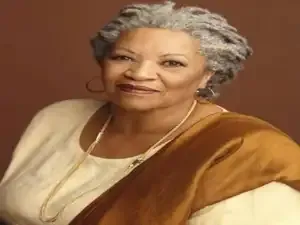
Quote of the Day: A powerful Quote of the Day often carries a moral weight that stretches far beyond the moment it was spoken. It becomes a lens through which we can examine our own lives, our responsibilities, and the world around us. Few voices have explored these themes with as much depth and honesty as Toni Morrison, whose words continue to challenge, inspire, and provoke reflection. In an era where freedom is often framed as a personal achievement, Morrison’s perspective reminds us that true freedom is never isolated—it is shared, extended, and lived collectively. That is why a Quote of the Day matters: it anchors us in values that might otherwise be overshadowed by the rush of everyday life.
The Quote of the Day today by Toni Morrison is:
“The function of freedom is to free somebody else.”
This line captures Morrison’s lifelong engagement with questions of identity, justice, and human dignity. Born Chloe Ardelia Wofford on February 18, 1931, in Lorain, Ohio, she grew into one of the most celebrated writers of the 20th century. Known for her luminous prose and profound exploration of Black life—particularly Black female experience—Morrison’s work reshaped American literature.
Toni Morrison grew up in a family deeply rooted in Black culture, where storytelling, songs, and folktales played a central role in shaping her imagination. These early influences would later echo throughout her writing, giving her stories a rich, layered texture. At the age of 12, she converted to Roman Catholicism and took the name “Anthony,” which eventually evolved into the nickname “Toni.”
After finishing high school, she attended Howard University in Washington, D.C., earning a bachelor’s degree in English in 1953. Her academic journey continued at Cornell University, where she completed her master’s degree in 1955. Morrison later taught at Texas Southern University and returned to Howard as a faculty member, where she spent several years shaping young minds while quietly nurturing her own creative voice, as per information sourced from Britannica.
In 1965, Morrison began working as a textbook editor before moving to Random House in New York City, where she became the first African American female editor in the company’s history. Her editorial work was groundbreaking—she helped bring forward the voices of influential Black writers and thinkers, including Toni Cade Bambara, Angela Davis, and Muhammad Ali. Through this work, she played a crucial role in building a literary space where Black stories could be told authentically.
During this period, Morrison also began writing her own fiction. Her debut novel, The Bluest Eye (1970), told the haunting story of a young Black girl struggling with identity and beauty standards. The novel was praised for its poetic language and emotional depth.
Her later works expanded her influence. Sula (1973) explored friendship and individuality, while Song of Solomon (1977) brought her national recognition with its powerful narrative of identity and heritage. But it was Beloved (1987) that cemented her legacy. The novel, inspired by a true story, examined the haunting legacy of slavery and won the Pulitzer Prize for fiction. It is now widely regarded as one of the greatest works in American literature, as per information sourced from Britannica.
In 1993, Toni Morrison received the Nobel Prize for Literature, becoming the first Black woman in history to earn the honor. This recognition was not just for her storytelling but for her ability to capture the complexities of human experience through language that was both poetic and unflinching.
Her later works, including Jazz (1992), Paradise (1998), and Love (2003), continued to explore themes of race, history, and belonging. She also wrote nonfiction, children’s books, and essays, often reflecting on the power of language and its role in shaping identity.
Beyond writing, Morrison taught at Princeton University and remained an influential voice in cultural and intellectual discussions. She received numerous awards, including the Presidential Medal of Freedom in 2012. Even after her passing on August 5, 2019, her work continues to resonate across generations.
At first glance, Morrison’s Quote of the Day may seem simple, but its implications are profound. “The function of freedom is to free somebody else” reframes freedom not as a personal endpoint but as an ongoing responsibility.
In many ways, society teaches us to think of freedom as something we achieve individually—financial independence, personal success, or the ability to make our own choices. Morrison challenges this idea. For her, freedom is incomplete if it stops at the self. It gains meaning only when it is extended outward.
The quote speaks directly to historical and social realities. For communities that have experienced oppression, freedom has never been an isolated concept. It has always been collective, tied to the liberation of others. Morrison’s work, particularly in novels like Beloved, reflects this understanding. Her characters often struggle not just for their own survival but for the dignity and freedom of those around them.
There is also a moral dimension to her words. Freedom, in this sense, is not passive—it demands action. It asks individuals to recognize inequality and work toward dismantling it. Whether in social justice movements, everyday relationships, or personal choices, the idea is the same: true freedom creates space for others to thrive.
On a personal level, the quote can be interpreted as a call to empathy. It encourages people to use their own experiences, privileges, or achievements to uplift others. It suggests that freedom is not diminished by sharing—it is strengthened.
In today’s world, where conversations about equality, rights, and justice continue to evolve, Morrison’s words remain strikingly relevant. They remind us that freedom is not just about what we gain, but about what we give.
Toni Morrison’s legacy is inseparable from her ability to tell stories that are both deeply personal and universally resonant. Her writing gave voice to experiences that had long been overlooked, and her words continue to challenge readers to confront uncomfortable truths.
Her influence extends beyond literature. She shaped cultural conversations, inspired generations of writers, and redefined what it means to tell a story with honesty and purpose. Her work stands as a testament to the power of language—not just to describe the world, but to change it.
Beyond the Quote of the Day, Morrison’s words continue to inspire reflection and action. Some of her most memorable quotes include:
"If there's a book that you want to read, but it hasn't been written yet, then you must write it.”
“You wanna fly, you got to give up the shit that weighs you down.”
“Freeing yourself was one thing, claiming ownership of that freed self was another.”
“Love is or it ain't. Thin love ain't love at all.”
“At some point in life the world's beauty becomes enough. You don't need to photograph, paint, or even remember it. It is enough.”
“And I am all the things I have ever loved: scuppernong wine, cool baptisms in silent water, dream books and number playing.”
"All water has a perfect memory and is forever trying to get back to where it was."
"Make a difference about something other than yourselves."
"We die. That may be the meaning of life. But we do language. That may be the measure of our lives."
"Somebody has to take responsibility for being a leader."
As a Quote of the Day, Toni Morrison’s words offer more than inspiration—they present a challenge. They ask us to rethink what freedom really means and how it should be used. In a world where individual success is often celebrated above all else, her message is both radical and necessary.
Freedom, she suggests, is not the end of a journey but the beginning of a responsibility. It is something to be shared, nurtured, and extended to others. And in that act of giving, it becomes something far more powerful than any individual achievement. More than anything, Morrison’s quote reminds us that the true measure of our lives may not lie in what we gain, but in what we help others achieve.
Quote of the Day Today April 28
The Quote of the Day today by Toni Morrison is:
“The function of freedom is to free somebody else.”
This line captures Morrison’s lifelong engagement with questions of identity, justice, and human dignity. Born Chloe Ardelia Wofford on February 18, 1931, in Lorain, Ohio, she grew into one of the most celebrated writers of the 20th century. Known for her luminous prose and profound exploration of Black life—particularly Black female experience—Morrison’s work reshaped American literature.
Early Life and Education
Toni Morrison grew up in a family deeply rooted in Black culture, where storytelling, songs, and folktales played a central role in shaping her imagination. These early influences would later echo throughout her writing, giving her stories a rich, layered texture. At the age of 12, she converted to Roman Catholicism and took the name “Anthony,” which eventually evolved into the nickname “Toni.”
After finishing high school, she attended Howard University in Washington, D.C., earning a bachelor’s degree in English in 1953. Her academic journey continued at Cornell University, where she completed her master’s degree in 1955. Morrison later taught at Texas Southern University and returned to Howard as a faculty member, where she spent several years shaping young minds while quietly nurturing her own creative voice, as per information sourced from Britannica.
Editing Career and Literary Breakthrough
In 1965, Morrison began working as a textbook editor before moving to Random House in New York City, where she became the first African American female editor in the company’s history. Her editorial work was groundbreaking—she helped bring forward the voices of influential Black writers and thinkers, including Toni Cade Bambara, Angela Davis, and Muhammad Ali. Through this work, she played a crucial role in building a literary space where Black stories could be told authentically.
During this period, Morrison also began writing her own fiction. Her debut novel, The Bluest Eye (1970), told the haunting story of a young Black girl struggling with identity and beauty standards. The novel was praised for its poetic language and emotional depth.
Her later works expanded her influence. Sula (1973) explored friendship and individuality, while Song of Solomon (1977) brought her national recognition with its powerful narrative of identity and heritage. But it was Beloved (1987) that cemented her legacy. The novel, inspired by a true story, examined the haunting legacy of slavery and won the Pulitzer Prize for fiction. It is now widely regarded as one of the greatest works in American literature, as per information sourced from Britannica.
Nobel Prize and Later Achievements
In 1993, Toni Morrison received the Nobel Prize for Literature, becoming the first Black woman in history to earn the honor. This recognition was not just for her storytelling but for her ability to capture the complexities of human experience through language that was both poetic and unflinching.
Her later works, including Jazz (1992), Paradise (1998), and Love (2003), continued to explore themes of race, history, and belonging. She also wrote nonfiction, children’s books, and essays, often reflecting on the power of language and its role in shaping identity.
Beyond writing, Morrison taught at Princeton University and remained an influential voice in cultural and intellectual discussions. She received numerous awards, including the Presidential Medal of Freedom in 2012. Even after her passing on August 5, 2019, her work continues to resonate across generations.
Meaning of the Quote of the Day
At first glance, Morrison’s Quote of the Day may seem simple, but its implications are profound. “The function of freedom is to free somebody else” reframes freedom not as a personal endpoint but as an ongoing responsibility.
In many ways, society teaches us to think of freedom as something we achieve individually—financial independence, personal success, or the ability to make our own choices. Morrison challenges this idea. For her, freedom is incomplete if it stops at the self. It gains meaning only when it is extended outward.
The quote speaks directly to historical and social realities. For communities that have experienced oppression, freedom has never been an isolated concept. It has always been collective, tied to the liberation of others. Morrison’s work, particularly in novels like Beloved, reflects this understanding. Her characters often struggle not just for their own survival but for the dignity and freedom of those around them.
There is also a moral dimension to her words. Freedom, in this sense, is not passive—it demands action. It asks individuals to recognize inequality and work toward dismantling it. Whether in social justice movements, everyday relationships, or personal choices, the idea is the same: true freedom creates space for others to thrive.
On a personal level, the quote can be interpreted as a call to empathy. It encourages people to use their own experiences, privileges, or achievements to uplift others. It suggests that freedom is not diminished by sharing—it is strengthened.
In today’s world, where conversations about equality, rights, and justice continue to evolve, Morrison’s words remain strikingly relevant. They remind us that freedom is not just about what we gain, but about what we give.
Legacy and Enduring Influence
Toni Morrison’s legacy is inseparable from her ability to tell stories that are both deeply personal and universally resonant. Her writing gave voice to experiences that had long been overlooked, and her words continue to challenge readers to confront uncomfortable truths.
Her influence extends beyond literature. She shaped cultural conversations, inspired generations of writers, and redefined what it means to tell a story with honesty and purpose. Her work stands as a testament to the power of language—not just to describe the world, but to change it.
Other Iconic Quotes by Toni Morrison
Beyond the Quote of the Day, Morrison’s words continue to inspire reflection and action. Some of her most memorable quotes include:
"If there's a book that you want to read, but it hasn't been written yet, then you must write it.”
“You wanna fly, you got to give up the shit that weighs you down.”
“Freeing yourself was one thing, claiming ownership of that freed self was another.”
“Love is or it ain't. Thin love ain't love at all.”
“At some point in life the world's beauty becomes enough. You don't need to photograph, paint, or even remember it. It is enough.”
“And I am all the things I have ever loved: scuppernong wine, cool baptisms in silent water, dream books and number playing.”
"All water has a perfect memory and is forever trying to get back to where it was."
"Make a difference about something other than yourselves."
"We die. That may be the meaning of life. But we do language. That may be the measure of our lives."
"Somebody has to take responsibility for being a leader."
As a Quote of the Day, Toni Morrison’s words offer more than inspiration—they present a challenge. They ask us to rethink what freedom really means and how it should be used. In a world where individual success is often celebrated above all else, her message is both radical and necessary.
Freedom, she suggests, is not the end of a journey but the beginning of a responsibility. It is something to be shared, nurtured, and extended to others. And in that act of giving, it becomes something far more powerful than any individual achievement. More than anything, Morrison’s quote reminds us that the true measure of our lives may not lie in what we gain, but in what we help others achieve.