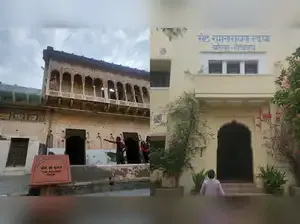
Shekhawati, a historic region in Rajasthan known for its fresco-painted havelis, is facing a serious threat to its architectural and cultural legacy. Once symbols of wealth and artistic excellence built by affluent Marwari merchant families, these grand mansions are now rapidly deteriorating due to neglect, ownership disputes and even deliberate demolition, according to a report by The Times of India.
Located in the northeastern part of Rajasthan, Shekhawati is often referred to as the “world’s largest open-air art gallery.” Its towns are dotted with intricately painted havelis constructed by prominent business families such as the Birlas, Poddars, Dalmias, Piramals, Rungtas and Khaitans. These structures were more than homes—they were public displays of wealth, taste and modernity, adorned with detailed frescoes depicting mythology, colonial influences and everyday life.
Historically, Shekhawati thrived as a key trade corridor linked to the Silk Route. Caravans carrying silk and spices passed through its towns, benefiting from lower transit duties compared to neighbouring regions. However, as trade routes shifted under British influence, the region’s economic significance declined, prompting merchant families to migrate to cities like Kolkata. There, they prospered as traders, bankers and industrialists, while their ancestral homes in Shekhawati were gradually abandoned.
Art and architecture flourished in Shekhawati between 1860 and 1900, when hundreds of havelis were constructed and decorated. Skilled artisans known as Chiteras brought these walls to life, blending traditional Indian themes with elements of colonial modernity. Today, these frescoes still showcase scenes ranging from Krishna leela to trains, gramophones and British officials—offering a visual narrative of a changing India.
However, the biggest threat to these heritage structures now comes not from time, but from human activity. As ownership of havelis passed down generations, it became fragmented among large joint families, making maintenance and restoration difficult. Many buildings have crumbled due to neglect, while others have been demolished by land mafias to make way for commercial developments.
The consequences extend beyond cultural loss. Towns like Mandawa, once central to Shekhawati’s tourism economy, are witnessing a steady decline as iconic havelis disappear. The loss impacts not just heritage but also livelihoods tied to tourism, including guides, hotel owners, artisans and local businesses.
Efforts are now underway to preserve what remains. The Rajasthan government has identified 615 havelis as heritage assets, restricted property transfers and allocated ₹200 crore for restoration in the state budget. Yet, conservationists warn that funding alone will not suffice. Preservation requires specialised techniques such as stabilising lime plaster, matching original pigments, preventing moisture damage and documenting existing artwork before it fades away.
Experts emphasise that sustainable tourism and community involvement will be crucial to saving Shekhawati’s heritage. Without a viable economic incentive to maintain these properties, the pressure to monetise land through demolition will continue to grow.
As things stand, Shekhawati’s painted havelis remain at a critical juncture—caught between preservation and irreversible loss.
Located in the northeastern part of Rajasthan, Shekhawati is often referred to as the “world’s largest open-air art gallery.” Its towns are dotted with intricately painted havelis constructed by prominent business families such as the Birlas, Poddars, Dalmias, Piramals, Rungtas and Khaitans. These structures were more than homes—they were public displays of wealth, taste and modernity, adorned with detailed frescoes depicting mythology, colonial influences and everyday life.
Historically, Shekhawati thrived as a key trade corridor linked to the Silk Route. Caravans carrying silk and spices passed through its towns, benefiting from lower transit duties compared to neighbouring regions. However, as trade routes shifted under British influence, the region’s economic significance declined, prompting merchant families to migrate to cities like Kolkata. There, they prospered as traders, bankers and industrialists, while their ancestral homes in Shekhawati were gradually abandoned.
Art and architecture flourished in Shekhawati between 1860 and 1900, when hundreds of havelis were constructed and decorated. Skilled artisans known as Chiteras brought these walls to life, blending traditional Indian themes with elements of colonial modernity. Today, these frescoes still showcase scenes ranging from Krishna leela to trains, gramophones and British officials—offering a visual narrative of a changing India.
However, the biggest threat to these heritage structures now comes not from time, but from human activity. As ownership of havelis passed down generations, it became fragmented among large joint families, making maintenance and restoration difficult. Many buildings have crumbled due to neglect, while others have been demolished by land mafias to make way for commercial developments.
The consequences extend beyond cultural loss. Towns like Mandawa, once central to Shekhawati’s tourism economy, are witnessing a steady decline as iconic havelis disappear. The loss impacts not just heritage but also livelihoods tied to tourism, including guides, hotel owners, artisans and local businesses.
Efforts are now underway to preserve what remains. The Rajasthan government has identified 615 havelis as heritage assets, restricted property transfers and allocated ₹200 crore for restoration in the state budget. Yet, conservationists warn that funding alone will not suffice. Preservation requires specialised techniques such as stabilising lime plaster, matching original pigments, preventing moisture damage and documenting existing artwork before it fades away.
Experts emphasise that sustainable tourism and community involvement will be crucial to saving Shekhawati’s heritage. Without a viable economic incentive to maintain these properties, the pressure to monetise land through demolition will continue to grow.
As things stand, Shekhawati’s painted havelis remain at a critical juncture—caught between preservation and irreversible loss.