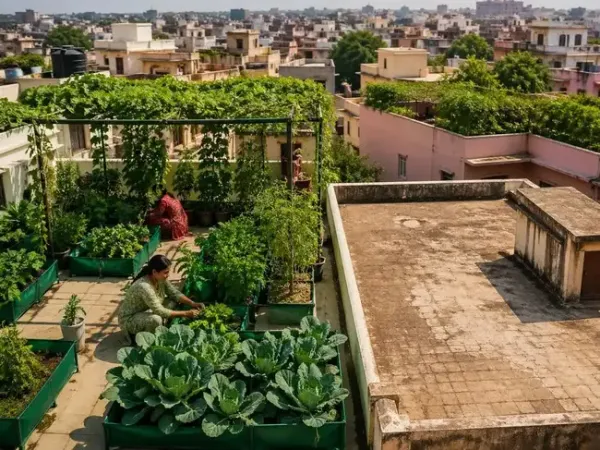
As heatwave conditions get worse across north India, a viral video is drawing attention for a practical fix: turning rooftops into green spaces to reduce indoor temperatures. Shared on X, the clip claims that over 4,000 homes in Jaipur are staying cooler without relying heavily on air conditioners, using portable rooftop farming systems.
Also read: Never hide split AC pipes inside your wall: Architect’s advice goes viral. Watch
It then introduces an alternative, portable farming setups that convert unused terraces into small gardens. These systems are designed to sit on rooftops without permanent construction, making them suitable for urban homes.
The visuals show cabbages growing in structured beds, families tending to vegetables, and small gatherings where the concept is explained. The idea is simple: plants provide shade and release moisture, which helps lower the temperature inside homes.
In addition, vertical gardens are part of the model. These do not use soil and instead depend on specially designed containers with a water recycling system that circulates moisture in a loop, supporting plant growth while conserving water.
Many viewers responded positively, calling it a smart way to tackle heat while growing food at home. One user described rooftop farming as “heat traps into cooling ecosystems,” highlighting its potential in cities.
At the same time, several users raised concerns. Some questioned whether terraces can handle the extra load. Others asked about costs and long-term maintenance. A few also doubted the scale mentioned in the video and pointed out that while installation looks simple, upkeep may not be easy for everyone.
A growing idea, but not a one-size solution
The video does not present rooftop farming as a universal fix, especially for dense apartment buildings. However, it shows that many households in Jaipur have already tried it and are seeing results in terms of cooler interiors and access to fresh produce.
Also Read: The monk who became a nuclear physicist: This Swami spent a decade in the Himalayas, then went to Europe and the US to study physics
With rising temperatures and increasing electricity use during summers, such ideas are gaining attention. The approach links two everyday concerns, heat and food, without depending on heavy infrastructure.
It may not work for every home, but the conversation it has triggered suggests that more people are willing to explore simple, local solutions to deal with extreme heat.
From heat-trapping terraces to cooling green covers
The video opens with aerial shots of closely packed houses painted in pink and yellow, but what stands out is the layer of greenery spread across their terraces. It contrasts these with bare rooftops absorbing heat, flashing the message that “rooftops trap heat.”Also read: Never hide split AC pipes inside your wall: Architect’s advice goes viral. Watch
It then introduces an alternative, portable farming setups that convert unused terraces into small gardens. These systems are designed to sit on rooftops without permanent construction, making them suitable for urban homes.
A corporate exit and a rooftop idea
At the centre of the video is a man who left his corporate career to push this idea. Seen standing among dense plants on a terrace, he explains how these setups can help achieve “cooler rooms.”The visuals show cabbages growing in structured beds, families tending to vegetables, and small gatherings where the concept is explained. The idea is simple: plants provide shade and release moisture, which helps lower the temperature inside homes.
How the system works
The setups use lightweight materials, avoiding the need for heavy soil. The greenhouses are made using high-density polyethylene and rely on a soil-less medium that is lighter than traditional mud. This medium is designed to remain fertile over time with small amounts of added nutrients.In addition, vertical gardens are part of the model. These do not use soil and instead depend on specially designed containers with a water recycling system that circulates moisture in a loop, supporting plant growth while conserving water.
Social media reacts with both excitement and doubt
The post ends with a direct question: “Would you turn your rooftop into a mini farm?”Many viewers responded positively, calling it a smart way to tackle heat while growing food at home. One user described rooftop farming as “heat traps into cooling ecosystems,” highlighting its potential in cities.
At the same time, several users raised concerns. Some questioned whether terraces can handle the extra load. Others asked about costs and long-term maintenance. A few also doubted the scale mentioned in the video and pointed out that while installation looks simple, upkeep may not be easy for everyone.
A growing idea, but not a one-size solution
The video does not present rooftop farming as a universal fix, especially for dense apartment buildings. However, it shows that many households in Jaipur have already tried it and are seeing results in terms of cooler interiors and access to fresh produce.Also Read: The monk who became a nuclear physicist: This Swami spent a decade in the Himalayas, then went to Europe and the US to study physics
With rising temperatures and increasing electricity use during summers, such ideas are gaining attention. The approach links two everyday concerns, heat and food, without depending on heavy infrastructure.
It may not work for every home, but the conversation it has triggered suggests that more people are willing to explore simple, local solutions to deal with extreme heat.