
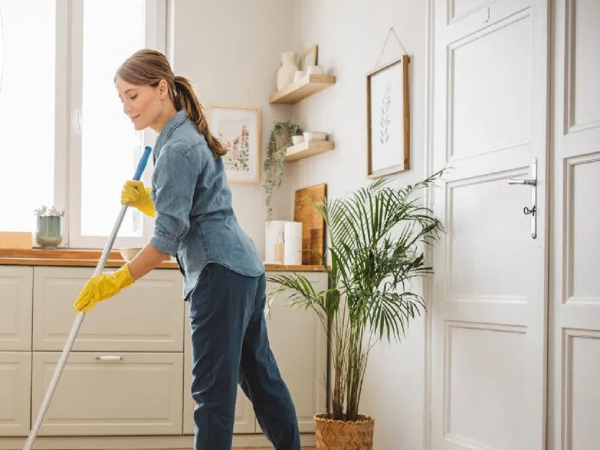
Keeping your home clean is a cornerstone of family health, especially since floors are the primary gathering spot for dust, allergens, and bacteria. If your tiles are losing their luster or stubborn yellow stains refuse to budge despite using expensive detergents, the solution might be sitting in your kitchen: Simple White Salt.
Adding a small amount of salt to your mopping routine is a traditional home remedy that offers powerful antibacterial benefits and long-lasting brightness.
Why Salt Works: 4 Major Benefits 1. Natural Antibacterial ActionSalt has natural antiseptic properties. When mixed with water, it creates an environment that is hostile to many types of bacteria and germs. Mopping with this mixture ensures a deep, hygienic clean that standard floor cleaners often miss, making it safer for children and pets who spend time on the floor.
2. Banishing Floor YellownessWhite or light-colored tiles often develop a dull, yellowish tinge over time due to hard water and foot traffic.
-
The Solution: Regular mopping with salt water helps break down these deposits.
-
Important Note: This isn't an "instant" chemical bleach. To see a noticeable difference in brightness and stain removal, you must use the salt-water method consistently over several weeks.
As the summer heat intensifies, flies and other crawling insects often find their way indoors. Salt water acts as a natural deterrent. The residue left behind—while invisible and harmless to humans—makes the floor surface unattractive to flies, helping to keep your home pest-free without using harsh chemicals.
4. Removing Humidity StickinessDuring the humid summer months, floors can feel tacky or "chip-chipa" even after cleaning. Salt is a natural desiccant; it helps cut through the oily grime and moisture that causes stickiness, leaving your floors feeling crisp and smooth underfoot.
How to Use Salt for MoppingGetting the best results is simple and cost-effective:
-
The Ratio: Add two teaspoons of common white salt to a standard bucket of lukewarm water.
-
The Method: Stir until the salt is fully dissolved before dipping your mop.
-
Frequency: For best results in summer, use this mixture every alternate day.
-
Marble Flooring: If you have high-quality marble or specific natural stone floors, test a small, hidden corner first. While salt is generally safe, very porous stones can sometimes react to salt over long periods.
-
Wait for the Floor to Dry: Ensure the floor is completely dry before walking on it to prevent slipping, especially if the humidity is high.
-
Post-Cleaning Routine: Just as you should wait after a heavy meal before exercising or eating fruit like watermelon, it’s best to mop during a time when foot traffic is low (like early morning or after everyone has left for the day) to allow the salt’s antibacterial properties to work undisturbed.
-
RBI Tightens Rules on Unsecured Loans: What New ECL Norms Mean for Bank Stocks

-
8th Pay Commission: Postal Staff Demand ₹1.12 Lakh Salary for Postmen—Will the Government Approve?

-
Anant Ambani Urges Colombia To Halt Hippo Cull, Offers Vantara As Lifelong Sanctuary

-
The Rise Of Liminal Core Among Gen-Zs-- Escape From Reality Or Finding Comfort In Eerie Silence?

-
NMC Removes 150 MBBS Seat Cap, Introduces 10 Km Distance Rule Between College And Hospital