As Delhi-NCR swelters under a brutal early summer heatwave, with temperatures touching 43-45°C and the India Meteorological Department (IMD) flashing yellow alerts, a simple street-side experiment in Noida has set social media ablaze. A video shot on Sunday in Noida Sector 77 and nearby extensions is making everyone pause and rethink our “development at all costs” mindset. It’s not just another clip of melting roads, it’s living proof of how a few trees can turn a furnace into a breath of fresh air.
Also Read: Heatwave Alert: These hidden symptoms could signal serious heatstroke dangers; know the warning signs before it’s too late and how to stay safe
This isn’t magic; it’s basic science we’ve known for ages but seem to have forgotten in the rush to build more flyovers and high-rises. Trees don’t just block the sun’s harsh rays with their leaves. They also release moisture through a process called transpiration, think of it as nature’s own evaporative cooler. On a scorching summer afternoon like this, that natural mist can slash ground-level heat significantly.
Experts say well-placed urban greenery can cool entire neighbourhoods by 8-12°C compared to barren concrete zones. Yet here we are, watching our cities turn into heat traps. Delhi and Noida are feeling it more than most this season. IMD data shows the capital recorded its hottest April day in years, with parts of NCR crossing 44°C.
Schools have shifted morning timings, power demand is spiking, and hospitals are seeing more heatstroke cases. But while we blame the sun, the real culprit stares back at us from every new construction site: loss of green cover. Roads, buildings, and parking lots made of asphalt and cement soak up heat like sponges during the day and radiate it back at night, turning cities into “urban heat islands.”
Also Read: 2 lifts for 400: Noida resident questions idea of “luxury” high-rise apartments, calls these societies as 'chawls'
Some point fingers at local authorities for clearing green belts for real-estate projects. Others recall how cities like Bengaluru and Singapore turned things around by mandating tree cover in every new development. One user even suggested a simple policy: for every plot sold, make one mature tree mandatory. Sounds basic, but it could change the game.
This Noida clip comes at the perfect time. April 2026 has already shattered temperature records in Uttar Pradesh, Rajasthan, and Madhya Pradesh. Climate scientists warn that such early heatwaves are the new normal unless we act fast. The good news? Solutions are right in front of us – and cheap. A single mature tree can cool the air around it enough to save households on electricity bills and reduce hospital visits.
Cities with 30% green cover stay noticeably cooler than those below 10%. Yet, year after year, we see the same cycle: summer heat complaints, monsoon floods from poor drainage, and then… silence until next April. This isn’t just about one viral video from Noida. It’s a mirror to how we treat our environment. The government has schemes like Green India Mission and urban forestry projects – but on ground, enforcement is weak. Builders get clearances faster than saplings get planted.
Next time you step out and feel the tarmac burning through your chappals, remember that Noida thermometer. Nature has already given us the cheapest, most effective cooling system. The difference, as that video shows, is literally life-changing.
Also Read: Heatwave Alert: These hidden symptoms could signal serious heatstroke dangers; know the warning signs before it’s too late and how to stay safe
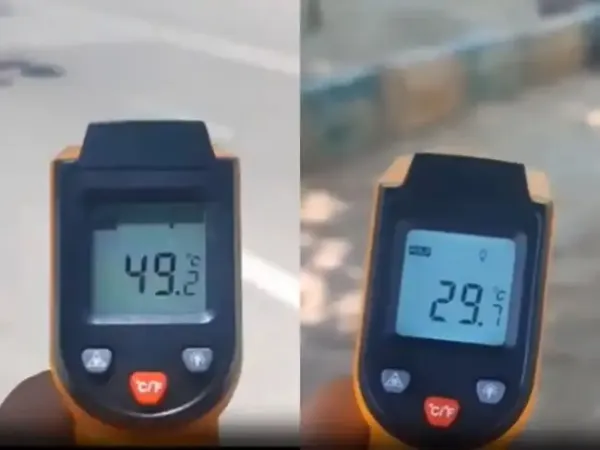
49°C vs 29°C: The temperature difference goes viral
In the viral footage that’s already racked up lakhs of views, a man having with a basic infrared thermometer walks along a sun-baked asphalt stretch. The reading? A blistering 46°C to 49°C on the open road, hot enough to fry an egg. Then he steps just a few metres away, under the canopy of roadside trees. The numbers drop dramatically – 29°C to 34°C. That’s a jaw-dropping 15-17°C cooler in the shade! No fancy AC, no gadgets – just good old Mother Nature doing what she does best.This isn’t magic; it’s basic science we’ve known for ages but seem to have forgotten in the rush to build more flyovers and high-rises. Trees don’t just block the sun’s harsh rays with their leaves. They also release moisture through a process called transpiration, think of it as nature’s own evaporative cooler. On a scorching summer afternoon like this, that natural mist can slash ground-level heat significantly.
Experts say well-placed urban greenery can cool entire neighbourhoods by 8-12°C compared to barren concrete zones. Yet here we are, watching our cities turn into heat traps. Delhi and Noida are feeling it more than most this season. IMD data shows the capital recorded its hottest April day in years, with parts of NCR crossing 44°C.
Schools have shifted morning timings, power demand is spiking, and hospitals are seeing more heatstroke cases. But while we blame the sun, the real culprit stares back at us from every new construction site: loss of green cover. Roads, buildings, and parking lots made of asphalt and cement soak up heat like sponges during the day and radiate it back at night, turning cities into “urban heat islands.”
We chop trees for progress
One viral comment nailed it: “We chop trees for ‘progress’ and then wonder why summers feel like hell.” The online reaction has been swift and emotional. Netizens from across India are sharing the video with captions like “Plant more trees before it’s too late” and “Stop the concrete mafia.”Also Read: 2 lifts for 400: Noida resident questions idea of “luxury” high-rise apartments, calls these societies as 'chawls'
Some point fingers at local authorities for clearing green belts for real-estate projects. Others recall how cities like Bengaluru and Singapore turned things around by mandating tree cover in every new development. One user even suggested a simple policy: for every plot sold, make one mature tree mandatory. Sounds basic, but it could change the game.
This Noida clip comes at the perfect time. April 2026 has already shattered temperature records in Uttar Pradesh, Rajasthan, and Madhya Pradesh. Climate scientists warn that such early heatwaves are the new normal unless we act fast. The good news? Solutions are right in front of us – and cheap. A single mature tree can cool the air around it enough to save households on electricity bills and reduce hospital visits.
Cities with 30% green cover stay noticeably cooler than those below 10%. Yet, year after year, we see the same cycle: summer heat complaints, monsoon floods from poor drainage, and then… silence until next April. This isn’t just about one viral video from Noida. It’s a mirror to how we treat our environment. The government has schemes like Green India Mission and urban forestry projects – but on ground, enforcement is weak. Builders get clearances faster than saplings get planted.
Next time you step out and feel the tarmac burning through your chappals, remember that Noida thermometer. Nature has already given us the cheapest, most effective cooling system. The difference, as that video shows, is literally life-changing.