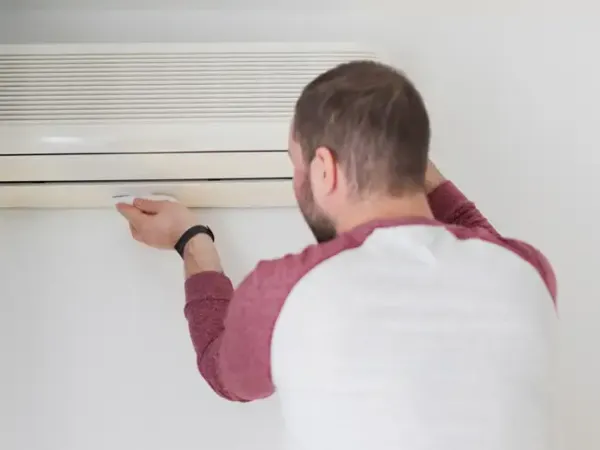
There is a specific kind of dread that comes with waking up in a sweat at 2 AM because your AC has decided to call it quits during the peak of a heatwave. For most of us, we assume that if the vents are blowing air, everything is fine. But air conditioners rarely just "die" overnight; they give off subtle warnings weeks in advance that we usually ignore until it’s too late. With the capital’s temperatures already climbing toward record highs in 2026, the window for preventive maintenance is closing. Instead of waiting for a total breakdown, you can perform a quick "health check" today to see if your unit is actually cooling or just moving warm air around.
Wait exactly fifteen minutes. After the time is up, hold your hand directly in front of the vents. The air coming out should be sharp, biting, and significantly colder than the ambient temperature of the room. If the air feels "cool" but not "cold," or if it feels like a standard table fan, you likely have a refrigerant (gas) leak. When gas levels are low, the evaporator coil cannot reach the freezing temperatures needed to exchange heat efficiently. If you see ice forming on the thin copper pipes outside or on the indoor grill, that is a definitive sign that your gas is low and your compressor is overworking to compensate.
(Disclaimer: This article is for informational purposes only).
3 easy ways: What those weird noises actually mean
Sometimes your ears are better diagnostic tools than a thermometer. Modern ACs should hum consistently, but if you start hearing "extra" sounds, your unit is trying to tell you something specific:- Rattling or Clattering: This usually points to loose hardware or a fan blade that has become unbalanced. If left unchecked, the vibration can crack the internal housing or damage the motor.
- Buzzing or Sizzling: This is often an electrical red flag. It could be a failing capacitor or a loose wire arcing inside the unit. If you hear this, turn the power off immediately to avoid a short circuit.
- Grinding or Screaming: This is the sound of metal on metal. It usually means the bearings in your fan motor or the compressor itself are failing. This is a high-priority fix; ignore it, and you'll likely be replacing the entire motor by next week.
The 15-minute rule: A simple test for low gas
If you suspect your AC isn't performing as well as it used to, don't wait for the room to get stuffy. Try this diagnostic: clear the room, close all windows and doors, and set your AC to 18°C with the fan on high.Wait exactly fifteen minutes. After the time is up, hold your hand directly in front of the vents. The air coming out should be sharp, biting, and significantly colder than the ambient temperature of the room. If the air feels "cool" but not "cold," or if it feels like a standard table fan, you likely have a refrigerant (gas) leak. When gas levels are low, the evaporator coil cannot reach the freezing temperatures needed to exchange heat efficiently. If you see ice forming on the thin copper pipes outside or on the indoor grill, that is a definitive sign that your gas is low and your compressor is overworking to compensate.
Why you should call the tech now
The reality of a Delhi summer is that once the heatwave peaks, every technician in the city is booked out for ten days. By running this 15-minute check now, you can get a head start on repairs while parts are still in stock and service rates are standard. A simple gas top-up or a motor lubrication today costs a fraction of what a burnt-out compressor will cost you in the middle of July.(Disclaimer: This article is for informational purposes only).