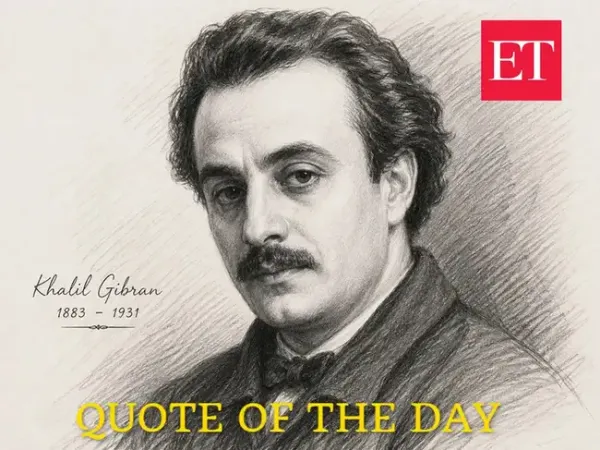
Khalil Gibran remains one of the most beloved literary voices in the world, known for his timeless wisdom and poetic style. Born in 1883 in present-day Lebanon, Gibran later moved to the United States, where he grew into a writer, artist, and philosopher whose work continues to inspire millions. Gibran is best known for his iconic book 'The Prophet', published in 1923. The book is a collection of poetic essays that explore deep themes like love, freedom, pain, work, and spirituality. Written in simple yet powerful language, 'The Prophet' has been translated into dozens of languages and remains widely read even today.
What makes Gibran’s work special is its universal message. He wrote about human emotions and life’s big questions in a way that connects with people across cultures and generations. His words often feel personal, as if they are speaking directly to the reader. Whether it is about love or loss, his insights remain relevant in modern life. Before becoming a global literary figure, Gibran also trained as an artist. His paintings and drawings often reflected the same spiritual depth found in his writing. He believed that art and words should work together to express deeper truths about life.
Quote of the day
Quote of the day - "It takes a minute to have a crush on someone, an hour to like someone, and a day to love someone... but it takes a lifetime to forget someone," is widely attributed to Lebanese-American writer Khalil Gibran.
Meaning of the quote
The Quote of the day by Khalil Gibran highlights how quickly feelings can grow, but how slowly they fade. It shows that attraction and love can develop in a very short time - sometimes in just moments or days. Human emotions move fast when we connect with someone special, making us feel close almost instantly. However, the deeper message lies in the second part. While love can begin quickly, forgetting someone you truly cared about is much harder. Memories, emotions, and shared experiences stay with us for years, sometimes a lifetime. This reflects the lasting impact people can have on our hearts. Gibran reminds us that love is powerful and not easily erased. Even when relationships end, the feelings and lessons remain. The quote encourages us to value our connections, because once someone becomes part of your life, their presence can leave a permanent mark on your journey.
Gibran’s journey was not easy. As an immigrant in the United States, he faced cultural challenges and personal struggles. Yet these experiences shaped his perspective and gave his writing a deeper emotional layer. His work often reflects a balance between Eastern spirituality and Western thought. He was part of a group of Arab-American writers known as the Pen League, which helped bring Arabic literature into the English-speaking world. Through this, Gibran played an important role in bridging cultures and ideas.
Even decades after his passing in 1931, Gibran’s influence continues to grow. His quotes are widely shared on social media, used in speeches, and read at weddings and ceremonies. His ability to capture the beauty and complexity of life in simple words is what keeps his legacy alive.
Khalil Gibran’s message is clear: life is full of meaning, and understanding it requires both the heart and the mind. His work reminds us to reflect, to feel deeply, and to appreciate the journey of being human.
What makes Gibran’s work special is its universal message. He wrote about human emotions and life’s big questions in a way that connects with people across cultures and generations. His words often feel personal, as if they are speaking directly to the reader. Whether it is about love or loss, his insights remain relevant in modern life. Before becoming a global literary figure, Gibran also trained as an artist. His paintings and drawings often reflected the same spiritual depth found in his writing. He believed that art and words should work together to express deeper truths about life.
Quote of the day
Quote of the day - "It takes a minute to have a crush on someone, an hour to like someone, and a day to love someone... but it takes a lifetime to forget someone," is widely attributed to Lebanese-American writer Khalil Gibran.
Meaning of the quote
The Quote of the day by Khalil Gibran highlights how quickly feelings can grow, but how slowly they fade. It shows that attraction and love can develop in a very short time - sometimes in just moments or days. Human emotions move fast when we connect with someone special, making us feel close almost instantly. However, the deeper message lies in the second part. While love can begin quickly, forgetting someone you truly cared about is much harder. Memories, emotions, and shared experiences stay with us for years, sometimes a lifetime. This reflects the lasting impact people can have on our hearts. Gibran reminds us that love is powerful and not easily erased. Even when relationships end, the feelings and lessons remain. The quote encourages us to value our connections, because once someone becomes part of your life, their presence can leave a permanent mark on your journey.
Gibran’s journey was not easy. As an immigrant in the United States, he faced cultural challenges and personal struggles. Yet these experiences shaped his perspective and gave his writing a deeper emotional layer. His work often reflects a balance between Eastern spirituality and Western thought. He was part of a group of Arab-American writers known as the Pen League, which helped bring Arabic literature into the English-speaking world. Through this, Gibran played an important role in bridging cultures and ideas.
Even decades after his passing in 1931, Gibran’s influence continues to grow. His quotes are widely shared on social media, used in speeches, and read at weddings and ceremonies. His ability to capture the beauty and complexity of life in simple words is what keeps his legacy alive.
Khalil Gibran’s message is clear: life is full of meaning, and understanding it requires both the heart and the mind. His work reminds us to reflect, to feel deeply, and to appreciate the journey of being human.