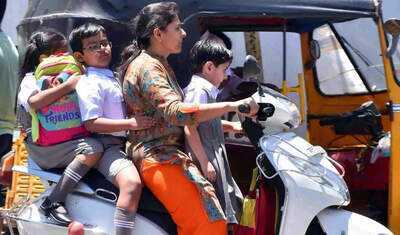
Neha Sharma, a resident of Noida Extension in Uttar Pradesh, frequently checks the weather forecast on her phone. With her seven-year-old son attending first grade, she worries about sending him to school in the sweltering heat. Neha expresses her desire for schools to announce summer vacations sooner, citing the increased risk of illness among young children during such extreme temperatures. This concern resonates with millions of parents across India as rising global temperatures challenge the traditional academic calendar.
Like Neha, many parents in various states of India are anxious about sending their children to school amidst the heatwave. Schools and state governments are acknowledging these worries. As temperatures soar, several states have begun to announce summer vacations earlier than usual.
Changing Climate Patterns Influence School Holidays
The trend of declaring summer vacations earlier has been on the rise since 2022. This shift is attributed to changing weather patterns in parts of India, where summers arrive earlier and are more intense, while winters are shorter but harsher.
According to the Global Temperature Ranking 2026, 95 out of the 100 hottest cities in the world are located in India. The India Meteorological Department (IMD) has already issued heat warnings for several regions, predicting temperatures could reach up to 45 degrees Celsius in northern states on Monday.
Educational Institutions Respond to Climate Challenges
Brian Seymour, principal of GD Somani Memorial School in Mumbai, stated that climate change is wreaking havoc in the country, making weather patterns unpredictable. He emphasized that decisions regarding summer vacations should be made practically.
Typically, northern Indian states schedule summer vacations from mid-May to the end of June, while in southern India, where summers begin at different times, vacations start in April and end in late May. Due to the extreme heat, at least ten states have declared summer vacations earlier since 2022.
Need for a Flexible Academic Calendar
Seymour noted that schools generally provide six weeks of vacation, a rule followed in Maharashtra. However, in northern states, vacations are extended to nearly two months due to severe heat. He pointed out that the unpredictability of weather has become a norm, with temperatures reaching 40 degrees Celsius as early as April, posing serious health risks.
The question arises whether the holiday schedule needs to be adjusted rather than just moving summer vacations earlier. A teacher from a Delhi-NCR school, who wished to remain anonymous, suggested that instead of shifting summer breaks, the annual holiday schedule should be revised.
State Governments Take Action to Protect Students
The structure of school holidays in India has long followed a set pattern, with schools operating approximately 250 days a year. However, the weather has become a significant challenge in fulfilling the required school days. States like Delhi, Uttar Pradesh, Chhattisgarh, and Punjab have modified their summer vacation schedules since 2022, but timely adjustments are crucial to avoid disruptions in education.
Nandita Sinha Roy, a retired principal from a Noida school, mentioned that moving summer vacations earlier does not impact the school calendar if an academic planner is well-prepared, accounting for extreme weather conditions.
Proactive Measures by States
The Odisha government has already announced early summer vacations due to worsening heat conditions, starting from April 27, instead of the previously scheduled May 6 to June 17. Similarly, Chhattisgarh declared early summer vacations on April 17, marking the third consecutive year of such decisions due to heat.
Other states like Uttar Pradesh, Uttarakhand, and Madhya Pradesh have also implemented measures to protect children from heat, adjusting school hours to cooler parts of the day and promoting hydration.
The Challenge of Extreme Weather
As summers become increasingly hotter and arrive earlier, schools are compelled to revise their vacation plans. Since 2022, at least ten northern states have had to start summer vacations around mid-April, a shift from the traditional mid-May start.
Delhi schools had to close early in 2024, and in previous years, they relied more on adjusted timings and hydration measures rather than simply starting vacations earlier.
Adapting to Changing Conditions
Nandita Sinha Roy noted that since the COVID-19 pandemic, schools have been prepared to operate in hybrid modes, allowing for online classes during adverse weather conditions. She emphasized that the national board mandates 220 working days, which include teaching, exams, and school activities, giving schools the flexibility to plan strategically for a successful academic year.
The Punjab government has also declared early school closures due to heat in 2022 and 2024, while West Bengal has adjusted its school holiday schedule twice in recent years.
Collaboration Between Schools and Parents
Schools must take necessary precautions to ensure children's safety during extreme weather. Brian Seymour highlighted the importance of holidays for students, who need mental breaks after a year of study. He mentioned that schools encourage indoor activities during extreme heat to keep students safe.
Roy concluded that while some schools are equipped with air conditioning and heating systems, many are not, making travel to and from school a significant challenge during extreme heat.
Conclusion: Rethinking Academic Calendars
Neha Sharma's concerns reflect a broader issue as her son prepares for unit tests in early May amidst rising temperatures. The need for early school holidays highlights the limitations of a rigid academic calendar. While these short-term measures provide some relief, they underscore the urgency for a climate-sensitive approach to education. The pressing question remains whether India should move beyond reactive measures and completely rethink the timing of summer vacations.
-
OnePlus Nord CE6 Lite is Back, Bringing 144Hz Smoothness and Massive Battery This May 7

-
Cook Gramam Mango Sangamam – A Seasonal Table – Organic Mango Feast

-
This is a great government scheme, where you can get a monthly pension of Rs 5000, just invest Rs 210 per month

-
Ladakh to get five new districts

-
UK weather maps show 23C mini-heatwave as May scorcher hits 28 counties - full list