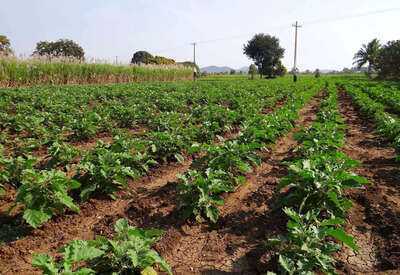
The project, which is expected to bolster sustainable farming and rural livelihoods (Photo:Pixabay)
SHILLONG, April 27: The Indian Council of Agricultural Research (ICAR) for the North Eastern Region has successfully decreased jhum cultivation by 75% in this area.
On Sunday, Sandeep Ghatak, the ICAR Director for the northeastern region, shared that through persistent efforts over the last five decades, the organization has achieved this significant reduction.
He emphasized the institute's dedication to promoting sustainable agricultural practices and enhancing farmers' livelihoods through innovative scientific approaches and collaborative initiatives.
Despite facing initial hurdles such as shifting cultivation, land degradation, acidic soils, and post-harvest losses, the institute has made remarkable progress, including the notable 75% decrease in jhum cultivation.
Jhum, or shifting cultivation, is a traditional agricultural method practiced by many indigenous groups in the Northeast. This technique involves clearing a section of land, growing mixed crops for 1-2 years, and then allowing the land to rest to enable soil and forest regeneration.
Historically, the fallow period lasted around 10-12 years due to lower population density. However, as the population has increased and the demand for crops has risen, this fallow period has shortened, resulting in soil degradation, erosion, and reduced crop yields.
To combat this, one of the alternative methods promoted in the Northeast is the integrated farming system. This approach encourages farmers in states like Manipur, Meghalaya, and Mizoram to combine various agricultural practices.
Farmers are urged to integrate crop cultivation with fish farming, piggery, horticulture, agroforestry, and goat rearing, which helps maintain soil fertility through animal manure and boosts their income through diverse production of crops, fruits, dairy, and meat.
Ghatak noted that ICAR has developed over 50 integrated farming system models tailored for the region. Many farmers are already implementing these methods and are beginning to see positive outcomes.
Additionally, ICAR is advancing natural resource management techniques and creating user-friendly tools, digital applications, and various sustainable farming practices, primarily through the Krishi Vigyan Kendras.
-
Explainer: Storms at Sea—But the Insurance Shield Is Ready! What Is BMIP, and Why Is It Needed?

-
LIC's Blockbuster Scheme: Yielding a 6-Fold Return on an Investment of ₹93,000..

-
A New Speed Record! India to Get Its First Indigenous Bullet Train in 2027; The World Will Witness the Prowess of Indian Engineering...

-
Guaranteed Income! Deposit Money in This Post Office Scheme and Receive ₹9,250 Every Month..

-
Now you will have control over your dreams too—Prophetic AI launches a unique smart device..