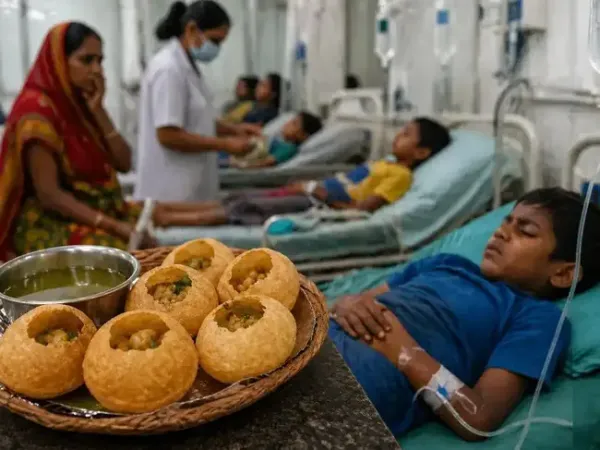
A routine evening treat ended in tragedy in Bajto village in Jharkhand after a suspected case of food poisoning killed one child and left nearly 20 others hospitalised. Officials have begun an urgent probe into a roadside golgappa vendor, as panic spreads among residents already dealing with rising heat-related illnesses.
Families initially sought local treatment, but as conditions worsened, the victims were rushed to Sadar Hospital and nearby health centres. Despite efforts, one child could not be saved.
Relatives said the pattern was alarming. One after another, those who had eaten the golgappas started falling ill, triggering fear across the village.
"One child has died, while others are under treatment in hospitals. Fear spread in the village... Officials said stale food kept for several days may have been the reason," DC Yadav stated.
Officials believe that ingredients used by the vendor, including flavoured water, may have been stored for several days without proper refrigeration — a risky practice, especially during extreme heat.
Authorities are now testing water samples and food remnants to identify the exact cause. The focus remains on whether contaminated or stale ingredients triggered the outbreak.
Speaking to reporters, Yadav said, "... In Bajto village, around 18 children and two adults fell ill after eating golgappa at a roadside stall. One child has died, while others are under treatment in hospitals. Fear spread in the village, already facing heat-related diarrhoea cases. Officials said stale food kept for several days may have been the reason. Water samples are being tested, and an investigation is underway to determine the root cause."
For now, uncertainty hangs over the village. While officials suspect stale food as the trigger, final confirmation will depend on lab reports. Until then, residents remain cautious, with many avoiding street food altogether. Further investigation is underway.
Choose freshly prepared food
Always prefer items that are cooked and served hot. Avoid food that looks pre-prepared or has been sitting out for long, especially chutneys, sauces, and flavoured water used in street snacks.
Be cautious with water-based foods
Items like golgappas, juices, and ice-based drinks can carry a higher risk if the water quality is poor. Opt for sealed bottled water and avoid ice unless you are sure it is made from safe water.
Check hygiene around the stall or outlet
A quick glance can tell a lot. Clean utensils, covered ingredients, and proper waste disposal are good signs. If the surroundings look unhygienic, it is better to skip the place.
Avoid cut fruits and raw salads sold in the open
Fruits and vegetables that are already cut and exposed to heat can get contaminated quickly. It is safer to consume whole fruits that you can peel yourself.
Eat during peak hours
Food turnover is higher during busy times, which means you are more likely to get freshly prepared items rather than stale ones.
Trust your instincts on taste and smell
If something smells off or tastes unusual, stop eating immediately. Spoiled food may not always look bad but can still be harmful.
Stay hydrated, but smartly
Drink plenty of fluids, but stick to safe options like packaged drinks or water from reliable sources. Avoid sharing bottles or glasses.
Watch for early symptoms
If you experience nausea, vomiting, stomach pain, or diarrhoea after eating out, seek medical attention quickly, especially in extreme heat, where dehydration can worsen the condition.
In summer, enjoying food outside is still possible, but being alert and selective can make all the difference.
Children fall sick after eating golgappas from roadside
The incident unfolded when a golgappa seller visited the village and a group of children gathered to eat the popular street snack. Within hours, several of them began complaining of severe discomfort. Soon, 18 children and two adults showed signs of serious illness.Families initially sought local treatment, but as conditions worsened, the victims were rushed to Sadar Hospital and nearby health centres. Despite efforts, one child could not be saved.
Relatives said the pattern was alarming. One after another, those who had eaten the golgappas started falling ill, triggering fear across the village.
Administration flags stale food as possible cause
Deputy Commissioner Ramniwas Yadav confirmed to ANI the scale of the incident and pointed to suspected food contamination."One child has died, while others are under treatment in hospitals. Fear spread in the village... Officials said stale food kept for several days may have been the reason," DC Yadav stated.
Officials believe that ingredients used by the vendor, including flavoured water, may have been stored for several days without proper refrigeration — a risky practice, especially during extreme heat.
Heatwave worsens food safety risks
The district is currently facing intense heatwave conditions, which speed up food spoilage. Health officials say cases of diarrhoea and stomach infections have already gone up in recent days, making such incidents more dangerous.Authorities are now testing water samples and food remnants to identify the exact cause. The focus remains on whether contaminated or stale ingredients triggered the outbreak.
Probe underway, village on edge
The Deputy Commissioner later visited Bajto village to assess the situation and review medical response efforts.Speaking to reporters, Yadav said, "... In Bajto village, around 18 children and two adults fell ill after eating golgappa at a roadside stall. One child has died, while others are under treatment in hospitals. Fear spread in the village, already facing heat-related diarrhoea cases. Officials said stale food kept for several days may have been the reason. Water samples are being tested, and an investigation is underway to determine the root cause."
For now, uncertainty hangs over the village. While officials suspect stale food as the trigger, final confirmation will depend on lab reports. Until then, residents remain cautious, with many avoiding street food altogether. Further investigation is underway.
Heatwave alert: Simple precautions to follow while eating out in summer
As large parts of India face an intense heatwave, food safety becomes as important as staying hydrated. High temperatures speed up food spoilage, especially in street food and open-air setups. A few simple precautions can significantly reduce the risk of foodborne illness.Choose freshly prepared food
Always prefer items that are cooked and served hot. Avoid food that looks pre-prepared or has been sitting out for long, especially chutneys, sauces, and flavoured water used in street snacks.
Be cautious with water-based foods
Items like golgappas, juices, and ice-based drinks can carry a higher risk if the water quality is poor. Opt for sealed bottled water and avoid ice unless you are sure it is made from safe water.
Check hygiene around the stall or outlet
A quick glance can tell a lot. Clean utensils, covered ingredients, and proper waste disposal are good signs. If the surroundings look unhygienic, it is better to skip the place.
Avoid cut fruits and raw salads sold in the open
Fruits and vegetables that are already cut and exposed to heat can get contaminated quickly. It is safer to consume whole fruits that you can peel yourself.
Eat during peak hours
Food turnover is higher during busy times, which means you are more likely to get freshly prepared items rather than stale ones.
Trust your instincts on taste and smell
If something smells off or tastes unusual, stop eating immediately. Spoiled food may not always look bad but can still be harmful.
Stay hydrated, but smartly
Drink plenty of fluids, but stick to safe options like packaged drinks or water from reliable sources. Avoid sharing bottles or glasses.
Watch for early symptoms
If you experience nausea, vomiting, stomach pain, or diarrhoea after eating out, seek medical attention quickly, especially in extreme heat, where dehydration can worsen the condition.
In summer, enjoying food outside is still possible, but being alert and selective can make all the difference.