
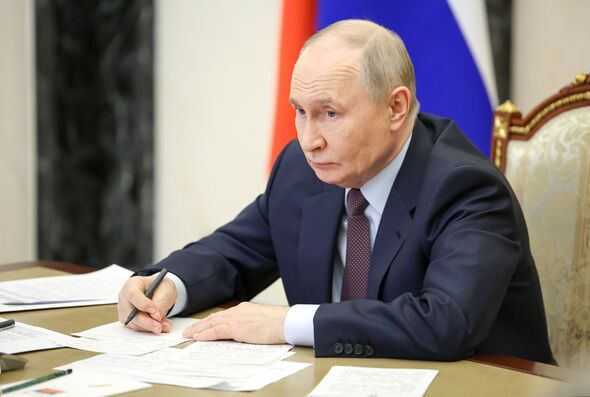
Britain's heavy reliance on a fragile web of subsea internet cables leaves it exposed to disruption that could slow the country to a crawl within hours, an industry expert has warned. The stark assessment comes as Defence Secretary John Healey disclosed that British and allied forces tracked Russian submarines operating around critical undersea infrastructure earlier this month.
While no damage was reported, the operation - attributed to activity linked to Vladimir Putin - has intensified concern about the vulnerability of the UK's digital backbone. Tony O'Sullivan of RETN said the idea of a seamless and resilient "global network" masks a more fragile reality beneath the surface.
Mr O'Sullivan said: "The industry likes to call them 'global networks', but in reality, a huge share of traffic funnels through a handful of narrow corridors." These corridors, including parts of the English Channel and the North Sea near the Strait of Dover, have become focal points for global data flows due to geography and cost.
But that convenience comes with risk. Mr O'Sullivan said: "Favourable doesn't mean entirely safe. Many of these same corridors are also popular shipping lanes and fishing spots, making accidental damage a big risk." He stressed that such incidents - often caused by anchors or fishing equipment - are already the primary source of cable outages worldwide.
Mr O'Sullivan said: "These are the real causes of most outages, rather than deliberate sabotage. As so much capacity runs along these routes, if they do get affected, it doesn't impact the edge of the internet backbone, but a major conduit." Despite heightened fears about hostile state activity, Mr O'Sullivan said the immediate danger is not a sudden nationwide blackout.
Mr O'Sullivan said: "It's a misconception that cables get cut, and the internet suddenly goes dark. It relies on a mesh of networks that's highly unlikely to fail." Instead, disruption would build quickly and visibly. He said: "Traffic would simply find another route to take. However, performance could degrade quickly."
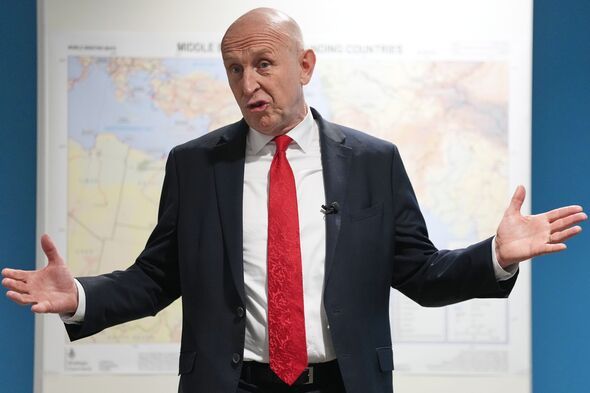
He said: "Within hours, alternative pathways could become unstable under the load, and congestion would pile up to the point where the internet... becomes painfully slow and unresponsive." For households, that would mean everyday digital services faltering.
Mr O'Sullivan said: "Payments not going through, feeds failing to update, and messages taking longer to send," adding that "critical services, such as healthcare systems or banking apps, could also come under strain."
The consequences for businesses could be more severe, particularly for those reliant on real-time connectivity or cloud-based systems. Mr O'Sullivan said: "The impact on individual businesses would depend on how well they've designed and invested in their networks and services," warning that firms which fail to prepare "will pay the price when disruption hits."
The scale of the infrastructure challenge is vast. The UK depends on dozens of subsea cable systems, including major transatlantic links stretching thousands of kilometres. Mr O'Sullivan said: "It is unlikely they could patrol the network in its entirety. The UK relies on thousands of miles of submarine cables... and that's one of approximately sixty routes that the UK depends on.
Instead, he argued that resilience must come from better design and investment. Mr O'Sullivan said: "A more realistic fix... is building and, more importantly, utilising routes that don't all sit in the same place. There has been investment, but the uncomfortable truth is the industry hasn't moved fast enough."
That lag is now colliding with rising geopolitical risk - and increasing costs. Mr O'Sullivan said: "The reality is, resilience isn't free. The cost of more complex routing, higher insurance, and increased capacity adds up." While companies have so far absorbed some of the financial pressure, he warned: "It's only delaying the inevitable."
The result is a growing mismatch between the UK's deep dependence on uninterrupted connectivity and the resilience of the infrastructure supporting it.
Britain may not go offline entirely. However, as Mr O'Sullivan's warning makes clear, even limited disruption could be enough to bring large parts of its digital economy grinding towards a standstill.
-
Jharkhand Golgappa Tragedy: 1 Child Dead, 20 Hospitalised After Suspected Mass Food Poisoning From Roadside Vendor In Giridih

-
'I Am So Happy, I Got A Call From PM Modi's Office': Bengal Girl Who Gifted PM His Portrait

-
Iranian Foreign Minister Araghchi Heads To Moscow After Pakistan Stop As Islamabad Pushes For US-Tehran Peace Deal

-
FBI Director Kash Patel's Real-Time Reaction Goes Viral As Secret Service Tackles Gunman Targeting Trump's Event At Washington Hilton

-
Mojtaba Khamenei Is Dead? Mural Featuring His Pic With Slain Leaders Spark Speculations