Today, using a reusable water bottle has become a common practice in America. Such bottles go along to work offices, to gyms, to school runs, on trips by car, or even to your bedside table. However, although people do not forget about refilling such containers, few consider their proper care. It could turn out to be a serious problem. Although your water bottle seems to be clean since it contains water only, according to specialists, such factors as moisture, backwash, and difficult-to-access nooks make the ideal conditions for the development of bacteria, odor, and residue formation.
It was reported by a study from the Food Protection Trends that reusable water bottles can get contaminated when they are not maintained. The following tips will help you prevent such a case.
According to the Cleveland Clinic, slimy sensation, musty smell, or persistent aftertaste could be indications of mold or biofilm buildup. The lid is usually the culprit rather than the bottle itself. Straws, rubber gaskets, and screwed tops tend to absorb moisture.
Bottle brushes are great tools for scrubbing the interior surfaces of the bottle, while straws and small openings need smaller brushes. Gaskets or silicon rings must be removed from the bottles when possible. It is equally important to ensure that all the pieces dry before putting them back together.
One should perform an intensive cleaning at least once a week or even more often if one uses their bottle all the time. Warm water with some amount of baking soda might help to get rid of bad odors.
Vinegar can help in the removal of residues. In case one has persistent odors, many brands advise consumers to make sure that the bottle is dishwasher safe.
Check the condition of the rubber seals on the cap. Their condition can give you an indication whether or not they should be replaced. Lastly, ensure that there are no scratches in the interior of your plastic bottle.
In case you have two bottles that you alternate using daily, then both bottles will have enough drying time between uses.
The water bottle is often one of the things that you use most often. Caring for it is not only about avoiding any odd smell; it is also about making sure that an essential part of your day works as intended.
It was reported by a study from the Food Protection Trends that reusable water bottles can get contaminated when they are not maintained. The following tips will help you prevent such a case.
Why do water bottles start to smell
This unpleasant smell doesn’t appear from thin air. Every time you drink, bacteria from your saliva enter the bottle. Moisture and heat inside could facilitate the development of biofilm, a sticky, usually invisible coating that can attach to inner walls. Flavored beverages, protein shakes, and electrolyte solutions could contribute to faster buildups.According to the Cleveland Clinic, slimy sensation, musty smell, or persistent aftertaste could be indications of mold or biofilm buildup. The lid is usually the culprit rather than the bottle itself. Straws, rubber gaskets, and screwed tops tend to absorb moisture.
Wash it more often than you think
Most people just rinse and reuse. But the professionals warn that this is not enough. Daily cleaning with warm water and dish soap is recommended for bottles that are used on a daily basis. The bottle must be cleaned whenever it is holding something other than just water.Bottle brushes are great tools for scrubbing the interior surfaces of the bottle, while straws and small openings need smaller brushes. Gaskets or silicon rings must be removed from the bottles when possible. It is equally important to ensure that all the pieces dry before putting them back together.
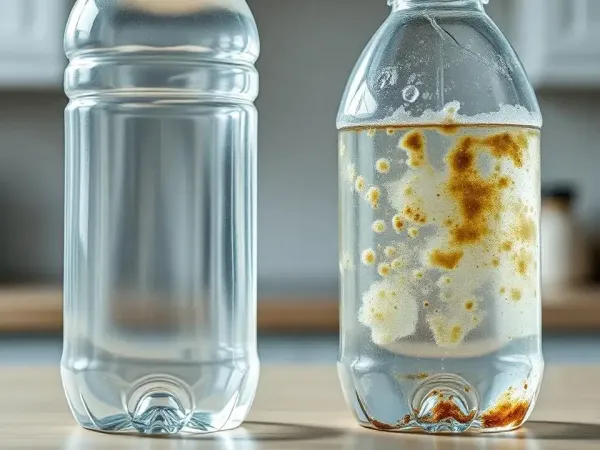
Image Credit: TIL Creatives| Two identical water bottles, one pristine and the other visibly contaminated with bacterial growth and cloudy water.
Deep clean regularly
Although regularly cleaning bottles does not leave them dirty, there comes a time when they require a more intensive cleaning.One should perform an intensive cleaning at least once a week or even more often if one uses their bottle all the time. Warm water with some amount of baking soda might help to get rid of bad odors.
Vinegar can help in the removal of residues. In case one has persistent odors, many brands advise consumers to make sure that the bottle is dishwasher safe.
Pay attention to the parts people ignore
Maintaining hygiene is always about the small things. Cap, screw top, bite valve, and reusable straw parts usually accumulate the most build-up. They are also easy to overlook and are frequently the reason a bottle continues to smell bad despite being washed.Check the condition of the rubber seals on the cap. Their condition can give you an indication whether or not they should be replaced. Lastly, ensure that there are no scratches in the interior of your plastic bottle.
Habits that keep building up from returning
Little things matter a lot. Do not leave water in a warm car for many hours because heat can cause foul smells and increase bacteria. Drain the bottle in the evening instead of leaving stale water inside throughout the night. When your bottle is used for smoothies, coffee, or supplements, wash it right away instead of delaying it.In case you have two bottles that you alternate using daily, then both bottles will have enough drying time between uses.
When it may be time to replace it
Not always is washing sufficient. Should there be a smell in a bottle, moldy spots, broken seals, or deep scratches that cannot be cleaned, replacing it might just prove to be a better choice. Reusing bottles is intended to promote good health by providing safe drinks. Should it always smell strange when opened, it might very well be trying to tell you something.The water bottle is often one of the things that you use most often. Caring for it is not only about avoiding any odd smell; it is also about making sure that an essential part of your day works as intended.